

The management of carcinoma of the cervix represents a remarkable dichotomy.

Your AI-Trained Oncology Knowledge Connection!
The management of carcinoma of the cervix represents a remarkable dichotomy.

Nishitha M. Reddy, MD, MBBS, discusses the significance of the ECHELON-2 trial in peripheral T-cell lymphoma, the need for novel therapies for those with CD30-negative disease, and the excitement surrounding duvelisib in the relapsed/refractory setting.

November 15, 2020 - The European Medicines Agency’s Committee for Medicinal Products for Human Use has adopted a positive opinion for the fixed-dose combination of pertuzumab plus trastuzumab with hyaluronidase-zzxf for administration via subcutaneous injection in combination with intravenous chemotherapy in the treatment of patients with early and metastatic HER2-positive breast cancer

November 14, 2020 - A novel combination comprised of the TKI cabozantinib plus the PD-1 inhibitor nivolumab and the CTLA-4 inhibitor ipilimumab is under exploration in treatment-naïve patients with intermediate or poor risk advanced or metastatic renal cell carcinoma in the phase 3 COSMIC-313 trial.
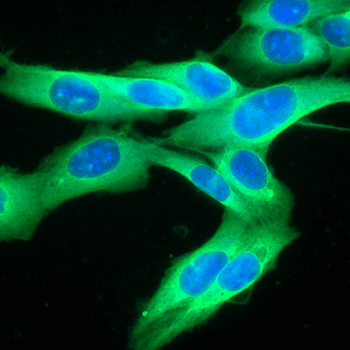
November 14, 2020 – Treatment with the novel intratumoral immuotherapy agent PVSRIPO resulted in an overall response rate of 33% among all patients with anti–PD-1 refractory melanoma.

November 13, 2020 - Treatment with the combination of eganelisib, a selective PI3K-γ inhibitor, and nivolumab demonstrated encouraging clinical activity and a favorable safety profile in patients with head and neck squamous cell carcinoma.

November 13, 2020 - ALX148 showcased favorable safety and elicited objective responses when combined with trastuzumab, pembrolizumab, and multiagent chemotherapy regimens in patients with gastric/gastroesophageal junction cancer and head and neck squamous cell carcinoma.
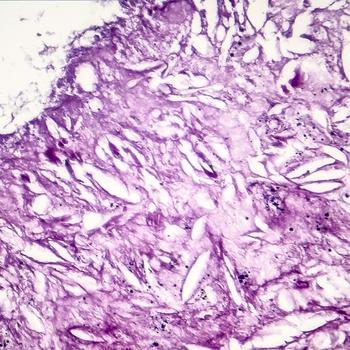
November 13, 2020 - The combination of bempegaldesleukin and the PD-1 inhibitor nivolumab elicited a confirmed best overall response rate of 53% in efficacy-evaluable patients with metastatic melanoma.
November 13, 2020 - The genetically modified herpes simplex-1 oncolytic RP2 demonstrated encouraging clinical activity and an acceptable safety profile in heavily pretreated patients with advanced solid tumors

November 13, 2020 - The FDA has granted an accelerated approval to pembrolizumab for use in combination with chemotherapy in the treatment of patients with locally recurrent unresectable or metastatic triple-negative breast cancer whose tumors express PD-L1 as determined by an FDA-approved test.
November 13, 2020 - The combination of nivolumab and ipilimumab elicited an objective response rate of 25% and was found to be well tolerated in patients with advanced or unresectable angiosarcoma, according to cohort findings of the phase 2 DART trial.

November 13, 2020 - In an effort to expand the benefit of immunotherapy to nonresponders or those who have relapsed, the novel STING agonist SB 11285 is being evaluated as a monotherapy and in combination with atezolizumab in patients with advanced solid tumors in a phase 1/1b dose-escalation trial.
November 13, 2020 - The addition of plasmid IL-12 pembrolizumab resulted in durable responses, as well as several complete responses, in patients with advanced melanoma who were refractory to PD-1–directed therapy.

November 12, 2020 - The investigational PD-L1 inhibitor cosibelimab demonstrated durable and robust responses in patients with non–small cell lung cancer and cutaneous squamous cell carcinoma.

November 12, 2020 - The combination of CMP-001 intratumoral injection and pembrolizumab was found to reverse PD-1 blockade resistance and elicit durable systemic responses in patients with advanced melanoma.

November 12, 2020 - The first-in-class, next-generation, DuoBody-PD-L1×4-1BB bispecific antibody GEN1046 demonstrated promising early activity and an acceptable safety profile in in patients with advanced solid tumors.

November 12, 2020 - In an effort to further improve outcomes without sacrificing tolerability, the combination of cabozantinib with pembrolizumab is being evaluated in patients with advanced melanoma in a phase 1b/2 study.

Regulatory applications have been submitted to the FDA and the European Medicines Agency for subcutaneous daratumumab for use in combination with pomalidomide and dexamethasone in patients with relapsed or refractory multiple myeloma who have received at least 1 previous therapy.
Monoclonal antibodies have played a key role in the development of personalized oncology and have proven antitumor activity through multiple mechanisms, including direct transmembrane signaling leading to apoptosis, complement mediated cytotoxicity, antibody-dependent cellular cytotoxicity, and inhibiting tumor vasculature and stroma.

Keith T. Flaherty, MD, discusses the rationale to conduct the NCI-MATCH trial, key findings from the recent publication, and potential permutations of the trial design that could further the role of precision medicine in oncology.

The addition of the first-in-class targeted therapy bemarituzumab to chemotherapy significantly improved progression-free survival and overall survival versus chemotherapy alone in the frontline treatment of patients with FGFRb-positive, locally advanced or metastatic gastric and gastroesophageal junction cancer.

Adagrasib, a novel agent aimed at KRAS G12C mutations, has demonstrated early signs of efficacy in patients with advanced non–small cell lung cancer and colorectal cancer whose tumors harbor the alteration, raising hopes for a new therapy against a challenging oncogenic target.

Miriam Merad, MD, PhD, discusses how her explorations of the role of inflammation in patients with cancer translated into critical insights for patients with COVID-19.

Community-based practices in The Network advance value-based care by significantly reducing costs while enhancing care.

November 10, 2020 - The China National Medical Products Administration has approved enzalutamide for the treatment of adult patients with nonmetastatic castration-resistant prostate cancer who are at a higher risk of metastasis.

November 10, 2020 - The European Union approved the next-generation BTK inhibitor acalabrutinib for use in adult patients with chronic lymphocytic leukemia.

African American men with low-risk prostate cancer who received active surveillance had a statistically significant increased 10-year cumulative incidence of disease progression and definitive treatment compared with non-Hispanic white men.

The European Commission has approved the combination of atezolizumab plus bevacizumab for use in adult patients with advanced or unresectable hepatocellular carcinoma who have not been given previous systemic therapy.

Nicholas Rohs, MD, discusses the progress made with chemoimmunotherapy combinations in frontline non–small cell lung cancer, future research directions, and emerging approaches that seek to propel progress in this disease.

The use of advanced molecular imaging with the PET radiotracer fluciclovine (18F) to inform treatment decisions can lead to improved disease-free survival rates in patients with recurrent prostate cancer.