
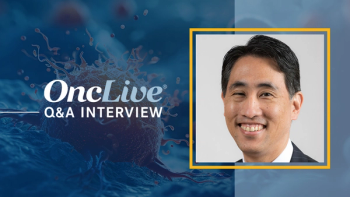
Scott T. Tagawa, MD, MS, FACP, FASCO, discusses the evolving role of radioligand therapies for the treatment of PSMA-positive prostate cancer.

Your AI-Trained Oncology Knowledge Connection!
Scott T. Tagawa, MD, MS, FACP, FASCO, discusses the evolving role of radioligand therapies for the treatment of PSMA-positive prostate cancer.
Treatment with pacritinib in a real-world clinical setting led to hemoglobin responses in 44% of patients with myelofibrosis and anemia.

Patients with lung cancer who take GLP-1 receptor agonists—commonly prescribed for weight loss and diabetes management—fare better than those who don’t.

Vorasidenib has been approved by the European Commission for IDH1/2-mutated grade 2 glioma.
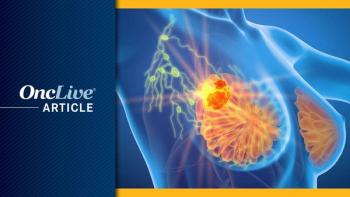
Giredestrant plus everolimus improved PFS vs SOC endocrine therapy plus everolimus in CDK4/6 inhibitor–pretreated, ER-positive breast cancer.

Oncology experts discuss the role of the Scout AI platform in aiding trial matching and treatment selection in oncology.
Isa-VRd produced a VGPR or better rate of 87.8% in transplant-ineligible newly diagnosed multiple myeloma.
Naoto T. Ueno, MD, PhD, FACP, discusses treatment sequencing considerations in HER2+ advanced or metastatic breast cancer.

The top 5 OncLive TV videos of the week cover insights in lung cancer, multiple myeloma, and ovarian cancer.

Sonrotoclax plus dexamethasone was well tolerated and produced early efficacy signals in relapsed/refractory multiple myeloma with t(11;14).

Belantamab mafodotin plus carfilzomib and dexamethasone was active in patients with relapsed/refractory multiple myeloma.
Belantamab mafodotin plus lenalidomide maintenance was active and had an expected safety profile in transplant-eligible, newly diagnosed myeloma.
Belantamab mafodotin monotherapy was active and safe in patients with relapsed/refractory multiple myeloma.

Carfilzomib, lenalidomide, and dexamethasone after transplant improved PFS and OS in high-risk, newly diagnosed multiple myeloma.
Efficacy and pharmacokinetic measures with IV vs SC isatuximab delivered via an on-body injector were comparable in patients with multiple myeloma.
Maintenance therapy with daratumumab plus lenalidomide led to higher MRD-negativity conversion rates vs lenalidomide alone in newly diagnosed myeloma.

The FDA held a Type A meeting for RP1 in advanced melanoma, the AACR released its Annual Cancer Progress Report, and more.
Linvoseltamab monotherapy generated responses and had a favorable safety profile with low rates of high-grade TEAEs in high-risk smoldering myeloma.
Treatment with BVd led to favorable survival outcomes and prolonged responses vs DVd in lenalidomide-refractory patients with multiple myeloma.
The combination of daratumumab, lenalidomide, ixazomib, and dexamethasone was efficacious in transplant-ineligible, newly diagnosed myeloma.
The addition of belantamab mafodotin to standard-of-care VRd proved feasible as frontline therapy in newly diagnosed multiple myeloma.
Belantamab mafodotin plus lenalidomide and dexamethasone induced CRs or better in over half of patients with newly diagnosed multiple myeloma.
Administering the anti-GPRC5D agent MCARH109 and anti-BCMA therapy MCARH125 in tandem was feasible and tolerable in relapsed/refractory multiple myeloma.

The FDA approved subcutaneous pembrolizumab for use in adult and pediatric solid tumor indications approved for intravenous pembrolizumab.

Eque-cel was effective for the treatment of patients with relapsed/refractory multiple myeloma.
Arlo-cel given as a single infusion drove efficacy and was safe in relapsed/refractory multiple myeloma.
D-VRd led to favorable PRO outcomes in patients with newly diagnosed multiple myeloma who had MRD negativity after therapy.

Taletrectinib was approved in Japan for advanced non–small cell lung cancer harboring ROS1 fusions.

The EMA’s CHMP has recommended the approval of subcutaneous pembrolizumab across all indications and perioperative pembrolizumab in locally advanced HNSCC.
Maintenance therapy with belantamab mafodotin, pomalidomide, and dexamethasone was safe and led to durable responses in high-risk myeloma.