

Findings from the KEYNOTE-B61 trial demonstrate antitumor activity across histologic subtypes, including those with papillary and chromophobe disease.

Your AI-Trained Oncology Knowledge Connection!
Findings from the KEYNOTE-B61 trial demonstrate antitumor activity across histologic subtypes, including those with papillary and chromophobe disease.

A genetically engineered herpes simplex virus plus immunotherapy reduces or eliminates tumors in 1/3 of clinical trial patients, according to a new study.
The FDA issued a CRL to the application for glofitamab plus chemotherapy in relapsed/refractory diffuse large B-cell lymphoma.

Luspatercept plus a concomitant JAK inhibitor didn’t meet the primary end point of 12-week RBC transfusion independence in myelofibrosis-associated anemia.
ICT01 has received orphan drug designation from the FDA for the treatment of patients with acute myeloid leukemia.

Treatment with belzutifan increased the time without progression or toxicity vs everolimus in patients with advanced RCC.
Metastasis-directed radiotherapy without systemic therapy demonstrated an improved safety profile vs immunotherapy and tyrosine kinase inhibitors.

Sandip P. Patel, MD, discusses targeted therapy combination regimens in EGFR-mutated NSCLC.

Nimotuzumab plus chemotherapy was more effective than chemotherapy alone in patients with recurrent or persistent cervical cancer.

David A. Braun, MD, PhD, discusses findings from a study of personalized neoantigen vaccines in patients with high-risk, resectable ccRCC.

Research supports the use of novel CAR T-cell therapy targeting CAIX and CD70 for the treatment of patients with advanced ccRCC.
Research centers across New York State are collaborating to develop cell therapies for cancer to expand progress in the emerging field of cell therapy.
The FDA’s ODAC voted against the risk/benefit profiles of belantamab mafodotin–based combinations in relapsed/refractory multiple myeloma.

The FDA has granted priority review to TAR-200 for BCG-unresponsive, high-risk NMIBC with CIS, with or without papillary tumors.
The FDA granted breakthrough therapy designation to first-line trastuzumab deruxtecan plus pertuzumab in HER2-positive metastatic breast cancer.

Cyrus M. Khan, MD, discusses the role of second-generation BTK inhibitors and their implications for clinical practice in the CLL treatment paradigm.

Justin T. Jordan, MD, MPH, FAAN, discusses the implications of the FDA approval of mirdametinib for adult NF1-associated plexiform neurofibromas.

Laura Huppert, MD, discusses the implications of data with first-line T-DXd plus pertuzumab in HER2-positive metastatic breast cancer.

STAR-221 will evaluate domvanalimab plus zimberelimab and chemotherapy for the first-line treatment of patients with gastric, GEJ, or esophageal adenocarcinoma.
ZEN-3694 has received fast track designation from the FDA for use in combination with abemaciclib for patients with previously treated NUT carcinoma.

Hans Hammers, MD, PhD, discusses the efficacy, safety, and clinical utilization of IO/IO and IO/TKI combinations in advanced clear-cell RCC.
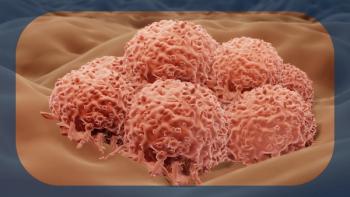
A Yale study found that open-source AI tools outperformed traditional, visual methods for measuring the abundance of melanoma biomarkers.

In patients with HPV16-positive HNSCC, CUE-101 plus pembrolizumab generated 2 complete responses and a 12-month overall survival rate of 88%.

SH-110 received orphan drug designation from the FDA for the treatment of patients with glioma.
Dive into each of the oncology-related CRLs that were recently released by the FDA, as well as relevant subsequent FDA decisions.

Joseph Vento, MD, discusses how WHO updates and molecular profiling are shaping trial design and targeted treatment in non–clear cell RCC.

Oncology experts share topline insights from 19 of the most exciting abstracts from the 2025 ASCO Annual Meeting.

Darren Pan, MD, discusses updates regarding cilta-cel and anito-cel for the treatment of patients with relapsed/refractory multiple myeloma.

Safety and efficacy data for elotuzumab support its further investigation in the treatment of myelofibrosis.
Qian (Janie) Qin, MD, discusses the current arsenal of radioligand therapies in metastatic castration-resistant prostate cancer.