
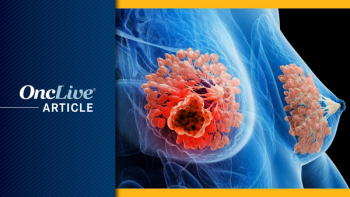
Response to evorpacept plus zanidatamab was predicted by high levels of CD47 expression in patients with HER2-positive metastatic breast cancer.

Your AI-Trained Oncology Knowledge Connection!
Response to evorpacept plus zanidatamab was predicted by high levels of CD47 expression in patients with HER2-positive metastatic breast cancer.

Rachna T. Shroff, MD, MS, FASCO, discusses how this “sea change” has coincided with evolving considerations for frontline selection in pancreatic cancer.
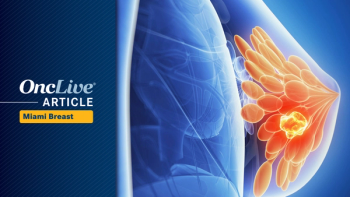
Giuseppe Curigliano, MD, PhD, discusses the challenges of treatment sequencing in HER2-positive breast cancer with all the options currently available.
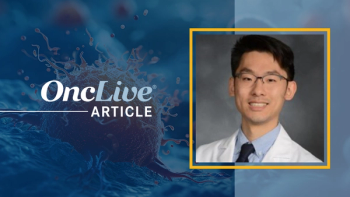
PD-L1 expression may signal worse outcomes with frontline osimertinib in EGFR-mutant metastatic NSCLC, highlighting potential prognostic value.
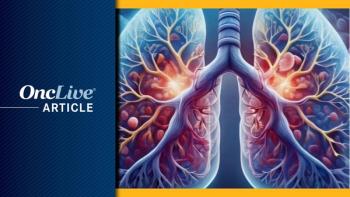
The FDA has issued a CRL for retifanlimab plus chemotherapy in metastatic NSCLC citing compliance issues at a third-party facility.
Andrew Hyland, PhD, of Roswell Park Comprehensive Cancer Center, received the 2026 John Slade Award from the Society for Research on Nicotine and Tobacco.

Vishal A. Patel, MD, FAAD, FACMS, explains how the availability of neoadjuvant and adjuvant immunotherapy is reshaping treatment decisions in CSCC.

The FDA indications for tazemetostat in relapsed/refractory follicular lymphoma and epithelioid sarcoma are being voluntarily withdrawn.
The EC approved an indication extension for niraparib and abiraterone acetate dual-action tablets plus prednisone/prednisolone with ADT in BRCA1/2-mutated mHSPC.

The EMA has received a Type II variation application seeking the approval of teclistamab for relapsed/refractory multiple myeloma after 1 line of therapy.
Data from China showed relma-cel yielded durable responses in patients with relapsed/refractory mantle cell lymphoma.
Will the FDA approve T-DXd for HER2-positve early breast cancer with residual disease after HER2-targeted neoadjuvant therapy?
Continuing treatment with zenocutuzumab beyond disease progression was effective and safe in patients with advanced NRG1+ NSCLC.

Kanwal P.S. Raghav, MD, MBBS, discusses a phase 2 study evaluating the MET-directed ADC Temab-A vs SOC active surveillance in postadjuvant, ctDNA-positive CRC.
Mezigdomide plus carfilzomib and dexamethasone improved progression-free survival in relapsed/refractory multiple myeloma.
Giredestrant plus palbociclib did not yield a statistically significant PFS improvement in ER-positive/HER2-negative locally advanced or metastatic breast cancer.
The FDA has received a resubmitted sBLA for nogapendekin alfa inbakicept in BCG-unresponsive NMIBC with papillary-only tumors.

Peter WT Pisters, MD, received the Charles M. Balch, MD, Distinguished Service Award at the 2026 Society of Surgical Oncology Annual Meeting

Jasleen Pannu, MBBS, explains how interventional pulmonologists guide timely molecular testing and treatment through lung cancer diagnosis, staging, and tissue acquisition.
Findings presented at the Miami Breast Cancer Conference support using T-DXd across a wide range of real-world patients in community cancer settings.

The top 5 OncLive TV videos of the week cover insights in mantle cell lymphoma, breast cancer, bladder cancer, head and neck cancer, and pancreatic cancer.

The FDA approved a teclistamab combination in relapsed/refractory myeloma, Pylarify TruVu for PSMA-PET imaging in prostate cancer, and more.

Zovegalisib plus fulvestrant drove responses in HR-positive, HER2-negative, PIK3CA-mutant advanced breast cancer
Priyanka Sharma, MD, discusses potential neoadjuvant de-escalation strategies in HER2-positive breast cancer.
The FDA has cleared Pylarify TruVu injection, a new formulation of its F 18 PSMA imaging agent for prostate cancer.
W. Fraser Symmans, MD, discusses data on the current state of AI-driven digital pathology in HR+ breast cancer.
Dato-DXd plus durvalumab showed promising efficacy in locally advanced or metastatic triple-negative breast cancer.
Heather A. Parsons, MD, MPH, shares growing evidence for the prognostic value of circulating tumor DNA in early-stage breast cancer.

Did you catch all of this week's top oncology news? Test your knowledge with OncLive's Weekly News Quiz.
Ultra-hypofractionted radiotherapy yielded responses in locally advanced breast cancer.