
Precision medicine has arrived in all stages of prostate cancer care and recommendations for optimal testing and how best to leverage the results to inform clinical decisions continue to rapidly evolve.
Precision medicine has arrived in all stages of prostate cancer care and recommendations for optimal testing and how best to leverage the results to inform clinical decisions continue to rapidly evolve.
Although the formal process of investigating a job takes time and effort, the reality is that you started interviewing for your first job on the first day of your fellowship.

Lisa M. Carey, MD, ScM, FASCO, discusses upcoming treatments that could impact standard-of-care practices and the continually evolving role of antibody-drug conjugates role in the breast cancer treatment paradigm.

press release
IU School of Medicine alumnus Kip E. Virts, MD, has made an $8 million estate gift to support bile duct cancer research at Indiana University Melvin and Bren Simon Comprehensive Cancer Center.

The Center for Drug Evaluation of the China National Medical Products Administration has accepted the biologics license application for enfortumab vedotin for the treatment of patients with locally advanced or metastatic urothelial cancer who received prior treatment with a PD-1/L1 inhibitor and platinum-based chemotherapy.

First-line treatment with the combination of pembrolizumab and chemotherapy generated a statistically significant and clinically meaningful improvement in overall survival compared with chemotherapy alone in patients with unresectable advanced or metastatic malignant pleural mesothelioma.
Given the current lack of positive phase 3 immunotherapy trials for glioblastoma, a misconception held by oncologists and neuro-oncologists is that immunotherapy has no place in this malignancy.

The combination of cabozantinib and atezolizumab elicited responses in patients with non–clear cell renal cell carcinoma, according to extended follow-up data from the phase 1b COSMIC-021 trial.

The FDA’s Oncologic Drugs Advisory Committee voted 11 to 2 that data from the phase 3 POLARIX trial support a favorable benefit-risk profile for polatuzumab vedotin-piiq in patients with previously untreated large B-cell lymphoma, including diffuse large B-cell lymphoma not otherwise specified.

Jubilee Brown, MD, discusses future considerations for using minimally invasive surgery and PARP inhibitors in ovarian cancer, how immunotherapies have fulfilled an unmet need in cervical cancer, and the importance of leveraging molecular profiling to determine personalized therapeutic strategies in endometrial cancer.
Durvalumab plus neoadjuvant chemotherapy followed by surgery and adjuvant single-agent durvalumab significantly improved event-free survival vs neoadjuvant chemotherapy and surgery alone in patients with resectable stage IIA-IIIB non–small cell lung cancer.

Treatment with ruxolitinib impaired antibody responses to complete vaccination with the BNT162b2 SARS-CoV-2 vaccine in patients with myelofibrosis or polycythemia vera.

Press Release
A recently published study in the New England Journal of Medicine provides further data to support that certain female patients over age 65 can achieve positive outcomes without postoperative radiation.

Osimertinib produced a statistically significant and clinically meaningful improvement in overall survival compared with placebo as adjuvant treatment for patients with stage IB, II, or IIIA, EGFR-mutated non–small cell lung cancer after complete tumor resection with curative intent.
Despite incremental advances in the treatment landscape of metastatic colorectal cancer, patients with the disease still face a poor prognosis.
The progression-free survival benefit associated with the combination of nivolumab plus cabozantinib compared with sunitinib was largely independent of PD-L1 and c-MET status in previously untreated patients with advanced or metastatic renal cell carcinoma.
The FDA has granted a fast track designation to the novel aryl hydrocarbon receptor antagonist IK-175 in combination with nivolumab for the treatment of patients with advanced urothelial carcinoma who have progressed on or within 3 months of receiving the last dose of checkpoint inhibitors.

Susan M. Domchek, MD, highlights key points related to her presentation on germline testing and breast cancer treatment.

Boris A. Hadaschik, MD, discusses results from a post-hoc analysis of subsequent therapy for patients with nonmetastatic castration-resistant prostate cancer who progressed following treatment with apalutamide.

Treatment with ruxolitinib significantly reduced hematocrit levels and the number of yearly phlebotomies in patients with polycythemia vera, according to findings from a prespecified futility analysis of the phase 2b RuxoBEAT trial.
Press Release
Pancreatic cancer diagnoses are increasing more rapidly than any other cancer type while remaining one of the most deadly cancers.
The FDA’s Office of Therapeutic Products has accepted a resubmission of the biologics license application (BLA) for remestemcel-L for the treatment of pediatric patients with steroid-refractory, acute graft-vs-host-disease.
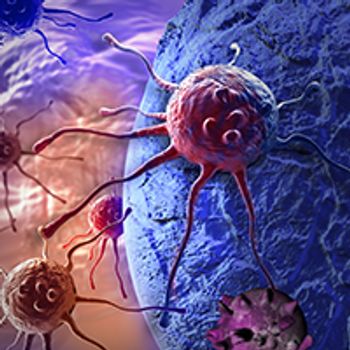
An understanding of BET protein dysregulation, which leads to abnormal expression of oncogenes, has prompted investigators to explore the idea of these proteins as a therapeutic target for cancer.
Eleni Efstathiou, MD, PhD, expands on the updated interim data from the MAGNITUDE trial and sheds light on the utility of PARP inhibitor combinatorial strategies in patients with mCRPC and HRR gene alterations.

Palbociclib plus an aromatase inhibitor improved real-world data for progression-free survival, overall survival, and time to chemotherapy compared with an aromatase inhibitor alone in patients 75 years and older with hormone receptor–positive, HER2-negative advanced/metastatic breast cancer.
As more antibody-drug conjugates emerge and investigators foresee fam-trastuzumab deruxtecan-nxki moving forward in lines of treatment for metastatic disease, the treatment landscape of hormone receptor–positive, HER2-negative breast cancer continues to expand and shift.

Matthew Galsky, MD, discusses the key long-term findings and the clinical implications of the updated data from the phase 3 CheckMate 274 trial of nivolumab for the adjuvant treatment of patients with urothelial carcinoma.
The advent of effective first-generation TKIs has allowed for improvements among patients with Philadelphia chromosome–positive disease, which is traditionally associated with a poor prognosis, as it generally does not respond to conventional chemotherapy options.
The FDA has approved the VENTANA PD-L1 assay for expanded use in patients with advanced non–small cell lung cancer to help identify patients who may be candidates for treatment with cemiplimab.

The European Commission has granted a full marketing authorization to luspatercept-aamt for use in adult patients with anemia associated with non–transfusion-dependent β-thalassemia.