

VERU-111 demonstrated antitumor activity and durable PSA declines in men with metastatic castration-resistant prostate cancer who are resistant to at least 1 novel androgen-blocking agent.
VERU-111 demonstrated antitumor activity and durable PSA declines in men with metastatic castration-resistant prostate cancer who are resistant to at least 1 novel androgen-blocking agent.

Ritu Salani, MD, discusses the evolving role of biomarker development and testing in cervical cancer.

A doublet combining umbralisib and ublituximab improved progression-free survival in patients with chronic lymphocytic leukemia.

Manuel Hidalgo Medina, MD, PhD, discusses some of the research he presented at the 2020 ACCR Virtual Annual Meeting and future areas of exciting efforts being made in pancreatic cancer.

Cemiplimab induced clinically meaningful and durable responses in patients with advanced basal cell carcinoma.

FGFR2 fusions are significantly less common in endemic fluke-associated cholangiocarcinoma compared with non–fluke-associated cholangiocarcinoma, demonstrating that distinct etiologies could affect the molecular landscape of cholangiocarcinoma tumors.

Udai Banerji, discusses the rationale for a phase 1 trial, the potential implications of these data, and future studies in development.
The combination of nivolumab and regorafenib demonstrated promising antitumor activity in patients with gastric and colorectal cancer.

R. Wendel Naumann, MD, discusses the FDA approval of niraparib in ovarian cancer and the impact on the current treatment paradigm.

Scott T. Tagawa, MD, MS, FACP, provides background on radionuclide therapy, sheds light on the key findings from the trial, and discusses future directions with 225Ac-J591 in mCRPC.

The FDA has granted an orphan drug designation to HQP1351 for the treatment of patients with chronic myeloid leukemia.

A reduction in patient-reported symptomatic adverse events was observed with intensity-modulated radiotherapy compared with standard radiotherapy in patients with cervical or endometrial cancer, whereas no difference was observed with regard to clinician-reported AEs.
Nivolumab, when administered approximately 4 weeks prior to surgery in patients with Merkel cell carcinoma, was found to be tolerable and to induce pathological complete responses and radiographic tumor regressions.

Edward B. Garon, MD, MS, discusses the importance of the GEOMETRY mono-1 study in patients with advanced NSCLC who harbor MET exon 14 skipping mutations.
The FDA has approved a new subcutaneous formulation of daratumumab for the treatment of patients with multiple myeloma.
Narjust Duma, MD, shares her experience with being tested for COVID-19 and discusses the lasting implications of the pandemic.

Lloyd B. Gayle, MD, discusses the current treatment of patients with breast implant–associated ALCL and remaining questions that need to be addressed.
A European panel has recommended approval of encorafenib in combination with cetuximab for the treatment of adult patients with BRAF V600E–mutant metastatic colorectal cancer.

Allyson Ocean, MD, discusses the emotional toll COVID-19 has had on patients and practitioners and the importance of self-care and social distancing.

The combination of MRI-targeted and systemic biopsy led to increased detection of all prostate cancers in patients with MRI-visible lesions.
The FDA has granted a priority review designation to CC-486 for the maintenance treatment of adult patients with acute myeloid leukemia.
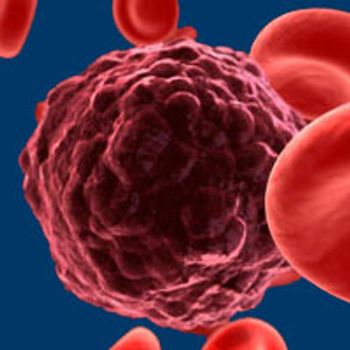
A European panel has recommended approval of luspatercept for the treatment of anemia in patients with myelodysplastic syndromes and beta thalassemia.

A European panel has recommended approval of a subcutaneous formulation of daratumumab for the treatment of patients with multiple myeloma.
Nizar M. Tannir, MD, FACP, discusses the 42-month follow-up results from the CheckMate-214 trial in advanced renal cell carcinoma and provides perspective on other approved combinations in the frontline setting.

Updated data from the pivotal phase 3 FLASH trial showed that SGX301 (synthetic hypericin) continued to demonstrate strong clinical activity in patients with cutaneous T-cell lymphoma.

Kevin Hughes, MD, highlights the need for widespread implementation of genetic testing in breast cancer.

Quantitative microelastography demonstrated increased sensitivity, specificity, and accuracy in detecting positive surgical margins in combination with optimal coherence tomography versus optimal coherence tomography alone in women who received breast-conserving surgery.

Nabil F. Saba, MD, FACP, discusses how the COVID-19 pandemic has impacted treatment in head and neck cancer and the health care system at large.
The FDA has approved niraparib for use as a frontline maintenance treatment for women with advanced ovarian cancer who responded to platinum-based chemotherapy.

Findings from the pivotal phase 3 PROfound trial of olaparib as a treatment for men with metastatic castration-resistant prostate cancer harboring homologous recombination repair (HRR) gene alterations were published in the New England Journal of Medicine.