
Global COVID-19 cases exceed 1.7 million confirmed cases, and a staggering daily growth rate.
Global COVID-19 cases exceed 1.7 million confirmed cases, and a staggering daily growth rate.
The PD-1 inhibitor tislelizumab combined with frontline chemotherapy significantly improved progression-free survival versus chemotherapy alone in patients with nonsquamous non–small cell lung cancer.
Jorge E. Cortes, MD, discusses managing treatment toxicities to optimize therapeutic outcomes in patients with CML and MPNs.
The American Society of Clinical Oncology has been highly proactive in addressing COVID-19­–related issues as the pandemic has created a global healthcare crisis.
Obese men with nonmetastatic prostate cancer have higher cardiovascular disease–related mortality and all-cause mortality, and potentially increased prostate cancer–specific mortality.

Amplicon-based liquid biopsy can detect ALK/ROS1 fusions in TKI-naïve patients with non–small cell lung cancer and allows for the identification of resistance mutations in those treated with TKIs.
Neeraj Agarwal, MD, discusses the implications of the PFS2 data from the TITAN trial in metastatic castration-sensitive prostate cancer.
As the COVID-19 pandemic beats down on major cities like New York, oncologists across the United States are either bracing themselves for what will hopefully be a peak in cases or desperately preparing for when the storm will hit their own health systems.

The phase III ADAURA trial of adjuvant osimertinib in patients with EGFR mutation–positive non–small cell lung cancer has been unblinded due to “overwhelming efficacy.”
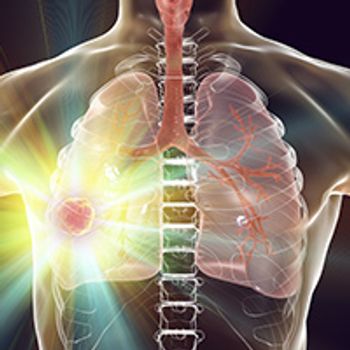
Join top leaders in the lung cancer field as they share their insights on COVID-19 and how the pandemic is poised to have a significant impact on lung cancer treatment and the health care system on Thursday, May 14, 2020 at 8 PM EST.
Shilpa Gupta, MD, discusses the modifications made to patient care in light of the COVID-19 pandemic, the hurdles faced with clinical trials during this time, and some of the ways in which her institution is facing the virus-related challenges head-on.
Jason J. Luke, MD, FACP, discusses the future of T-cell therapies in melanoma, emerging biomarkers, and ongoing research regarding the gut microbiome.

This week we have collaborated with NYU Langone Health to highlight important topics facing oncologists today. Join us on Saturday, May 9, 2020 at 11 AM EDT.

Ragini Kudchadkar, MD, discusses the prognosis of patients with metastatic ocular melanoma and the work being done to define novel approaches in melanoma.
Ivosidenib showed minimal toxicity, substantial 2-hydroxyglutarate reduction, and durable disease control in patients with chondrosarcoma, a rare primary malignancy of the bone.
Suresh S. Ramalingam, MD, FASCO, discusses the adjustments being made in cancer care due to the rapid spread of COVID-19 and treatments under development.
Farrukh Awan, MD, discusses the rationale for combining BTK inhibitors with CD20-directed monoclonal antibodies in CLL, sequencing challenges, and remaining questions in the chronic lymphocytic leukemia.
Scott T. Tagawa, MD, MS, discusses the results of the phase I dose-escalation trial, the advantages of using an alpha emitter and a monoclonal antibody, and the possibility of combining the modality with other classes of agents in prostate cancer.
The China National Medical Products Administration has accepted an application for gilteritinib for the treatment of adult patients with FLT3 mutation–positive acute myeloid leukemia.

This OncLive® webinar will focus on the impact of COVID-19 in patients with breast cancer and the innovative ways in which treatment has evolved during this time. Join us on May 7, 2020 at 8 PM EDT.
Chau T. Dang, MD, discusses recent treatment breakthroughs and emerging agents in HER2-positive breast cancer.
STP705 met the primary efficacy end point in an ongoing phase II study of patients with cutaneous squamous cell carcinoma in situ.
The NCCN has published guidelines for ensuring that patients with cancer, care providers, and staff are kept as safe as possible during the COVID-19 crisis.
An increased proportion of Indigenous American genetic ancestry may be linked with a higher incidence of HER2-positive breast cancer.

Pazopanib plus oral cyclophosphamide is a well-tolerated regimen that has clinically relevant benefit in patients with platinum-resistant or -refractory epithelial ovarian cancer, according to results from a retrospective study published in the Journal of Clinical Oncology.

Tony S. K. Mok, MD, BMSc, FRCPC, FASCO, discusses the impact of the COVID-19 outbreak on Hong Kong and explained how the implementation of early preventive safety measures may have contributed to the low incidence rate.
A supplemental Biologics License Application has been filed with the FDA for avelumab for the frontline maintenance treatment of patients with locally advanced or metastatic urothelial carcinoma.
The FDA has approved the combination of encorafenib and cetuximab for the treatment of adult patients with metastatic colorectal cancer with a BRAF V600E mutation, following prior therapy.
The investigational RAF inhibitor lifirafenib demonstrated antitumor activity in patients with melanoma and other solid tumors.
Michael Wang, MD, discusses the implications of the ZUMA-2 trial for patients with relapsed/refractory mantle cell lymphoma and other targeted therapies on the horizon.