
Sylvester Comprehensive Cancer Center, part of the University of Miami Leonard M. Miller School of Medicine, has received the prestigious NCI designation from the National Cancer Institute.
Sylvester Comprehensive Cancer Center, part of the University of Miami Leonard M. Miller School of Medicine, has received the prestigious NCI designation from the National Cancer Institute.

The European Medicines Agency’s Committee for Medicinal Products for Human Use has granted a positive opinion to the triplet regimen of atezolizumab (Tecentriq), carboplatin, and nab-paclitaxel (Abraxane) for the first-line treatment of patients with advanced, nonsquamous non–small cell lung cancer who do not have EGFR or ALK molecular aberrations.
Financial pledge from Pelotonia represents one of the largest gifts ever to The Ohio State University and honors the 2,265 riders who participated in the inaugural ride in 2009.
PD-L1–positive natural killer cells may prove to be another important immune effector cell for checkpoint inhibitor-based cancer immunotherapy.

Kenneth C. Anderson, MD, discusses available and emerging frontline treatment regimens for patients with newly diagnosed multiple myeloma and evaluated the utility of minimal residual disease in the paradigm.
The European Medicines Agency's Committee for Medicinal Products for Human Use has recommended approval of pembrolizumab (Keytruda) in combination with axitinib (Inlyta) for the frontline treatment of patients with advanced renal cell carcinoma.
The European Medicines Agency’s Committee for Medicinal Products for Human Use has recommended approval of atezolizumab in combination with carboplatin and etoposide for the frontline treatment of patients with extensive-stage small cell lung cancer.

Pembrolizumab in combination with chemotherapy led to a statistically significant improvement in pathological complete response rates compared with placebo plus chemotherapy in the neoadjuvant phase of a neoadjuvant/adjuvant treatment regimen in patients with triple-negative breast cancer, meeting one of the dual primary endpoints of the phase III KEYNOTE-522 trial.
The European Medicines Agency's Committee for Medicinal Products for Human Use has recommended approving elotuzumab (Empliciti) for use in combination with pomalidomide (Pomalyst) and low-dose dexamethasone for the treatment of patients with relapsed/refractory multiple myeloma following 2 or more prior therapies, including lenalidomide (Revlimid) and a proteasome inhibitor.

The European Medicines Agency’s Committee for Medicinal Products for Human Use has recommended approval of larotrectinib for the treatment of adult and pediatric patients with solid tumors that have an NTRK gene fusion without a known acquired resistance mutation, are metastatic or where surgical resection is likely to result in severe morbidity, and have no satisfactory alternative treatments or that have progressed following treatment.

The European Medicines Agency's Committee for Medicinal Products for Human Use has backed approval of TAS-102 for the treatment of adult patients with metastatic gastric cancer, including adenocarcinoma of the gastroesophageal junction, following treatment with at least 2 prior systemic regimens for advanced disease.

Mohammad Razaq, MD, discusses how the detection of driver mutations has changed the way treatment is approached in advanced non–small cell lung cancer.

Ajai Chari, MD, discusses current and emerging research in patients with transplant-eligible and -ineligible multiple myeloma as well as updates in smoldering multiple myeloma.
Erdafitinib induced an objective response rate of 40% in previously treated patients with locally advanced or metastatic urothelial carcinoma, according to findings from the pivotal phase II BLC2001 trial published in the New England Journal of Medicine.

Deepu Madduri, MD, discusses ongoing trials examining CAR T-cell therapy in myeloma and the potential to use it in earlier lines of therapy.
The FDA has granted a priority review to tazemetostat for the treatment of patients with metastatic or locally advanced epithelioid sarcoma not eligible for curative surgery.

The combination of nivolumab (Opdivo) and low-dose ipilimumab (Yervoy) was superior in overall survival compared with chemotherapy for the first-line treatment of patients with non–small cell lung cancer whose tumors express PD-L1 ≥1%, meeting the co-primary endpoint of part 1a of the phase III CheckMate-227 trial.
The CAR T-Cell therapy MB-102 has been granted an Orphan Drug Designation by the FDA, according to Mustang Bio, Inc, the manufacturer of the investigational treatment.
Celestia S. Higano, MD, FACP, shares insight on key trials in prostate cancer.
A new molecular mechanism discovered by UT Southwestern researchers indicates that drugs currently used to treat less than 10 percent of breast cancer patients could have broader effectiveness in treating all cancers where the drugs are used, including ovarian and prostate cancers.

Richard T. Penson, MD, MRCP, discusses novel strategies with PARP inhibitors and the use of biomarkers to create more personalized treatments for patients with platinum-sensitive ovarian cancer.
Elias Jabbour, MD, highlights the evolving armamentarium and next steps in the treatment paradigm for acute myeloid leukemia.
Paul G. Richardson, MD, reviews the results of the phase III ICARIA-MM trial as well as preliminary data regarding melflufen in relapsed/refractory multiple myeloma.

Mollie Meek, MD, highlights key lung cancer screening trials, offered insight into how to successfully implement an effective program, and stressed that collaboration is critical in order to provide the best patient care.
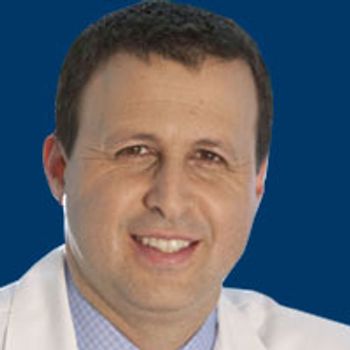
Richard S. Finn, MD, discusses results from the KEYNOTE-240 trial and explained how they are still clinically meaningful for patients with hepatocellular carcinoma.
The FDA has approved PF-05280586, a biosimilar for rituximab, for the treatment of adult patients with CD20-positive B-cell non-Hodgkin lymphoma as a single agent or in combination with chemotherapy, or for patients with CD20-positive chronic lymphocytic leukemia in combination with chemotherapy.
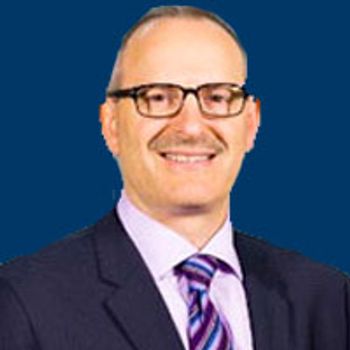
David Polsky, MD, PhD, discusses findings from an analysis in patients with BRAF-mutant, unresectable, metastatic melanoma, as well as the next steps for validating these findings and potentially using circulating tumor DNA to help inform treatment decisions.
The FDA has granted a breakthrough therapy designation to the combination of pembrolizumab and lenvatinib for the first-line treatment of patients with advanced unresectable hepatocellular carcinoma that is not amenable to locoregional therapy.
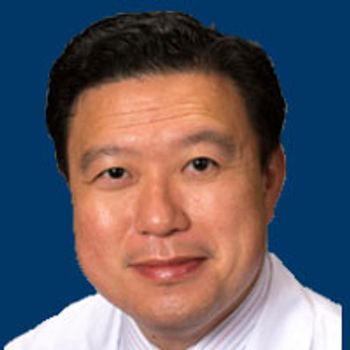
Stephen V. Liu, MD, discusses the impact of immunotherapy in the first-, second-, and third-line settings of small cell lung cancer, as well as novel agents and targets on the horizon.
The FDA has updated the label for durvalumab for patients with unresectable, stage III non–small cell lung cancer whose disease has not progressed following concurrent platinum-based chemoradiation to include overall survival data from the phase III PACIFIC trial.