
COTA, Inc., a leading precision medicine technology company, has signed a 2-year Research Collaboration Agreement with the FDA’s Information Exchange and Data Transformation program.
COTA, Inc., a leading precision medicine technology company, has signed a 2-year Research Collaboration Agreement with the FDA’s Information Exchange and Data Transformation program.

The FDA has granted copanlisib (Aliqopa) a breakthrough therapy designation for the treatment of adult patients with relapsed marginal zone lymphoma who have received at least 2 prior therapies.

Corey J. Langer, MD, highlights how precision medicine has emerged in the treatment of patients with non–small cell lung cancer via targeted therapies and checkpoint inhibitors.

The FDA approved a supplemental new drug application to update the label for gilteritinib to include final analysis data from the phase III ADMIRAL trial, which demonstrated an improvement in overall survival with the FLT3 inhibitor compared with salvage chemotherapy in adult patients with relapsed/refractory FLT3-mutant acute myeloid leukemia.

The FDA has granted a fast track designation to ARV-110, a PROTAC® protein degrader, for use as a treatment of patients with metastatic castration-resistant prostate cancer who have disease progression following ≥2 systemic therapies.

Raajit K. Rampal, MD, PhD, discusses a retrospective analysis of pre-transplant samples from patients with myelofibrosis to determine the value of mutational profiling in predicting outcomes after transplant.
The FDA has granted a fast track designation to lasofoxifene for use as a treatment of female patients with estrogen receptor–positive, HER2-negative metastatic breast cancer who harbor ESR1 mutations.

Banu Arun, MD, discusses how the role of genetic testing is evolving in breast cancer with the development of new targeted agents.

The European Medicines Agency has validated and accepted a marketing authorization application for the trastuzumab biosimilar HD201 (Tuznue), according to the developer Prestige BioPharma.
The FDA has approved the R2 regimen of lenalidomide plus rituximab for use in patients with previously treated follicular lymphoma and marginal zone lymphoma.

Gary D. Steinberg, MD, a nationally recognized specialist in the surgical management of bladder cancer, has been named director of the Goldstein Urology Bladder Cancer Program at NYU Langone Health.

Gottfried E. Konecny, MD, shares the known aspects of PARP inhibition in recurrent ovarian cancer.
The FDA has approved the PI3K inhibitor alpelisib (Piqray) for the treatment of postmenopausal women, and men, with HR-positive, HER2-negative, PIK3CA-mutated, advanced or metastatic breast cancer following progression on or after an endocrine-based regimen.
The FDA has approved ruxolitinib for the treatment of adult and pediatric patients ≥12 years of age with steroid-refractory acute graft-versus-host disease.

Mark M. Zalupski, MD, sheds light on the current treatment landscape of advanced gastric cancer and the numerous challenges that remain.
The FDA has granted a breakthrough therapy designation to the tumor-infiltrating lymphocyte therapy LN-145 for the treatment of patients with recurrent, metastatic, or persistent cervical cancer with disease progression on or after chemotherapy.

Ernest S. Han, MD, PhD, FACOG, discusses the role of HIPEC in advanced ovarian cancer at the time of interval debulking, as well as anticipated research examining its use at time of primary debulking.

Ann S. LaCasce, MD, MMSc, highlights recent progress made in MCL, exciting approaches under investigation, and provides insight into where future research should focus.
The FDA has approved the NovoTTF-100L System in combination with pemetrexed and platinum-based chemotherapy for the frontline treatment of patients with unresectable, locally advanced or metastatic malignant pleural mesothelioma.

Myung-Ju Ahn, MD, discusses the results from the AURA LM trial and the next steps that need to be taken in order to confirm the efficacy that was seen with the lower dose of osimertinib in patients with EGFR-mutant non–small cell lung cancer with leptomeningeal metastases.

Jacqueline C. Barrientos, MD, MS, highlights emerging agents in the post-ibrutinib landscape and overall next steps for advancing the field of CLL.

Sai-Hong I. Ou, MD, PhD, discusses the status of different mutations in lung cancer and the work being done to bring clinically meaningful treatments to the space.

Geoffrey Oxnard, MD, discusses testing error underlying liquid biopsy discordance, steps clinicians can take to optimize liquid biopsy, and where he sees this evolving in the treatment landscape for patients with cancer.
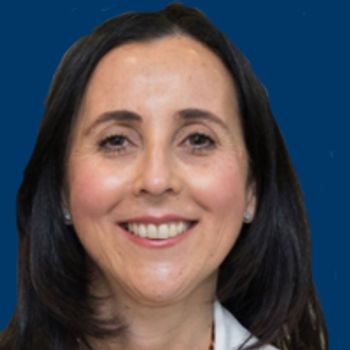
Ana Oaknin, MD, provides insight into the implications of the GARNET trial and the promise of dostarlimab in endometrial cancer.

Arjun V. Balar, MD, highlights the KEYNOTE-057 study findings and provided insight into the role of immunotherapy in bladder cancer.
Sai-Hong I. Ou, MD, highlights the conveniences of liquid biopsies relative to tissue biopsies, as well as current drawbacks to their use in detecting targetable alterations in lung cancer.

The use of immunotherapy in cancer was solidified by the ample activity seen in patients with melanoma.

Gazala N. Khan, MD, highlights the recent headway made in hepatocellular carcinoma and discusses the remaining challenges.
The University of Texas MD Anderson Cancer Center named David Jaffray, PhD, as its first-ever chief technology and digital officer.

Lyudmila A. Bazhenova, MD, discusses the phase III PACIFIC trial and clinical scenarios that warrant further investigation in the field of stage III non–small cell lung cancer.