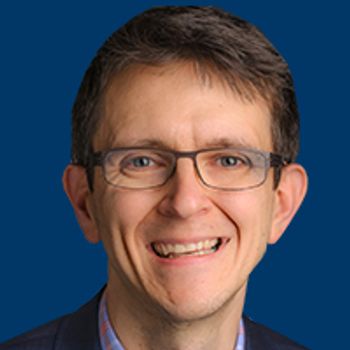
Naveen Pemmaraju, MD, discusses SL-401 and the future of treatment for patients with blastic plasmacytoid dendritic cell neoplasm.

Your AI-Trained Oncology Knowledge Connection!


Naveen Pemmaraju, MD, discusses SL-401 and the future of treatment for patients with blastic plasmacytoid dendritic cell neoplasm.

Jose M. Pacheco, MD, discusses the preferred therapeutic strategies for treating patients with NSCLC whose tumors harbor genetic alterations in EGFR, ALK, and ROS1.

David O'Malley, MD, discusses the emerging combination of mirvetuximab soravtansine plus bevacizumab and the evolving treatment landscape in ovarian cancer.

Alexander E. Drilon, MD, discusses the data with LOXO-292 thus far and the promise for this agent in patients with RET alterations.

Stephanie L. Graff, MD, discusses the current and evolving landscape of breast oncology and what this means for patients.

James Larner, MD, discusses the process by which radiation interacts with the immune system and how physicians are working to improve treatment responses for patients with non–small cell lung cancer.

Jodie Barr, DO, discusses the evolution of treatment of patients with neuroendocrine tumors and the need for biomarkers.

Apar Kishor Ganti, MD, discusses some of the most intriguing abstracts in lung cancer recently presented at medical meetings.

Suman Kambhampati, MD, discusses the impact of next-generation sequencing on treatment selection, updates in the inhibition of BCL-2, IDH1/2, and FLT3-ITD, and new agents on the horizon for the treatment of patients with acute myeloid leukemia.

Sixty percent of adult survivors of pediatric CNS tumors do not achieve full functional and social independence, according to results from a study conducted by researchers at St. Jude Children’s Research Hospital and the University of Tennessee Health Science Center.

Alexander R. Menter, MD, discusses treatment advances in early-stage non–small cell lung cancer (NSCLC).

Kevin Kalinsky, MD, discusses the current treatment landscape of metastatic HER2-positive breast cancer, the potential for immunotherapy, and what is on the horizon for patients in this population who develop brain metastases.

James I. Geller, MD, describes the ongoing work in pediatric patients with rare rhabdoid tumors.

Debu Tripathy, MD, discusses the evolution of treatment of patients with metastatic HR-positive breast cancer.

The FDA has granted a priority review designation to a biologics license application for SL-401 (tagraxofusp, Elzonris) for the treatment of patients with blastic plasmacytoid dendritic cell neoplasm.

Kristopher R. Bosse, MD, discusses how D3-GPC2-PBD could impact pediatric neuroblastoma.

Brad Kahl, MD, discusses the exciting new advancements on the horizon for the treatment of patients with mantle cell lymphoma.

Susan Halabi, PhD, discusses the unexpected results of a survival disparity analysis of African-American and Caucasian patients with metastatic castration-resistant prostate cancer.

Daniel J. George, MD, discusses an analysis of RCC patients in the S-TRAC trial with the highest risk of recurrence, and potential prognostic factors of DFS that emerged from the study.

Tony Mok, MD, discusses the promise of dacomitinib for the frontline treatment of patients with EGFR-mutant NSCLC.

Abemaciclib (Verzenio) has emerged as a promising agent for patients with hormone receptor-positive, HER2-negative metastatic breast cancer, according to Lowell L. Hart, MD.

Arlene O. Siefker-Radtke, MD, discusses the promise of erdafitinib in patients with urothelial carcinoma.

Andre Goy, MD, shares insight on the new array of treatment options for mantle cell lymphoma and how to properly implement them.

Rashmi K. Murthy, MD, discusses selecting therapy for patients with HER2-positive breast cancer in the curative setting.

Peter Borchmann MD, sheds light on the updated JULIET data and how tisagenlecleucel fits into the paradigm of diffuse large B-cell lymphoma.

Susan M. O'Brien, MD, discusses some of the latest intriguing data in the treatment of chronic lymphocytic leukemia and what this means for physicians and patients.

The PD-L1 immunohistochemistry 22C3 pharmDx can be an aid in identifying patients with non–small cell lung cancer and gastrointestinal cancers who are eligible for pembrolizumab (Keytruda) monotherapy.

Robert M. Jotte, MD, PhD, addresses the underutilization of lung cancer screening in the United States and the importance of multidisciplinary management in improving patient outcomes.

Wendy A. Woodward, MD, PhD, highlights encouraging advances and ongoing developments with radiotherapy in breast cancer.

Dara L. Aisner, MD, PhD, discusses the rapidly progressing field of molecular profiling, the importance of understanding assay results, and how they translate to patient care in lung cancer.