

Kimberly L. Blackwell, MD, discusses novel agents and other recent advancements in the treatment paradigm of HER2-positive breast cancer.
Kimberly L. Blackwell, MD, discusses novel agents and other recent advancements in the treatment paradigm of HER2-positive breast cancer.
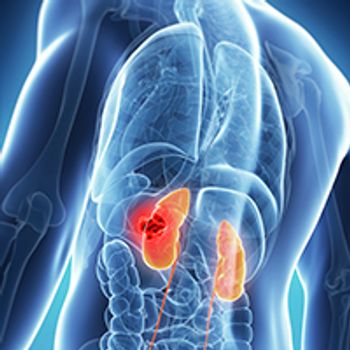
Kerstin Junker, MD, PhD, discusses the need to identify prognostic biomarkers for patients with RCC.

William K. Oh, MD, discusses treatment with abiraterone versus docetaxel in patients with prostate cancer, other remaining questions in the field, and what role immunotherapy is poised to play.

Denosumab was noninferior to zoledronic acid in preventing skeletal-related event in patients with newly diagnosed multiple myeloma.

Susan O’Brien, MD, discusses the impact that has been seen with ibrutinib following the long-term follow-up of the RESONATE studies in chronic lymphocytic leukemia.

Thomas Powles MBBS, MRCP, MD, discusses the findings from the CheckMate-214 trial, as well as continuing studies in immunotherapy and targeted therapy in kidney cancer.
Christopher Sweeney, MBBS, discusses the role of abiraterone for patients with hormone-sensitive prostate cancer, and what physicians should consider when choosing between abiraterone and docetaxel.

The FDA has granted a priority review to a new drug application for lorlatinib for use in patients with ALK-positive metastatic non–small cell lung cancer who have progressed on 1 or more ALK TKIs.

Antitumor activity of the combination of axitinib (Inlyta) and pembrolizumab (Keytruda) is superior to that expected from axitinib or PD-1/PD-L1 pathway inhibitor monotherapy in treatment-naïve patients with advanced renal cell carcinoma.

Cabozantinib (Cabometyx) improved progression-free survival as initial systemic therapy across subgroups of patients with intermediate- and poor-risk advanced RCC enrolled in the randomized phase II CABOSUN trial.

Thomas Eldridge Stinchcombe, MD, recaps recent data with immunotherapy as a single agent and in combination in NSCLC and what challenges the field is facing in 2018.

Mark E. Hatley, MD, discusses the research of endothelial progenitor cells in pediatric patients with rhabdomyosarcoma and how it can lead to thorough analyses of the tumor cells.

With the advent of the combination of dabrafenib (Tafinlar) plus trametinib (Mekinist) in melanoma physicians are no longer using BRAF inhibitors alone, but rather in combination with MEK inhibitors due to the improved efficacy.
Michael J. Overman, MD, discusses updated findings from the single-agent nivolumab CheckMate-142 cohort and combination data for nivolumab/ipilimumab from the pivotal trial.

Cristina Gasparetto, MD, discusses selinexor in combination with daratumumab and dexamethasone in patients with relapsed/refractory myeloma.

Alpelisib (BYL719) induced a disease control rate of 58.2% and stable disease rate of 52.2% in patients with advanced solid tumors.

The FDA has approved abiraterone acetate in combination with prednisone and androgen deprivation therapy for high-risk patients with metastatic hormone-naïve prostate cancer or newly-diagnosed metastatic hormone-sensitive prostate cancer.

John Richter, MD, discusses the findings form the self-reported symptom and psychological survey in patients with multiple myeloma.

Jennifer A. Chan, MD, discusses the significance of the phase II results of cabozantinib in patients with carcinoid tumors and pancreatic NETs.

Miguel Perales, MD, discusses the impact of the FDA approval of letermovir for patients with CMV prophylaxis following transplantation.

A new drug application has been submitted to the FDA for duvelisib for a full approval for relapsed/refractory chronic lymphocytic leukemia/small lymphocytic lymphoma and an accelerated approval in relapsed/refractory follicular lymphoma.

Venetoclax (Venclexta) in combination with a hypomethylating agent induced complete remissions in 61% of patients aged 65 years or older with previously untreated acute myeloid leukemia.

William C. Huang, MD, discusses the transition from open cystectomy to minimally invasive robotic-assisted surgery in the management of muscle-invasive bladder cancer.

Selective bladder preservation has been suggested as a potential alternative to cystectomy in patients with bladder cancer who have a transitional cell carcinoma pathology.
Adding pomalidomide to the combination of bortezomib and low-dose dexamethasone led to a significant improvement in progression-free survival in patients with relapsed/refractory myeloma with prior exposure to lenalidomide.

Nearly 80% of patients assigned to blinatumomab for minimal residual disease (MRD)–positive acute lymphoblastic leukemia in hematologic complete remission achieved complete MRD response.

Matthew Kulke, MD, discusses the evolving treatment paradigm for patients with neuroendocrine tumors.

Treatment with encorafenib and binimetinib improved survival versus single-agent vemurafenib (Zelboraf) in patients with BRAF-mutant advanced, unresectable or metastatic melanoma.

Enrico Tiacci, MD, discusses the high potential with the combination of vemurafenib and rituximab in relapsed/refractory patients with hairy cell leukemia.

The combination of nivolumab and ipilimumab improved progression-free survival compared with chemotherapy in treatment-naïve patients with high tumor mutation burden non–small cell lung cancer.