
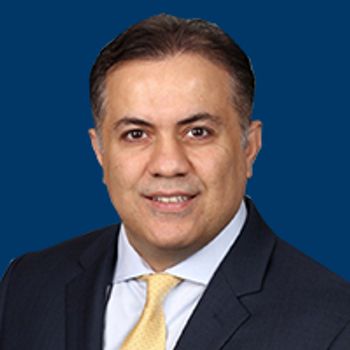
Rahmi Oklu, MD, PhD, discusses various approaches physicians use to treat patients who have CRC with liver metastases.
Rahmi Oklu, MD, PhD, discusses various approaches physicians use to treat patients who have CRC with liver metastases.

Lewis R. Roberts, MB, ChB, PhD, spoke on the current state of hepatocellular carcinoma.

Hans J. Hammers, MD, PhD, discusses early promising data for HyperAcute Renal immunotherapy in renal cell carcinoma and the overall potential for vaccines in the field.

Juno therapeutics has shifted its focus toward the development of JCAR017 for relapsed/refractory diffuse large B-cell lymphoma after a series of toxicity-related setbacks culminated in the need to halt the development of JCAR015.

The University of Pennsylvania took a multidisciplinary team to Botswana to implement an approach to bring treatment to patients with cervical cancer in a more efficient and conducive way.

Daniel H. Ahn, DO, discusses updates in the gastric cancer landscape, biomarker developments, and agents emerging in the pipeline.

Treatment with blinatumomab (Blincyto) led to a median overall survival of 7.7 months versus 4 months with standard chemotherapy in patients with Philadelphia chromosome-negative relapsed or refractory B-cell precursor acute lymphoblastic leukemia, according to results from the phase III TOWER study published in The New England Journal of Medicine.

Adding pertuzumab (Perjeta) to trastuzumab (Herceptin) and chemotherapy reduced the risk of recurrence of invasive disease or death in patients with HER2-positive early breast cancer, according to findings from the phase III APHINITY study.

Single-agent ibrutinib induced a response rate of 90% at a median follow-up of 18.1 months in rituximab-refractory patients with Waldenstrom macroglobulinemia, according to results from an open-label substudy of the ongoing phase III iNNOVATE trial published in The Lancet Oncology.

Jennifer Brown, MD, PhD, discusses novel agents and the future treatment landscape of chronic lymphocytic leukemia.

Axel Grothey, MD, discusses frontline therapy and maintenance strategies for patients with metastatic colorectal cancer.

The FDA has granted a priority review to a new drug application for enasidenib as a treatment for patients with relapsed or refractory IDH2-mutated acute myeloid leukemia.
Carfilzomib (Kyprolis) plus dexamethasone improved overall survival by 21% versus dexamethasone plus bortezomib (Velcade) in patients with relapsed or refractory multiple myeloma, according to findings from the phase III ENDEAVOR trial.

The FDA has approved telotristat ethyl (Xermelo) for use in combination with somatostatin analog (SSA) as a treatment for carcinoid syndrome diarrhea in patients with metastatic neuroendocrine tumors that cannot be adequately controlled by SSA therapy alone.

Treatment with axicabtagene ciloleucel demonstrated an objective response rate of 82% and a complete response rate of 54% for patients with aggressive non-Hodgkin lymphoma.

The FDA has granted a priority review to a biologics license application for avelumab for the treatment of patients with locally advanced or metastatic urothelial carcinoma whose disease has progressed after platinum-based therapy.

Samuel Swisher-McClure, MD, discusses the results of a recent retrospective, observational cohort study that examined use and survival outcomes of adjuvant chemoradiotherapy in patients with resected locally advanced head and neck cancer.

Michael J. Morris, MD, discusses a phase I/II trial in which the combination of radium-223 (Xofigo) and docetaxel had a greater effect than docetaxel alone on bone biomarkers in patients with bone-metastatic castration-resistant prostate cancer.

Carey Anders, MD, discusses available and emerging treatment options for patients with breast cancer that has metastasized to the brain.

William K. Oh, MD, discusses the continued use of chemotherapy in patients with metastatic castration-resistant prostate cancer.

The number of positive lymph nodes is an appropriate selection factor in deciding adjuvant chemoradiotherapy use in some patients with locally advanced head and neck cancer.

The EMA’s Committee for Medicinal Products for Human Use (CHMP) has recommended approval of oral rolapitant (Varuby; Varubi in US) for the prevention of delayed nausea and vomiting associated with highly and moderately emetogenic cancer chemotherapy.

Ann H. Klopp, MD, PhD, discusses a phase III study highlighting the benefit of using intensity-modulated radiation therapy in gynecologic cancers and remaining challenges with radiation therapy in this setting.

Andrea Apolo, MD, discusses positive early trials exploring various regimens of nivolumab (Opdivo), ipilimumab (Yervoy), and avelumab in bladder cancer.

Researchers hope the acquired ibrutinib resistance mutations BTK and PLCG2 can be used as biomarkers for early intervention opportunities in patients with chronic lymphocytic leukemia.

The European Commission has approved alectinib (Alecensa) as a treatment for patients with metastatic ALK-positive non–small cell lung cancer following progression on crizotinib (Xalkori).

The EMA’s Committee for Medicinal Products for Human Use has recommended approval of daratumumab (Darzalex) in combination with lenalidomide (Revlimid) and dexamethasone or bortezomib (Velcade) and dexamethasone for patients with relapsed multiple myeloma following at least 1 prior therapy.
The EMA’s Committee for Medicinal Products for Human Use has recommended approval of the combination of dabrafenib (Tafinlar) and trametinib (Mekinist) as a treatment for patients with advanced or metastatic BRAF V600E-mutant non-small cell lung cancer.

A new study has provided yet more evidence that survivors of endometrial cancer should be closely monitored for cardiovascular disease.

Treatment with pembrolizumab could elicit long-term survival rates of 21% to 25% for previously-treated patients with PD-L1–positive non–small cell lung cancer compared with 3% to 4% for docetaxel.