

CHM CDH17 has received fast track designation from the FDA for the treatment of patients with gastroenteropancreatic neuroendocrine tumors.
CHM CDH17 has received fast track designation from the FDA for the treatment of patients with gastroenteropancreatic neuroendocrine tumors.

The EBMT have developed a machine learning model designed to identify and stratify transplant risk for patients with myelofibrosis.

Obrixtamig combined with topotecan demonstrated favorable safety and early efficacy in relapsed/refractory SCLC.
The FDA granted fast track designation to RAD101 for imaging of cerebral metastases from various solid tumors, including leptomeningeal metastases.
The FDA has approved a tablet formulation of zanubrutinib for use in all 5 approved indications of the capsule formulation.

Olaparib plus temozolomide was not superior to pazopanib or trabectedin for the treatment of patients with advanced uterine leiomyosarcoma.
Alicia Morgans, MD, MPH, discusses findings from a QOL analysis of the ARANOTE trial, which evaluated darolutamide plus ADT in patients with mHSPC.

The Mayo Clinic's new facility will house the first carbon ion therapy program in the Western Hemisphere.
The FDA has approved taletrectinib for use in patients with ROS1-positive advanced non–small cell lung cancer.

China’s Center for Drug Evaluation granted breakthrough therapy designation to sacituzumab tirumotecan for nonsquamous non–small cell lung cancer.

Data from the phase 1 CLOVER-2 trial demonstrated the safety and activity of iopofosine I-131 in relapsed/refractory pediatric high-grade glioma.

Jason J. Luke, MD, FACP, discusses data for the PRAME-targeted TCR T-cell therapy IMA203 in advanced or metastatic melanoma.

Liquid biopsy approaches aid in precision therapy selection for patients with breast cancer in a noninvasive manner.

Hope S. Rugo, MD, FASCO, discusses key considerations and unanswered questions arising from the DESTINY-Breast09 trial in HER2-positive breast cancer.
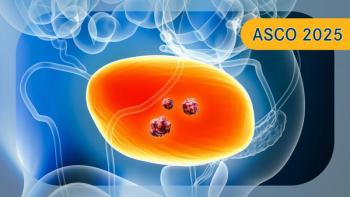
First-line enfortumab vedotin plus pembrolizumab continued to demonstrate efficacy across subgroups of locally advanced or metastatic urothelial carcinoma.

Sarah Sammons, MD, discusses data from the phase 1 ReDiscover trial of RLY-2608 plus fulvestrant in HR-positive, HER2-negative breast cancer.

Sara M. Tolaney, MD, MPH, discusses data showing that T-DXd plus pertuzumab improved PFS vs SOC THP in first-line HER2-positive breast cancer.
Clinical trial tests new treatment approach, offers hope for personalized therapies.

The Center for Drug Evaluation of the Chinese NMPA has accepted the marketing authorization application for pimicotinib in patients with TGCT.

The FDA granted priority review to the sNDA seeking the approval of the first-line maintenance combination of lurbinectedin and atezolizumab for ES-SCLC.
Rana R. McKay, MD, discusses data from the COMRADE trial, which showed that olaparib plus radium-223 improved rPFS in men with mCRPC with bone metastases.
A deep dive into the phase 3b ABLE-32 trial reveals the need for more treatments for patients with intermediate-risk NMIBC.
Elacestrant-based combinations were safe and displayed preliminary efficacy in ER-positive/HER2-negative advanced breast cancer.
UGN-102 showed strong responses in patients with recurrent, intermediate-risk, low-grade non–muscle-invasive bladder cancer, per the phase 3 ENVISION trial.
The FDA granted fast track designation to PHST001 for patients with ovarian cancer.

David J. Benjamin, MD, discusses how he uses real-world data to supplement clinical trial results in urothelial carcinoma.

OS Therapies submits a RMAT designation request for OST-HER2 for the treatment of patients with pediatric lung-metastatic osteosarcoma.
The FDA has lifted the partial clinical hold on a phase 3 study assessing IFx-2.0 in advanced Merkel cell carcinoma.

Daneng Li, MD, discusses the IL-27–targeted agent casdozokitug in hepatocellular carcinoma.