

Douglas B. Johnson, MD, MSCI, discusses the importance of Cancer Immunotherapy Awareness Month and the utility of immunotherapy across tumor types.
Douglas B. Johnson, MD, MSCI, discusses the importance of Cancer Immunotherapy Awareness Month and the utility of immunotherapy across tumor types.

Firmonertinib produced durable responses in the first line treatment of patients with non–small cell lung cancer harboring EGFR PACC mutations.

Scientists at Fox Chase Cancer Center have identified a mutation in a common oncogene that may play an important role in colon cancer.

The NMPA of China has accepted the new drug application for satricabtagene autoleucel in pretreated gastric/GEJ cancer.

Gallium Ga-68 gozetotide injection is now indicated for use in PET imaging patient selection for radioligand therapy in the pre-taxane setting for mCRPC.
As the HER2-positive breast cancer landscape continues to evolve, the omission of carboplatin in TCHP could drive significant change.

FLT3-ITD positivity plus mutations in NPM1 and epigenetic regulatory genes led to heightened efficacy of quizartinib plus chemotherapy in newly diagnosed AML.

Alexey Danilov, MD, PhD, highlights the importance of re-evaluating sequencing strategies amid a growing arsenal of targeted therapies in DLBCL.

Selinexor improved PFS, TFST, TSST, and PFS2 in TP53 wild-type advanced/recurrent endometrial cancer.

The EMA’s CHMP has recommended the approval of zanubrutinib tablets for B-cell malignancies.
Andrew Kuykendall, MD, discusses the utility of rusfertide in reducing therapeutic phlebotomy eligibility in patients with polycythemia vera.

Kate Gasparini, PharmD, BCOP, BCPPS, discusses how liquid formulations of oral agents, including imatinib, can aid in the delivery of anticancer agents.

Yale School of Medicine announced the opening of the Yale Biomedical Imaging Institute, uniting imaging, clinical translation, and data science.

The NCCN Clinical Practice Guidelines in Oncology for NSCLC recommend taletrectinib for the treatment of patients with advanced ROS1-positive NSCLC.

Revumenib’s sNDA has received priority review from the FDA for patients with relapsed or refractory NPM1-mutant acute myeloid leukemia.
Alexey Danilov, MD, PhD, shares key developments and areas of debate from the Bridging the Gaps in Leukemia, Lymphoma, and Multiple Myeloma Conference.

Ahmad Tarhini, MD, PhD, discusses key findings from the EA6194 trial and how these data support the continued investigation of vidutolimod in melanoma.

Talha Munir, MBChB, PhD, discusses findings from an Indirect comparative of zanubrutinib vs acalabrutinib plus venetoclax in treatment-naive CLL.

Naomi B. Haas, MD, delves into the KEYNOTE-564 trial and highlights the role of adjuvant pembrolizumab in clear cell renal cell carcinoma.

Robin Jones MD, MBBS, MRCP, discusses the treatment landscape of GIST and how patients can be effectively treated in the community.

R2 followed by R-DHAP led to an ORR of 93.3% in patients with newly diagnosed MCL.
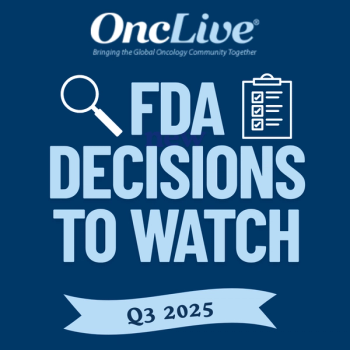
Here is your Q3 2025 preview spotlighting 10 FDA decisions to watch, including upcoming PDUFAs for sunvozertinib, linvoseltamab, vuslimogene oderparepvec, and more.

A clinical trial is testing an extract that could unlock the body’s natural ability to fight cancer.

Serplulimab is now the only anti–PD-1 monoclonal antibody approved by the MHRA for patients with extensive-stage small cell lung cancer in the first line.

THE001 plus regional hyperthermia was safe and led to responses in patients with heavily pretreated soft tissue sarcoma.
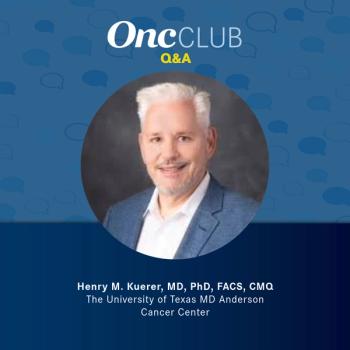
Henry Kuerer, MD, PhD, discusses considerations for the selective omission of surgery in HER2-positive breast cancer or triple-negative breast cancer.

Mirvetuximab soravtansine continues to show efficacy and safety in final analysis of the phase 2 PICCOLO study.

Acalabrutinib plus BR prolonged duration of MRD negativity vs BR alone in previously untreated MCL, supporting the use of MRD as a prognostic biomarker.

Gecacitinib, a dual JAK/ACVR1 inhibitor, showed spleen volume, symptom and anemia improvements in patients with myelofibrosis.

Amit Mehta, MD, discusses the landscape of metastatic urothelial carcinoma, including data updates as well as treatment selection and safety considerations.