
Jeffrey Weber, MD, PhD, a senior member at the Moffitt Cancer Center, discusses the EORTC 18701 study, which compared ipilimumab with placebo for patients with stage III node-positive melanoma.
Jeffrey Weber, MD, PhD, a senior member at the Moffitt Cancer Center, discusses the EORTC 18701 study, which compared ipilimumab with placebo for patients with stage III node-positive melanoma.
Samir Taneja, MD, professor of Urology and Radiology and director of the Division of Urologic Oncology at NYU Langone Medical Center.
Renier Brentjens, MD, PhD, associate professor, chief, Cellular Therapeutics Center, Memorial Sloan-Kettering Cancer Center, talks about the challenges of Chimeric Antigen Receptor (CAR) T-Cell therapies for the treatment of hematologic cancers.
Denise Yardley, MD, senior investigator, breast cancer research, Sarah Cannon Research Institute discusses the phase II FERGI study and how it can be applied to more than just breast cancer.
Harriet Kluger, MD, associate professor of medicine, Yale Cancer Center, talks about the toxicity of nivolumab and ipilimumab for the treatment of patients with advanced melanoma.
Chandra P. Belani, MD, deputy director, Penn State Hershey Cancer Institute, Miriam Beckner Distinguished Professor of Medicine, Penn State Hershey College of Medicine, discusses the benefits of immunotherapy for lung cancer.
Giant of Cancer Care, Vincent T. DeVita, Jr, MD, from the Yale School of Medicine, talks about the 10th Edition of Cancer: Principles and Practice of Oncology, an internationally acclaimed book geared toward practicing oncologists.
Kerin Adelson, MD, Assistant Professor of Medicine, Hematology, and Medical Oncology at the Icahn School of Medicine at Mount Sinai, explains the results of a phase II clinical trial comparing fulvestrant alone with bortezomib plus fulvestrant for the treatment of hormone receptor-positive metastatic breast cancer.
David Rimm MD, PhD, professor of pathology and medicine, director of pathology tissue services, Yale University School of Medicine, explains the benefits of quantitativecfor the measurement of HER2 proteins.

Joan Lunden talks about imaging technology and genetic testing for the early detection of breast cancer with Roy Firestone and Patrick I. Borgen, MD, in advance of her keynote address at the 32nd Miami Breast Cancer Conference.

Jonathan Tward, MD, PhD, Associate Professor of Radiation Oncology at the Huntsman Cancer Institute, discusses abbreviated course androgen-deprivation therapy (ADT) for prostate cancer treatment.
Lawrence Mayer, PhD, president, founder and chief scientific officer of Celator Pharmaceuticals, explains the technology behind CPX-351, a liposomal formulation of cytarabine and daunorubicin. CPX-351 was recently granted Fast Track Designation by the FDA for the treatment of elderly patients with relapsed acute myeloid leukemia (AML).

Joan Lunden discusses the diagnostic approach that led to the early detection of triple-negative breast cancer, which was undetected by mammogram and 3D mammogram but was detected with ultrasound.
Edith A. Perez, MD, the deputy director at large for the Mayo Clinic Cancer Center, discusses the BEACON trial.
Scott Rowley, MD, the Chief of John Theurer Cancer Center's Blood and Marrow Stem Cell Transplantation Division, discusses the challenges of allogeneic stem cell transplant.
A. Keith Stewart, MBChB, from the Mayo Clinic, discusses the safety profile of carfilzomib (Kyprolis) when used in combination with lenalidomide and dexamethasone for patients with relapsed multiple myeloma.
Donna McNamara, MD, Co-Chief of the Gynecologic Oncology Division and Medical Oncologist for the Breast Oncology Division at the John Theurer Cancer Center, talks about the benefits of PARP inhibitors for women with BRCA1 or BRCA2-mutated, platinum-sensitive ovarian cancer.
Kei Muro, MD, of the Aichi Cancer Center Hospital in Nagoya, Japan, discusses updated findings from the KEYNOTE-012 study, which looked at pembrolizumab for the treatment if several types of cancer.
Laura Dawson, MD, Princess Margaret Hospital, University of Toronto, talks about the challenges in treating hepatocellular carcinoma (HCC).

Joseph Alvarnas, MD, the director of Medical Quality at City of Hope National Medical Center, discusses autologous hematopoietic stem cell transplantation (AHCT) for patients with HIV-associated lymphoma.
Andre Goy, MD, MS chairman, director, and chief of the Lymphoma Division at the John Theurer Cancer Center, discusses the impact of Roche's recent acquisition of the molecular testing company Foundation Medicine.
Jedd D. Wolchok, MD, PhD, medical oncologist, Memorial Sloan Kettering Cancer Center, discusses remaining questions regarding immunotherapies for the treatment of melanoma.
No one biomarker is effective for all types of bladder cancer, says Michael Cookson, MD, a professor and chairman of the Department of Urology at the University of Oklahoma College of Medicine.
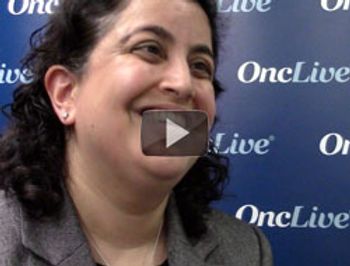
Anjali Advani, MD ,staff physician, Department of Hematologic Oncology and Blood Disorders, Director, Inpatient Leukemia Program, Taussig Cancer Institute, associate professor, Cleveland Clinic Lerner College of Medicine of Case Western Reserve University, compares inotuzumab ozogamicin, a CD22 monoclonal antibody, to blinatumomab, a CD19 bi-specific anti-CD19/CD3 antibody for the treatment of acute lymphoblastic leukemia (ALL).
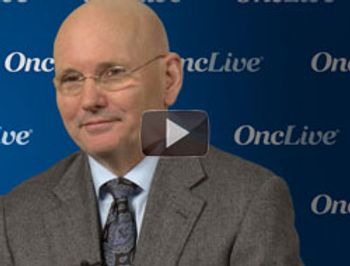
Paul Sieber, MD, principal investigator for clinical trials with Lancaster Urology, talks about the CHAARTED trial, which examines chemohormonal therapy versus androgen ablation for extensive disease in prostate cancer.
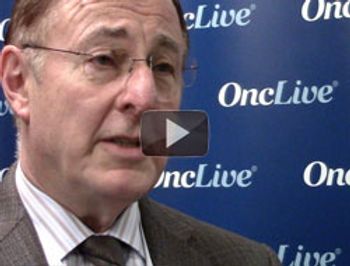
Richard Fisher, MD, president and CEO of Fox Chase Cancer Center, discusses adding bortezomib (Velcade) to the standard R-CHOP regiment (rituximab, cyclophosphamide, doxorubicin hydrochloride, vincristine sulfate, prednisone) for previously untreated mantle cell lymphoma.
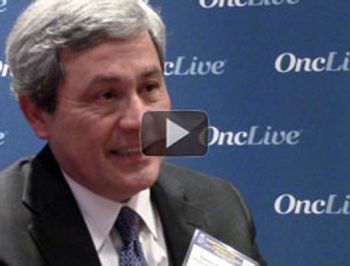
Carlos Arteaga, MD, assistant director, Clinical Research, director, Breast Cancer program, Vanderbilt-Ingram Cancer Center, discusses the PI3K pathway and the role of therapeutic inhibitors in reducing the progression of breast cancer.
Corey Langer, MD, the director of Thoracic Oncology at the University of Pennsylvania, discuses afatinib, which was approved in 2013 for first line EGFR-mutated advanced non-small cell lung cancer.
Gareth Morgan, MD, PhD, the director of the Myeloma Institute at the University of Arkansas, discusses his expectations of multiple myeloma treatment going forward.