

Midhun Malla, MD, discusses specific biomarkers that are crucial for GI cancer management and how to interpret them.
Midhun Malla, MD, discusses specific biomarkers that are crucial for GI cancer management and how to interpret them.
Sara A. Hurvitz, MD, FACP, discusses the mechanism of action of evorpacept and data with the agent in pretreated HER2-positive metastatic breast cancer.
Toni K. Choueiri, MD, discusses safety data from LITESPARK-022 in ccRCC.
Matthew Galsky, MD, discusses data from the phase 3 KEYNOTE-B15/EV-304 study in MIBC.
Shimoli Barot, MD, highlights the role of maintenance palbociclib plus trastuzumab, pertuzumab, and endocrine therapy in HER2-positive breast cancer.
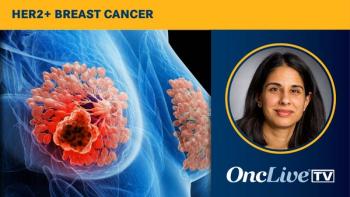
Sara M. Tolaney, MD, MPH, discusses research inspired by an analysis of first-line T-DXd plus pertuzumab in HER2-positive metastatic breast cancer.
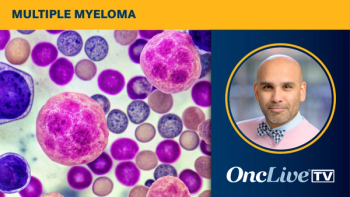
Hamza Hashmi, MD, outlines considerations for identifying patients with early relapsed/refractory multiple myeloma as candidates for CAR T-cell therapy.
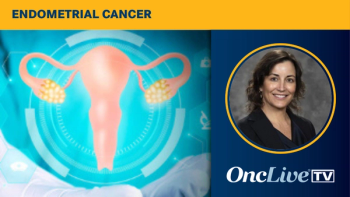
Angeles Alvarez Secord, MD, MHSc, discusses the rationale behind the phase 1/2 BEHOLD-2 trial evaluating mocertatug rezetecan plus dostarlimab in endometrial cancer.
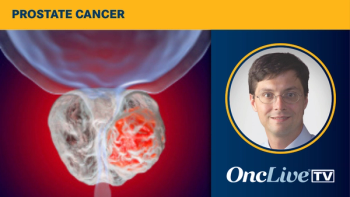
Leonard J. Appleman, MD, PhD, discusses prior data with SYNC-T Therapy SV-102 and the ongoing LEGION-100 study in prostate cancer.
Paolo Tarantino, MD, PhD, notes the emergence of TROP2-directed ADCs in first-line TNBC management and the sequencing questions their arrival raises.
Sara A. Hurvitz, MD, FACP, discusses updated data with a switch to camizestrant upon detecting a ctDNA-emergent ESR1 mutation in metastatic breast cancer.
Paolo Tarantino, MD, PhD, notes the implications of updated safety data with post-neoadjuvant T-DXd in high-risk, HER2-positive early breast cancer.
Xiuning Le, MD, PhD, discusses treatment selection among targeted therapies for HER2-mutant NSCLC.
David Gerber, MD, discusses the evolution of ALK TKIs and the central nervous system toxicity tradeoffs seen with later-generation agents in NSCLC.
Wen Wee Ma, MBBS, discusses the potential advantages of inhaled KB707 and the rationale behind investigating it in non–small cell lung cancer.
Priya Rastogi, MD, discusses a substudy evaluating a whole-exome sequencing, tumor-informed ctDNA MRD assay in TNBC after neoadjuvant chemotherapy.

Amol Akhade, MD, discusses how biosimilars, subcutaneous formulations, and dose optimization each bear on the cost of cancer care.
Amol Akhade, MD, discusses the pharmacologic rationale for reduced-dose checkpoint inhibition and the funding barrier to definitive randomized evidence.
Narjust Florez, MD, discusses a trilingual, multidisciplinary workshop that was held at the 2026 ASCO Annual Meeting.
Amol Akhade, MD, discusses how cost shapes immunotherapy decisions and what standard cost-effectiveness measures miss for individual patients.
Narjust Florez, MD, discusses how the FDA approval of zidesamtinib in locally advanced or metastatic ROS1-positive NSCLC is an example of the fast pace of clinical oncology.
Jay M. Lee, MD, discusses the role of ctDNA in guiding surveillance and treatment escalation decisions in resected NSCLC.
Amy L. Cummings, MD, discusses patient selection for adjuvant immunotherapy in resectable non–small cell lung cancer.
Matthew Galsky, MD, discusses safety data with perioperative enfortumab vedotin plus pembrolizumab in MIBC.
Watch a highlight reel of breast cancer data from ASCO 2026 that experts anticipate will have the biggest impact on the field.
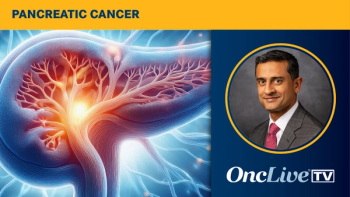
Shubham Pant, MD, MBBS, discusses data for daraxonrasib and its potential impact on pancreatic cancer management.
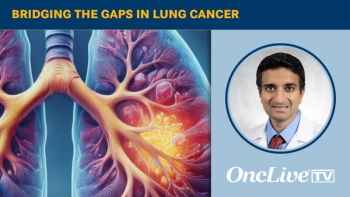
Sandip Patel, MD, discusses key unmet needs and open questions surrounding EGFR-mutant NSCLC that has transformed to SCLC.
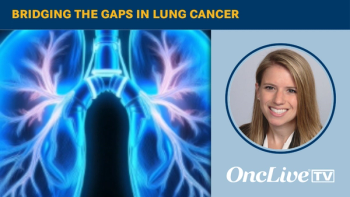
Alissa Cooper, MD, discusses evolving strategies for biomarker-driven patient selection with tarlatamab in small cell lung cancer.
Matthew Galsky, MD, discusses systemic therapy advances in muscle-invasive bladder cancer.
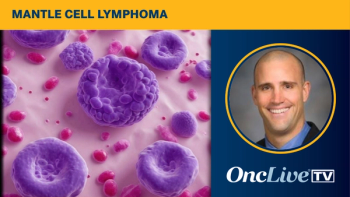
Marc S. Hoffmann, MD, discusses current data for sonrotoclax plus zanubrutinib and upcoming trials for the combination in mantle cell lymphoma.