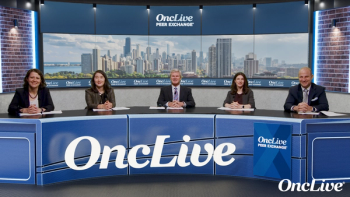
Targeting NSCLC with Precision: Evaluation of the Emerging Role of Antibody-Drug Conjugates
Mark Socinski, MD; Helena A. Yu, MD; Zosia Piotrowska, MD, MHS; Julia Rotow, MD, and Benjamin Levy, MD,discuss the current standard of care, emerging data on novel therapies such as antibody-drug conjugates (ADCs) and clinical trials, patient selection considerations, and practical guidance foroptimizing patient care.
Advertisement
Targeting NSCLC with Precision: Evaluation of the Emerging Role of Antibody-Drug Conjugates
Mark Socinski, MD; Helena A. Yu, MD; Zosia Piotrowska, MD, MHS; Julia Rotow, MD; and Benjamin Levy, MD, provide a concise overview of current first-line treatment options for non-small cell lung cancer (NSCLC), including their approaches for NSCLC with non-actionable mutations and the influence of PD-L1 tumor proportion score status on treatment choices.
Benjamin Levy, MD, leads discussion on the promising potential of antibody-drug conjugates (ADCs) in treating non-small cell lung cancer (NSCLC) with non-actionable mutations, while Helena A. Yu, MD, presents an overview of the EVOKE-02 study, emphasizing key efficacy and safety data that could significantly impact the current treatment landscape.
Benjamin Levy, MD, presents an overview of the TROPION-Lung04 study in the first-line setting, focusing on the toxicity profile and potential impact on clinical practice.
Julia Rotow, MD, explores the rationale, study design, and primary endpoints of the AVANZAR trial, which investigated the combination of datopotamab deruxtecan (Dato-DXd), durvalumab, and carboplatin as a first-line treatment for patients with advanced non-small cell lung cancer lacking actionable mutations, and discusses the patient population most likely to benefit from this drug combination.
The panel examines the characteristics of patients with non-small cell lung cancer (NSCLC) without actionable alterations who might be the best candidates for frontline treatment with either sacituzumab govitecan or datopotamab deruxtecan (Dato-DXd) and identifies the persisting unmet needs for this patient population.
Helena A. Yu, MD, discusses her treatment strategy for patients with EGFR-mutant non-small cell lung cancer (NSCLC), emphasizing current guidelines and standard of care, while Zosia Piotrowska, MD, MHS, examines the key efficacy and safety findings from the FLAURA2 study, which evaluated first-line osimertinib combined with chemotherapy in patients with advanced EGFR-mutant NSCLC.
The panel discusses which patients with EGFR-mutant non-small cell lung cancer (NSCLC) are more likely to receive frontline treatment with either osimertinib monotherapy or the combination of osimertinib and chemotherapy, based on individual patient characteristics and preferences.
Benjamin Levy, MD, initiates a discussion on the rationale behind using amivantamab and lazertinib as a first-line treatment for EGFR-mutant non-small cell lung cancer and reviews the recently presented efficacy and safety data from the MARIPOSA trial.
Helena A. Yu, MD, examines the patient selection criteria for potentially using osimertinib monotherapy, osimertinib plus chemotherapy, or amivantamab combined with lazertinib in the first-line treatment of advanced EGFR-mutant non-small cell lung cancer.
The panel explores promising novel therapies in the treatment landscape, focusing on new or recently presented data at the American Society of Clinical Oncology (ASCO) 2024 annual meeting, and share their insights on the potential impact of these therapies on future clinical practice.
Helena A. Yu, MD, initiates a discussion on the role of HER3 in the development of resistance to EGFR-targeted therapies. She also examines the HERTHENA-Lung01 study and analyzes the emerging data from this trial.
Benjamin Levy, MD, provides an overview of the rationale and study design for the EVOKE-01 trial, which evaluates the efficacy and safety of sacituzumab govitecan in patients with non-small cell lung cancer who have experienced disease progression following treatment with platinum-based chemotherapy and checkpoint inhibitors.
Julia Rotow, MD, highlights and discusses other notable antibody-drug conjugate (ADC) data presented at the American Society of Clinical Oncology (ASCO) 2024 annual meeting, providing insights into the potential impact of these findings on the evolving treatment landscape for non-small cell lung cancer (NSCLC).
Benjamin Levy, MD, compares the common toxicities associated with datopotamab deruxtecan (Dato-DXd), sacituzumab govitecan, and patritumab deruxtecan (HER3-DXd), and shares practical tips for managing these toxicities in the clinical setting to optimize patient care and minimize adverse effects.
The panel examines which patient populations might benefit most from treatment with datopotamab deruxtecan (Dato-DXd), sacituzumab govitecan, and patritumab deruxtecan (HER3-DXd). Additionally, they explore potential sequencing strategies for these antibody-drug conjugates in second-line and later treatment settings.