
Opinion|Videos|June 24, 2024
Role of Antibody-Drug Conjugates in NSCLC Treatment: Insights from EVOKE-02
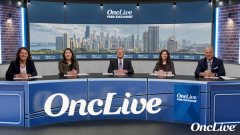
Benjamin Levy, MD, leads discussion on the promising potential of antibody-drug conjugates (ADCs) in treating non-small cell lung cancer (NSCLC) with non-actionable mutations, while Helena A. Yu, MD, presents an overview of the EVOKE-02 study, emphasizing key efficacy and safety data that could significantly impact the current treatment landscape.
Advertisement
Episodes in this series
- Briefly discuss the potential role of ADCs in NSCLC with non-actionable mutations.
- What is the rationale for use of ADCs in this treatment space?
- What characteristics may allow ADCs to be more advantageous in this treatment space over other traditional chemotherapy and targeted agents?
- Which ADCs are most likely to have potential benefit here and why?
- Please review the rationale and study design for EVOKE-02 and discuss key efficacy and safety data and the implications these findings may have on the treatment landscape. (
Garon, et al. J Clin Oncol, 2022 ;Cho, et al. WCLC 2023 ;Cappuzzo et al. WLC 2024. Efficacy results by histology from the EVOKE-2 study ;ASCO 2024 Patel et al. SG + Pembro in 1L mNSCLC with PD-L1 ≥50%: Cohort A of EVOKE-02) - What do data demonstrateregarding the efficacy of SG + pembro in patients with NSCLC and how does response differ by PD-L1 expression?
- Other key takeaways? What implications could these findings have on clinical practice?
- Which patients stand to benefit the greatest from this treatment approach?
Advertisement
Related to this article

Adding intercalated gefitinib to adjuvant chemotherapy improved DFS vs chemotherapy alone in completely resected stage II-IIIB EGFR-mutant NSCLC in a phase 3 trial.
A real-world study found just one-third of patients remained on adjuvant osimertinib at 3 years, with early discontinuation linked to worse disease-free survival.

Primary results from the phase 3 ARTEMIS-008 trial presented at WCLC 2026 showed risvutatug rezetecan reduced the risk of death by 54% and more than doubled PFS.
Tambotatug pelitecan improved survival and confirmed ORR in the phase 3 TAISHAN-302 trial presented at WCLC 2026.

Randomized dose-expansion data from the global phase 1 study establish the recommended phase 3 dose for the EGFR x HER3 bispecific ADC in the IZABRIGHT-Lung01 trial.
Final analysis of the phase 3 IMpower030 trial showed a median EFS of 62.8 months versus 34.9 months with placebo plus chemotherapy in stage IIB to IIIB disease.

First data from the phase 1B/2 BNT324-01 trial pair a PD-L1 and VEGF-A bispecific antibody with a B7H3-directed ADC in patients with SCLC.

Every-3-week and every-4-week tarlatamab regimens produced ORRs of 31% and 27% vs 40% with standard bi-weekly dosing in the phase 2 DeLLphi-309 trial.
Advertisement
Advertisement
Trending on OncLive
1
Tam-Peli Reduces Risk of Death by 54% vs Topotecan in Relapsed SCLC
2
Ris-Rez Extends Median OS to 18.5 Months vs Topotecan in Relapsed SCLC
3
Iza-Bren Elicits 33% ORR, 6.9-Month PFS in Post-Osimertinib EGFR-Mutated NSCLC
4
Early Discontinuation of Adjuvant Osimertinib Doubles Recurrence Risk in EGFR-Mutated NSCLC
5