
An interview with Barry D. Nelkin, PhD, from Johns Hopkins, on his research investigating a promising new target in a KRAS-related pathway, cyclin-dependent kinase 5.
An interview with Barry D. Nelkin, PhD, from Johns Hopkins, on his research investigating a promising new target in a KRAS-related pathway, cyclin-dependent kinase 5.
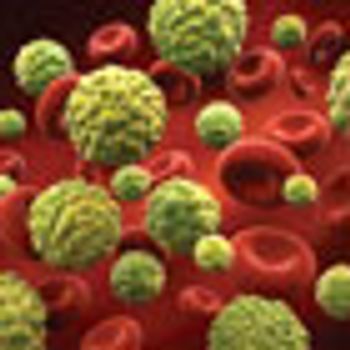
The members of the RAS oncogene family are central cogs in many different cell-signaling pathways, coordinate a variety of important cellular processes, and are highly mutated in a number of different cancers, including several with extremely poor prognosis.
A crop of targeted agents have demonstrated promising results in fighting chronic lymphocytic leukemia (CLL), suggesting that a range of emerging therapies and drug combinations may be more effective and better tolerated than standard chemotherapy

During his undergraduate years at Princeton University, Charles L. Sawyers, MD, studied history. Now, well into his career as a physician and translational scientist, Sawyers is busy making it.

The management of patients with malignant peritoneal surface disease (PSD) commonly known as "carcinomatosis" continues to evolve.

Treatment of stage III non-small cell lung cancer (NSCLC) with chemotherapy, radiation, and surgery has hit a plateau, and the key to improved outcomes will hinge on the testing of targeted therapies in clinical trials with more novel designs and better patient selection, according to a leading researcher.
A recent study determined that it would take 6.7 years on average to enroll enough patients with pancreatic cancer for the trials that opened in 2011-a tall order considering that the 5-year relative survival rate for those diagnosed with pancreatic ductal adenocarcinoma is only 6%.

During the past decade, several oral tyrosine kinase inhibitors targeting the vascular endothelial growth factor have been approved for the first-line treatment of metastatic renal cell carcinoma.

So many new agents for the treatment of men with castration-resistant prostate cancer (CRPC) have been introduced in the past several years that optimal sequencing of therapies remains an unsettled question.

There's no question that the advent of molecularly targeted strategies in anticancer therapy have revolutionized the understanding and practice of oncology, but it also is clear that those gains have not been uniformly realized throughout the range of malignancies.