
In case you missed any, below is a recap of every OncLive On Air episode that aired in May 2024.
In case you missed any, below is a recap of every OncLive On Air episode that aired in May 2024.
Dr Brown discusses the rationale for the RAMP-301 trial of avutometinib plus defactinib in low-grade serous ovarian cancer.
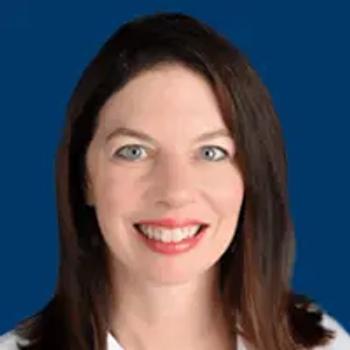
Jubilee Brown, MD, highlights the RAS/MAPK pathway in low-grade serous ovarian cancer and research with avutometinib/defactinib that prompted RAMP 301.

Vaidehi Mujumdar, MD, discusses how awareness initiatives can help address unmet needs in patients with ovarian cancer on World Ovarian Cancer Day.
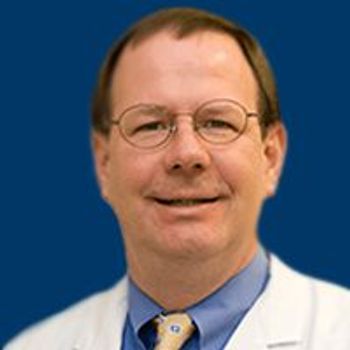
R. Wendel Naumann, MD, highlights endometrial cancer case studies and how they represent changes in this treatment paradigm.
Vaidehi Mujumdar, MD, discusses updates in ovarian cancer for 2024 World Ovarian Cancer Day.
R. Wendel Naumann, MD, discusses 2 case studies in platinum-resistant ovarian cancer and the optimal treatment approaches for each patient.

Erin K. Crane, MD, MPH, discusses the impact of the phase 3 PRIMA trial on second-line maintenance approaches in ovarian cancer.
A panel of expert oncologists offer closing thoughts on the future treatment landscape and unmet needs in CLL.
Expert oncologists explore emerging therapies being investigated in CLL, including BTKi degraders, CAR-T therapy, and bispecific antibodies, and discussed their potential impact in shaping the future of CLL treatment.
The dopamine receptor D2 antagonist ONC201 is under evaluation in patients with H3K27M-mutated diffuse midline glioma in the phase 3 ACTION trial.
The expert panel discusses recent data regarding the mechanisms of resistance to non-covalent BTK inhibitors in CLL.
Jacqueline Barrientos, MD, MS, discusses the role of non-covalent BTK inhibitors in R/R CLL and provided concise comments on the latest data, including insights from the ongoing BRUIN and Bellwave trials.
Javier Pinilla, MD, PhD explores evidence on molecular mechanisms leading to resistance in second-generation BTK inhibitors for CLL, providing insights from recently presented data at ASH 2023.
A panel of expert oncologists explore the influence of hypertension risk and other cardiovascular AEs in guiding treatment selection with BTKis, sharing insights from ASH 2023.
Faculty provide insights into the selection of BTK inhibitors, emphasizing the role of efficacy, toxicity, and quality of life data in treatment decisions, and exploring the impact of MAIC data.
Panel experts examine considerations for BTKi-based strategies in R/R CLL, highlighting pivotal findings from head-to-head trials, including acalabrutinib vs ibrutinib in ELEVATE-RR and zanubrutinib vs ibrutinib in ALPINE, covering safety, quality of life, and extended follow-up data.
Faculty share insights into the overall strategy for managing relapsed/refractory CLL following first-line therapy with venetoclax-based regimens and BTK inhibitors, discussing strategy variations based on prior first-line treatments.
Experts explore the role of BTKi-based combination therapy in the front-line treatment of CLL, focusing on patient considerations and referencing key data from CAPTIVATE, FLAIR, MAJIC, and SEQUOIA (Arm D).
Javier Pinilla, MD, PhD, provides a brief overview of the changing CLL treatment landscape, discussing the influence of off-target adverse events and the development of treatment resistance on the evolution of BTK inhibitor therapy.
Joanna Rhodes, MD, MSCE, explores the general approach to treatment-naïve CLL patients with high-risk factors such as del17p and TP53 mutations.
Brian Hill, MD, PhD, discusses the use of BTK inhibitor monotherapy in CLL and presented recent long-term data updates from studies such as the 6-year follow-up of ELEVATE-TN and the extended follow-up from SEQUOIA.

Ashley Sumrall, MD, FACP, medical oncologist, section chief, Neuro-Oncology, clinical assistant professor, medicine, Atrium Health, Levine Cancer Institute, discusses the clinical efficacy of ONC201 in H3K27M-mutant diffuse midline gliomas.
Catherine Coombs, MD discusses the present CLL front-line treatment landscape, addressing considerations like choosing fixed-duration or continuous therapy and variations in first-line approaches based on age and ECOG status.
Venetoclax-based therapy generated durable responses both overall and in the second or third line following covalent BTK inhibitor discontinuation in real-world patients with chronic lymphocytic leukemia or small lymphocytic lymphoma.
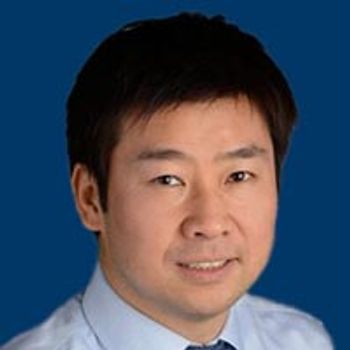
Steven I. Park, MD, discusses the unique design of the SYMPHONY-1 trial, the importance of enrolling patients to the phase 3 portion of the study, and why tazemetostat in combination with lenalidomide and rituximab could represent an effective and tolerable therapeutic option for frail or older patients with relapsed/refractory follicular lymphoma.
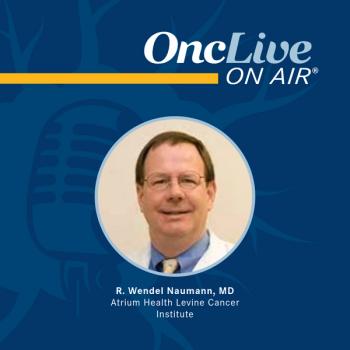
Dr Naumann discusses the role of frontline maintenance therapy for patients with endometrial cancer; which patients are likely to benefit from the RUBY and NRG-GY018 trial regimens; and ongoing research that may elucidate optimal treatments for patients with recurrent, mismatch repair–deficient disease.
Professional and personal satisfaction are both possible with a hybrid option that optimizes work-life balance.
Steven Park, MD, discusses the mechanism of action of tazemetostat and the rationale for the phase 3 SYMPHONY-1 trial in patients with relapsed follicular lymphoma.
TNB-486 demonstrated sustained antitumor activity in all but 1 patient with relapsed/refractory follicular lymphoma, regardless of CD20 status, as well as number and type of prior therapy.