Atrium Health Levine Cancer | Strategic Alliance Partners
Latest from Atrium Health Levine Cancer
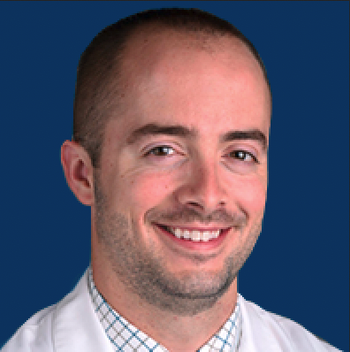
Ryan Jacobs, MD, expands on the initial efficacy and safety data seen with TNB-486, the need for more data on treatment-related CRS to improve toxicity management, and next steps planned for the investigation of this and other bispecific antibodies in relapsed/refractory follicular lymphoma.
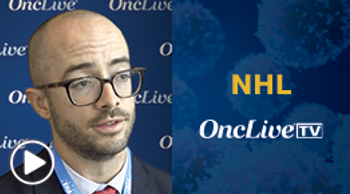
Ryan Jacobs, MD, hematologist and medical oncologist, Levine Cancer Institute, Atrium Health, discusses early responses with the novel CD19 and CD3 T-cell engager TNB-486 in relapsed/refractory follicular lymphoma according to a phase 1 study.
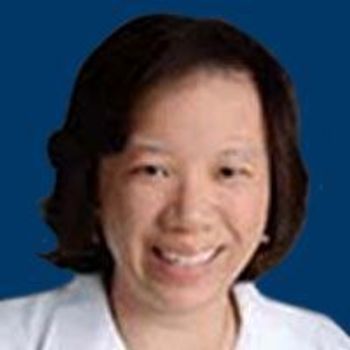
Antoinette R. Tan, MD, MHSc, discussed the promise of oral SERDs as they continue to be developed for the treatment of patients with ER-positive, HER2-negative breast cancer, factors that inform treatment decisions following disease progression on a CDK4/6 inhibitor, and the growing role of antibody-drug conjugates across the breast cancer spectrum.

Alaa Muslimani, MD, discusses unanswered questions in the treatment of patients with metastatic colorectal cancer, highlighting how these unmet needs may be addressed through continued research.

R. Wendel Naumann, MD, FACOG, FACS, discusses how the evolution of immunotherapy has changed the treatment landscape for patients with recurrent or metastatic cervical cancer.

Neelam Desai, MD, discusses the toxicity profile of fam-trastuzumab deruxtecan-nxki in HER2-positive breast cancer.

Erin K. Crane, MD, MPH, discusses findings from 3 trials demonstrating the benefits of PARP inhibitor maintenance in patients with ovarian cancer.

Alaa Muslimani, MD, discusses the significance of the phase 2 DESTINY-CRC01 and MOUNTAINEER-03 trials on HER2-positive metastatic colorectal cancer treatment in the second line, efforts to expand the use of these agents in earlier disease settings, and the need for more robust clinical data and larger investigations for this population.
Alaa Muslimani, MD, discusses the unmet needs for patients with HER2-positve metastatic colorectal cancer and highlights the implications of the phase 2 MOUNTAINEER trial in this patient population.

Joshua Hill, MD, MS, discussed the early efficacy of dostarlimab in mismatch repair–deficient locally advanced rectal cancer.
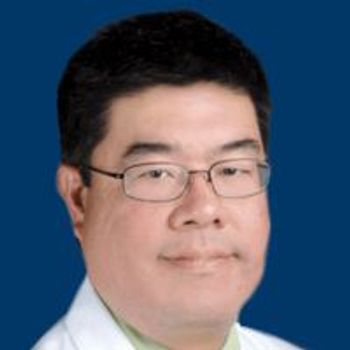
Jimmy Hwang, MD, discusses findings supporting the use of immunotherapy in hepatocellular carcinoma and biliary tract cancer, the potential benefits of antibody-drug conjugates in metastatic colorectal cancer, and unmet needs in esophageal squamous cell carcinoma and rectal cancer.
Jubilee Brown, MD, professor, director, gynecologic oncology, Levine Cancer Institute, Atrium Health, discusses benefits associated with PARP inhibitor maintenance therapy in the upfront and recurrent settings of ovarian cancer.
Erin K. Crane, MD, MPH, describes practice-changing findings from upfront trials with niraparib and olaparib, contextualizes the significance of the manufacturer restrictions of later-line PARP inhibitors for ovarian cancer, and predicts further research efforts in this population.

Jimmy Hwang, MD, discusses currently available first-line treatment options in hepatocellular carcinoma, and areas of continued unmet need in this space.
Jubilee Brown, MD, discusses future considerations for using minimally invasive surgery and PARP inhibitors in ovarian cancer, how immunotherapies have fulfilled an unmet need in cervical cancer, and the importance of leveraging molecular profiling to determine personalized therapeutic strategies in endometrial cancer.
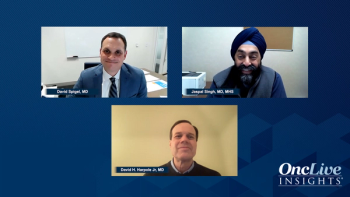
Looking to the future, a panel of experts offer closing remarks on promising developments and unmet needs in the treatment of NSCLC.
Experts discuss the role of neoadjuvant therapy and other emerging therapies in the treatment of early-stage NSCLC.
Jaspal Singh, MD, MHS, shares insights on treatment strategies for patients with stage II-IIIA NSCLC.
David H. Harpole Jr, MD, presents a case of a former smoker diagnosed with NSCLC, and David Spigel, MD, offers his initial impressions.
An expert panel shares perspectives on how to choose the appropriate patients with non-small cell lung cancer for lung resection.

Ryan Jacobs, MD, highlighted the updated safety and efficacy results from the minimal residual disease cohort of the CAPTIVATE trial, discussed unanswered questions regarding minimal residual disease as a predictive vs prognostic tool in patients with chronic lymphocytic leukemia, and outlined areas that are ripe for further exploration.
A panel of distinguished experts discuss how detection of actionable mutations affect their treatment choices in non-small cell lung cancer.
David Spigel, MD, and David H. Harpole Jr, MD, describe when adjuvant therapy is recommended in early stage NSCLC and discuss data from recent clinical trials of adjuvant therapy.

Sometimes, clinicians do not acknowledge how patients' values and beliefs influence how they ascribe meaning to their illness, how they prefer to receive information, and how they make decisions until the end-of-life stage, leading to misunderstandings between clinicians and patients.
Ryan Jacobs, MD, discusses the implications of next-line treatment strategies following long-term data of the phase 2 CAPTIVATE trial in chronic lymphocytic leukemia.
Treatment with the folate receptor α–directed antibody-drug conjugate luveltamab tazevibulin led to a 37.5% overall response rate in Frα-selected patients with advanced ovarian cancer, defined by a tumor proportion score above 25%.
Erin K. Crane, MD, MPH, talked to Oncology Fellows about helping trainees care for their own health and wellness, navigate the politics surrounding gynecologic care, and the lessons she hopes they take away from the program.
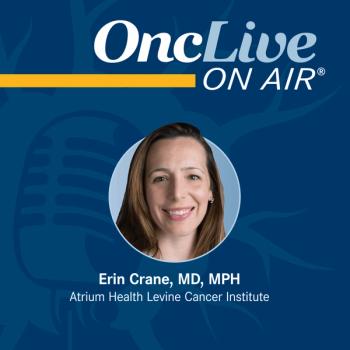
Dr Crane discusses why Atrium Health decided to launch a gyn onc fellowship, how she helps fellows navigate the current political landscape while maintaining high-level care, and how she tries to model a good work-life balance for her trainees.
The increasing integration of CAR T-cell therapies into the treatment paradigm for adult patients with relapsed or refractory multiple myeloma addresses several unmet needs and improves outcomes for this historically limited patient population.
Atrium Health Levine Cancer Institute’s breast cancer program has been granted accredited status by the National Accreditation Program for Breast Centers, a quality program administered by the American College of Surgeons.
