
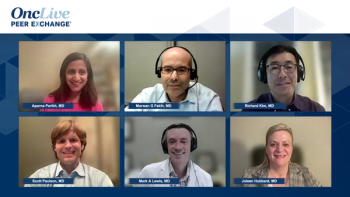
Richard Kim, MD, discusses the significance of real-world evidence when selecting treatment sequencing strategy.
Richard Kim, MD, discusses the significance of real-world evidence when selecting treatment sequencing strategy.
Managing dose adjustments and tolerability in metastatic colorectal cancer (mCRC) treatment regimens for optimal efficacy is underscored.
Medical experts provide key takeaways and impacts from the FRESCO-2 study.
Marwan G Fakih, MD, drives a discussion highlighting a significant combination therapy in mCRC treatment.
Key safety considerations for the use of fruquintinib are explored.
Dr Parikh drives a conversation surrounding 3L treatment for patients diagnosed with metastatic colorectal cancer.
Medical experts open a discussion providing an update on the current impact of metastatic colorectal cancer and common treatment strategies.
Laith Abushahin, MD, discusses the evolution of targeted therapy for patients with metastatic colorectal cancer and the importance of biomarker testing in this patient population.
Joyce A. O’Shaughnessy, MD, highlights multidisciplinary approaches including discussions on tumor boards, and discusses how to better assist patients with accessing care, and notable advances in the field particularly with the HER2 classification.
Bradley W. Christensen, MD, discusses the process of patient selection for BCL-2 induction therapy in patients with acute myeloid leukemia in accordance with their individual disease characteristics.
Joyce A. O’Shaughnessy, MD, discusses real-world data for the use of the phase 2 HER2CLIMB trial regimen of tucatinib plus trastuzumab and capecitabine in HER2-positive breast cancer.
Bradley W. Christensen, MD, discusses findings from the phase 3 VIALE-A trial in patients with acute myeloid leukemia.
Joyce O’Shaughnessy, MD, highlights key data from the 2022 San Antonio Breast Cancer Symposium, explains how trastuzumab deruxtecan and CDK4/6 inhibitors are altering the treatment landscape, and discusses novel data on steroid receptor expression in triple-negative breast cancer.
Joyce A. O’Shaughnessy, MD, discusses key data from the phase 3 DESTINY-Breast02 and DESTINY-Breast03 trials in metastatic HER2-positive breast cancer.
Joyce A. O’Shaughnessy, MD, discusses key results from the phase 3 EMERALD trial of elacestrant, and the potential effects of the agent’s approval on the use of oral selective estrogen receptor degraders for hormone receptor–positive, HER2-negative breast cancer.
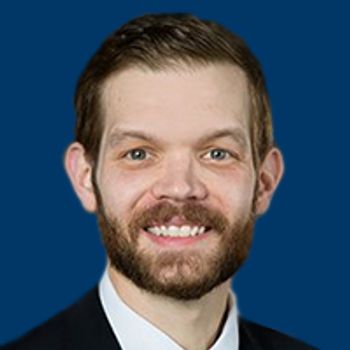
Edward J. Pearson, MD, and colleagues, discuss the expanded role of targeted therapies in the treatment of patients with hematologic malignancies.
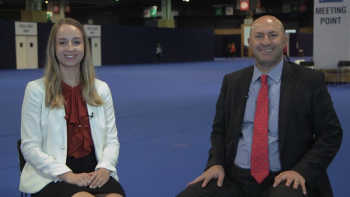
OncLive® will be LIVE with OncLive® News Network: On Location at the 2022 ESMO Congress. Each day, we will broadcast a series of interviews with top thought leaders, to learn their thoughts and reactions to data presented across oncology during the conference.
The European Medicines Agency’s Committee for Medicinal Products for Human Use has recommended the approval of nivolumab for the adjuvant treatment of adult patients with esophageal or gastroesophageal junction cancer who have residual pathologic disease after previous neoadjuvant chemoradiotherapy.
Selumetinib did not elicit clinical activity in pediatric and young adult patients with refractory cancers who had actionable mutations in the RAS/RAF/MAPK1/2-ERK pathway.
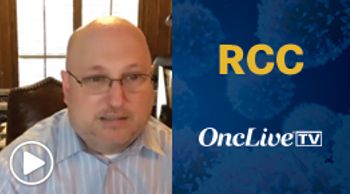
Thomas Hutson, DO, PharmD, discusses key safety considerations with cabozantinib in patients with metastatic renal cell carcinoma.
YoungNa Lee-Kim, MD, shares advice on how to advance as an oncology fellow.

Natural killer T cells that co-express GD2-CAR and interleukin-15 were found to be safe and to demonstrate evidence of in vivo expansion and localization to metastatic sites in patients with stage IV relapsed/refractory neuroblastoma.

Seth P. Lerner, MD, FACS, discusses the complexities of treating LG-UTUC and how mitomycin gel for instillation addresses an unmet need in this space.
Ronan J. Kelly, MD, MBA, explains how the results of the KEYNOTE-407 trial have positioned pembrolizumab plus chemotherapy as the frontline standard of care in this setting.
Joyce A. O'Shaughnessy, MD, discusses the utility of tucatinib in HER2-positive breast cancer with brain metastases.
Joyce A. O'Shaughnessy, MD, discusses the design and findings of the plasmaMATCH trial and ongoing research with targeted therapy in breast cancer.
Eric S. Nadler, MD, medical oncologist, Baylor University Medical Center, medical director, US Oncology Health Informatics and Internet Technology, discusses the impact of immunotherapy in squamous non–small cell lung cancer.
Ronan J. Kelly, MD, MBA, chief of oncology for the 10 Baylor Scott & White Health's North Texas Cancer Centers and director of oncology on the campus of Baylor Charles A. Sammons Cancer Center at Baylor University Medical Center, discusses the outlook of patients with ALK-positive non–small cell lung cancer (NSCLC).
Ronan J. Kelly, MD, MBA, chief of oncology for the ten Baylor Scott and White Health's North Texas Cancer Centers and director of oncology on the campus of Baylor Charles A. Sammons Cancer Center at Baylor University Medical Center, discusses the treatment of patients with ALK-positive non–small cell lung cancer.
The rationale for frontline chemoimmunotherapy in stage IV nonsquamous non–small cell lung cancer, now made evident by several phase III trials, stems from its synergistic activity, stimulatory effects on neoantigens, and tolerable safety profile.