

Lung cancer and neurology experts discuss the ties between cancer-associated LEMS and small cell lung cancer, diagnostic tips, and management strategies.
Lung cancer and neurology experts discuss the ties between cancer-associated LEMS and small cell lung cancer, diagnostic tips, and management strategies.
Dr Shields discusses the realities of treating patients with SCLC in the community setting and how emerging therapies are shaping care delivery.
Drs Armstrong and Tawagi highlight anticipated data from the upcoming 2026 Genitourinary Cancers Symposium in prostate, bladder, and kidney cancers.
Misty D. Shields, MD, PhD, discusses the modern role for prophylactic cranial irradiation in extensive-stage SCLC management.
Drs Armstrong and Tawagi discussed key data from the phase 3 MATTERHORN trial, which were presented at the 2025 ASCO Annual Meeting.
Misty D. Shields, MD, PhD, discusses the implications of the ADRIATIC trial of adjuvant therapy with durvalumab vs placebo in patients with LS-SCLC.
Misty D. Shields, MD, PhD, discusses the FDA approval of tarlatamab for patients with extensive-stage small cell lung cancer.
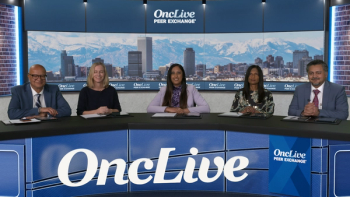
The expert panel concludes their discussion with clinical insights on treatment sequencing and therapeutic decision-making for patients who have relapsed.
A roundtable discussion on the evolving treatment landscape surrounding CAR T-cell therapy in multiple myeloma, with a focus on future directions and the management of adverse events.
The expert panel discusses recent clinical trial data on GPRC5D-targeting bispecific antibodies and how they apply to the multiple myeloma treatment paradigms.
Comprehensive insights on the adverse effects seen from bispecific antibodies in the treatment of patients with multiple myeloma.
Multiple myeloma specialists compare step-up dosing practices and provide clinical insights on treating patients with multiple myeloma.
Experts on multiple myeloma discuss how real-world evidence informs treatment selection for patients receiving bispecific antibodies.
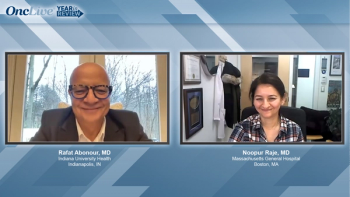
Dr. Raje and Dr. Abonour provide an insightful reflections on unmet needs and future perspectives in Relapsed/Refractory Multiple Myeloma (R/R MM), offering a glimpse into the evolving landscape of myeloma care.
Experts delve into the optimal positioning of BCMA-targeted CAR-T therapies in the treatment plan for Relapsed/Refractory Multiple Myeloma (R/R MM), providing valuable perspectives on strategic considerations in myeloma care.
An expert panel reviews recent updates on BCMA-targeting bispecific antibodies in multiple myeloma.
Krina Patel, MD, reviews data from the CARTITUDE-4 and KarMMa-3 studies and shares perspectives on a potential role for CAR T-cell therapy at early relapse.
Dr. Abonour and Dr. Raje provide an overview of the results that were presented at ASH 2023 of the CIBMTR registry and CARTITUDE-2 trial which was the study of ciltacabtagene autoleucel (cilta-cel) in patients with MM and 1-3 prior lines of therapy (Cohort A) and with early relapse after first line treatment (cohort B).
Experts discuss the recent data presented at ASH 2023 from the KarMMA-3 trial in which ide-cel vs standard of care was studied in triple class exposed R/R MM patients.
A panel of expert hematologic-oncologists offer insights on how they treat patients with multiple myeloma at early relapse.
The expert panel discusses how the standard of care for transplant-ineligible NDMM has evolved and reviews recent updates in this space.
Noopur Raje, MD discusses the rationale for utilizing BCMA-targeted CAR-T cell therapy in myeloma patients and uncover the similarities and differences when compared to BCMA bispecific.
Rafat Abonour, MD briefly summarizes the current treatment landscape for Relapsed/Refractory Multiple Myeloma (R/R MM) and discusses the diverse strategies and advancements in managing this complex disease.
Amrita Krishnan, MD, and Saad Z. Usmani, MD, MBA, FACP, offer their perspectives on the role of stem cell transplant and MRD testing in patients with newly diagnosed multiple myeloma.
Clinical insights on the definition of high-risk multiple myeloma and the treatment of patients with high risk disease, including how the results from the IsKia trial might impact practice.
Experts in multiple myeloma discuss highlights from the ASH 2023 meeting around transplant-eligible NDMM with particular focus on the PERSEUS and GRIFFIN trials and the clinical implications of the results of these studies.
A panel of experts discuss the evolving landscape of newly diagnosed multiple myeloma.
Misty D. Shields, MD, PhD, discusses systemic therapy updates for patients with extensive-stage small cell lung cancer.
Jennifer M. King, MD, expands on the design and methodology of a retrospective study of teratoma in residual nonretroperitoneal disease post-chemotherapy and key findings regarding the correlation between teratoma in the primary tumor and rates of post-chemotherapy teratoma in residual non–nonretroperitoneal disease.
Although patients with metastatic nonseminomatous germ-cell tumors who had teratoma in the primary tumor were found to have a higher rate of teratoma in residual non-retroperitoneal disease following chemotherapy, those without teratoma in the primary tumor could have teratoma or active testicular germ-cell tumors in residual disease post-chemotherapy and should be considered for resection.