
Jan A. Burger, MD, PhD, discusses choosing frontline therapy in chronic lymphocytic leukemia.
Jan A. Burger, MD, PhD, discusses choosing frontline therapy in chronic lymphocytic leukemia.
Anil K. Sood, MD, provides insight into his approach toward the frontline maintenance treatment of women with advanced ovarian cancer.
Ravin Ratan, MD, MEd, discusses the steps that should be taken to diagnose desmoid tumors.
James P. Allison, PhD, permanently etched his legacy into immuno-oncology with the development of ipilimumab, work that helped him win a Giants of Cancer Care® award for Scientific Advances in 2014.

Amado J. Zurita-Saavedra, MD, discusses emerging frontline therapies in metastatic hormone-sensitive prostate cancer.
Naval Daver, MD, discusses he encouraging early data that has been reported with KO-539 and other menin inhibitors in acute myeloid leukemia, data presented with novel KO-539 combinations in this disease, and next steps for research.
Despite their rarity, the management of desmoid tumors has been an area of significant clinical change as the field has shifted away from aggressive surgical interventions to active surveillance and systemic therapies that are less morbid for patients.
Amado J. Zurita-Saavedra, MD, discusses the utilization of the antiandrogen agents apalutamide and enzalutamide in patients with metastatic hormone-sensitive prostate cancer.
Anil K. Sood, MD, discusses navigating frontline maintenance therapy in ovarian cancer.
Naval Daver, MD, discusses the next steps for menin inhibitors in acute myeloid leukemia.

Elise Nassif, MD, discusses the evolving standard of care for patients with soft tissue sarcoma and the benefits of early phase inclusion, as well as histotype testing for this population.
Preclinical evidence suggests that pairing KO-539 with targeted agents directed against BCL-2, BET, and CDK6 could result in superior efficacy against KMT2A-rearranged and NPM1-mutated acute myeloid leukemia.

Alexander J. Lazar, MD, PhD, discusses the current state of diagnosis and treatment in desmoid tumors.
Bilal A. Siddiqui, MD, discusses selecting between available antiandrogen agents in nonmetastatic castration-resistant prostate cancer.
Dr. Shah and Dr. Wang discuss the management of cytokine release syndrome and neurotoxicity, the referral process, and the need for academic and community collaboration for CAR T-cell therapy in hematologic malignancies.
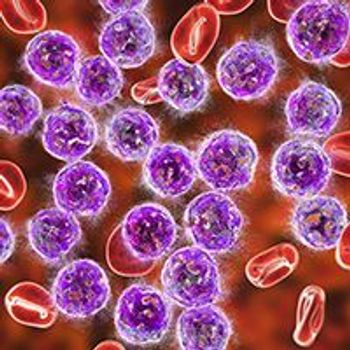
The novel non-covalent BTK inhibitor pirtobrutinib showed promising preclinical efficacy in overcoming ibrutinib and venetoclax resistance, and in limiting cell growth and inducing apoptosis in mantle cell lymphoma.
Axicabtagene ciloleucel induced high response rates and improved survival in patients with relapsed/refractory follicular lymphoma or marginal zone lymphoma, according to updated data from the phase 2 ZUMA-5 trial.
Kanwal Raghav, MBBS, MD, discusses treatment considerations in metastatic colorectal cancer.
William G. Wierda, MD, PhD, discussed the results of the phase 2 CAPTIVATE trial and the phase 1/2 TRANSCEND CLL 004 trial, and looked ahead to what the future holds for MRD in patients with CLL.
Kanwal Raghav, MBBS, MD, discusses the safety profiles of regorafenib and trifluridine/tipiracil, and selecting between the agents for the treatment of patients with colorectal cancer.

James P. Allison, PhD, discusses his experience with the urgency of drug development in oncology.
Joyce L. Neumann, PhD, APRN, AOCN, BMTCN, FAAN, discusses tapering steroids for patients with chronic graft-vs-host disease.

James P. Allison, PhD, discusses the impact of immunotherapy on patients with cancer.
James P. Allison, PhD, discusses the development of ipilimumab.

James P. Allison, PhD, discusses his early career at The University of Texas MD Anderson Cancer Center.
James P. Allison, PhD, discusses his research on reverse translation in cancer.
The combination of enasidenib plus azacitidine was well tolerated and induced significantly improved response rates compared with azacitidine alone in patients with newly diagnosed, IDH2-mutant acute myeloid leukemia.
Daniel M. Halperin, MD, discusses the efficacy and safety results of the phase 1/2a Protocol PEN-221-001 trial in advanced gastrointestinal mid-gut neuroendocrine tumors.
Xiuning Le, MD, PhD, discusses the emergence of antibody-drug conjugates in non–small cell lung cancer.
Bilal A. Siddiqui, MD, discusses the potential for novel imaging in patients with nonmetastatic castration-resistant prostate cancer.