
Susan F. Slovin, MD, PhD, discusses considerations for treatment selection in nonmetastatic castration-resistant prostate cancer.
Susan F. Slovin, MD, PhD, discusses considerations for treatment selection in nonmetastatic castration-resistant prostate cancer.
Meghan Thompson, MD, discusses the evolving role of minimal residual disease testing in chronic lymphocytic leukemia.
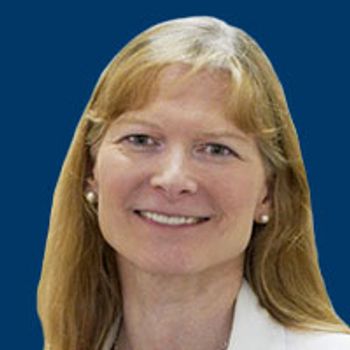
Antiandrogen agents, PARP inhibitors, and prostate-specific membrane antigen-directed therapy have broadened the armamentarium in prostate cancer.
Lindsey Roeker, MD, discusses the rationale for combining venetoclax with BTK inhibitors for use in patients with chronic lymphocytic leukemia.
Daniel C. Danila, MD, discusses factors to consider when selecting a treatment option for patients with nonmetastatic castration-resistant prostate cancer.
The first participants from the United States have been dosed with LUT014, a novel, topical BRAF inhibitor in a phase 2 trial that is evaluating the agent in patients with metastatic colorectal cancer who have developed dose-limiting acneiform lesions following treatment with an EGFR inhibitor.
Daniel C. Danila, MD, discusses the integration of advanced imaging in prostate cancer.
Data that were presented during the 2021 ASCO Annual Meeting shed light on new therapeutic strategies, and treatment considerations that are expanding the paradigms of gastrointestinal malignancies.
Jae Park, MD, discusses the factors to consider when selecting among the available CAR T-cell therapies for the treatment of patients with mantle cell lymphoma.
Michael J. Mauro, MD, discusses considerations for early treatment initiation in myelofibrosis.
Meghan Thompson, MD, discusses future research directions in chronic lymphocytic leukemia.
Anita Kumar, MD, discusses the improved efficacy of venetoclax when used in combination with ibrutinib compared with venetoclax or ibrutinib alone in mantle cell lymphoma.
Chung-Han Lee, MD, PhD, discusses the goals of the phase 3 KEYNOTE-B61 study and the potential for immunotherapy/TKI combinations in non–clear cell RCC.
Raajit K. Rampal, MD, PhD, discusses symptoms of disease progression in myelofibrosis.
Anita Kumar, MD, discusses patient factors to consider when selecting treatment in relapsed/refractory mantle cell lymphoma.
Jae H. Park, MD, discusses emerging CAR T-cell therapies in hematologic malignancies.

Memorial Sloan Kettering Cancer Center, the world’s oldest and largest private cancer center, has launched MSKCC India to provide cancer patients in India with access to the institution’s world-renowned oncologists, research, clinical trials, and education.
Maria E. Arcila, MD, highlights important considerations for selecting among molecular diagnostic tests for patients with lung cancer.
Michael J. Morris, MD, discusses ongoing research efforts with 177Lu-PSMA-617 in prostate cancer.
Lindsey Roeker, MD, discusses the emerging role of minimal residual disease as a predictive end point in chronic lymphocytic leukemia.
The combination of brentuximab vedotin plus doxorubicin, vinblastine, and dacarbazine with and without consolidative radiotherapy was found to have strong efficacy and favorable tolerability in patients with early-stage, unfavorable-risk, Hodgkin lymphoma.
Meghan Thompson, MD, discusses emerging treatment strategies with BTK inhibitors in chronic lymphocytic leukemia.
Robert J. Motzer, MD, discusses the importance of assessing health-related quality of life in renal cell carcinoma.
Robert J. Motzer, MD, discusses the efficacy and health-related quality of life benefits of lenvatinib/pembrolizumab in patients with advanced RCC, and projected where the regimen might fit into the treatment paradigm.
Michael J. Mauro, MD, discusses managing symptom burden in patients with myelofibrosis.
Paul K. Paik, MD, discusses the clinical implications of tepotinib on the non–small cell lung cancer armamentarium.
Dr. Sherman discusses the incidence of RET fusions in medullary thyroid cancer and the current clinical landscape of RET inhibitors in the field.
Alison Schram, MD, discusses the results of the phase 1/2 eNRGy trial, which were presented during the 2021 ASCO Annual Meeting, in NRG1 fusion–positive solid tumors.
Adjuvant nivolumab led to a significant improvement in disease-free survival compared with placebo in patients with high-risk muscle-invasive urothelial carcinoma following radical surgery, irrespective of PD-L1 expression level.
Encouraging initial durability has been observed with afamitresgene autoleucel in patients with advanced synovial sarcoma or myxoid/round cell liposarcoma, according to data from the phase 2 SPEARHEAD-1 trial.