

The combination of cabozantinib plus nivolumab demonstrated promising objective response rates in patients with non–clear cell renal cell carcinoma with prominent papillary features.
The combination of cabozantinib plus nivolumab demonstrated promising objective response rates in patients with non–clear cell renal cell carcinoma with prominent papillary features.
Anthony Mato, MD, MSCE, discusses current data surrounding BTK inhibitors in chronic lymphocytic leukemia, the benefits of targeted therapies in this population, ways to begin addressing unmet needs, and the importance of improved clinical trial designs for varying patient populations.

Steven Maron, MD, MSc, discusses sequencing considerations in the frontline treatment of gastrointestinal cancers.

Steven Maron, MD, MSc, discusses HER2-positive tumors in esophageal gastric cancers.

Checkpoint inhibitors prior to allogeneic hematopoietic cell transplant improved progression-free survival and relapse incidence in patients with Hodgkin lymphoma, but the treatment did not improve non-relapse mortality or overall survival.

“I can’t conceive of anything worse than being in a situation where you can’t ask, ‘How do we get better?’ ”

Eytan M. Stein, MD, discusses the key highlights of the phase 1/2 AUGMENT-101 trial in leukemias.

Tiffany A. Traina, MD, discusses the implications of the phase 3 EMERALD trial in advanced estrogen receptor–positive, HER2-negative breast cancer.

Komal Jhaveri, MD, FACP, discusses the implications of data from the phase 3 DESTINY-Breast03 trial in patients with HER2-positive metastatic breast cancer.
Miguel-Angel Perales, MD, discusses the science behind Orca-T and other approaches targeted to improve GVHD relapse-free survival in select patients with hematologic cancers.
Immune checkpoint inhibitors represent only one area of effective therapy for patients with advanced prostate cancer, but they are not “be all, end all” of immunotherapy options.

The historical boundaries of what was possible in the management of patients with breast cancer continue to be challenged, evidenced by the use of HER2-directed therapies in patients with brain metastases, de-escalated approaches in patients with visceral disease, and less-invasive surgical techniques for patients with lymph node involvement.
Tiffany Traina, MD, discusses the body of evidence supporting the use of CDK4/6 inhibitors in hormone receptor–positive, HER2-negative breast cancer, shifting standards of care in HER2-positive disease, as well as biomarkers of response with checkpoint inhibitors and PARP inhibitors in triple-negative breast cancer.

Jae Park, MD, discusses dosing strategies utilized in the phase 1/2 FELIX trial in relapsed/refractory acute lymphoblastic leukemia.
Although the addition of copanlisib to ibrutinib resulted in a high overall response rate in patients with relapsed/refractory mantle cell lymphoma, the regimen was found to have additive toxicity, according to findings from a small phase 1 trial.

Tiffany A. Traina, MD, discusses the implications of the phase 3 DESTINY-Breast03 trial in HER2-positive breast cancer.
William D. Tap, MD, discusses the key challenges faced in the treatment of patients with soft tissue sarcoma and efforts being made to overcome them.

Targeted therapies, specifically those agents directed at mutated proteins and aberrant protein-to-protein interactions, have been shown to improve survival among patients with relapsed or refractory acute myeloid leukemia.
The addition of atezolizumab to neoadjuvant gemcitabine and cisplatin generated a high rate of non–muscle-invasive downstaging following radical cystectomy, which correlated with improved relapse-free survival and overall survival in patients with muscle-invasive bladder cancer, according to data from a phase 2 trial.

Neil M. Iyengar, MD, discusses the use of fam-trastuzumab deruxtecan-nxki in HER2-low breast cancer.

Treatment with lenvatinib plus pembrolizumab was associated with a clinical benefit in advanced renal cell carcinoma, regardless of a patient’s biomarker status.
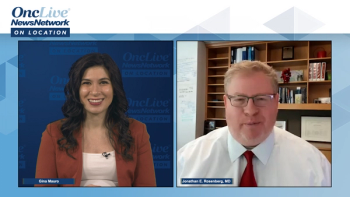
OncLive® speaks with Drs. Jonathan Rosenberg and Guru Sonpavde on the groundbreaking research being presented in bladder cancer.
The addition of olaparib to durvalumab did not result in a significant prolongation in progression-free survival compared with durvalumab alone in patients with previously untreated, platinum-ineligible metastatic urothelial carcinoma.
Saad Z. Usmani, MD, MBA, FACP, shares key takeaways from presentations given during the meeting on the evolving paradigms of frontline, early relapsed, and late relapsed multiple myeloma, the current role of bispecific antibodies and CAR T-cell therapy, and emerging immunotherapies and also trials in progress in the space.

Geoffrey Y. Ku, MD, medical oncologist, discusses the efficacy of zanidatamab plus standard chemotherapy in patients with HER2-positive gastroesophageal adenocarcinoma in the ongoing phase 2 ZW25-201 trial.

Neha S. Korde, MD, hematologist, Memorial Sloan Kettering Cancer Center, discusses key updates to the phase 3 Cassiopeia study (NCT02541383) in multiple myeloma.

Saad Z. Usmani, MD, MBA, FACP, discusses emerging treatment strategies in late relapsed multiple myeloma.
William D. Tap, MD, discusses developing treatment opportunities in soft tissue sarcomas.
The combination of durvalumab and tremelimumab demonstrated a significant improvement in overall survival vs sorafenib as frontline therapy in patients with unresectable hepatocellular carcinoma, according to findings from the phase 3 HIMALAYA trial.

Michael J. Morris, MD, discusses logistical challenges of utilizing Lutetium 177 PSMA-617 in prostate cancer.