

Alexander Drilon, MD, medical oncologist, Memorial Sloan Kettering Cancer Center, discusses RET rearrangements for patients with non–small cell lung cancer (NSCLC).
Alexander Drilon, MD, medical oncologist, Memorial Sloan Kettering Cancer Center, discusses RET rearrangements for patients with non–small cell lung cancer (NSCLC).

Chung-Han (Joe) Lee, MD, medical oncologist at Memorial Sloan Kettering Cancer Center, discusses the future of immunotherapy in the treatment landscape of renal cell carcinoma.
Robert J. Motzer, MD, medical oncologist at Memorial Sloan Kettering Cancer Center, 2016 Giant of Cancer Care in Genitourinary Cancer, discusses the data seen thus far with nivolumab plus ipilimumab in the treatment of patients with renal cell carcinoma.

Sergio Giralt, MD, a professor of Medicine at Memorial Sloan Kettering Cancer Center, discusses the future role of transplantation in patients with multiple myeloma as well as other hematologic malignancies.
Wassim Abida, MD, PhD, Memorial Sloan Kettering Cancer Center, discusses the future of hormonal therapy in prostate cancer.
Jonathan E. Rosenberg, MD, medical oncologist, Memorial Sloan Kettering Cancer Center, discusses the potential that immunotherapy has in the frontline setting for patients with bladder cancer.
Robert J. Motzer, MD, medical oncologist at Memorial Sloan Kettering Cancer Center, 2016 Giant of Cancer Care in Genitourinary Cancer, discusses the explosion of immunotherapy in the landscape of renal cell carcinoma (RCC).
Philip W. Kantoff, MD, chair of the Department of Medicine, Memorial Sloan Kettering Cancer Center and a 2014 Giants of Cancer Care winner for Genitourinary Cancer, discusses the combination of docetaxel (Taxotere) chemotherapy and androgen deprivation therapy (ADT) in the setting of metastatic hormone-sensitive prostate cancer.

Dana E. Rathkopf, MD, Memorial Sloan Kettering Cancer Center, discusses the emergence of the androgen receptor splice variant-7 (AR-V7) biomarker in the treatment of patients with prostate cancer.

Steven Horwitz, MD, associate attending physician at Memorial Sloan Kettering Cancer Center, discusses some of the ongoing clinical trials being explored in T-cell lymphoma.

C. Ola Landgren, MD, PhD, chief of Myeloma Service at Memorial Sloan Kettering Cancer Center, discusses the use of the triplet of daratumumab, bortezomib, and dexamethasone in the treatment of patients with relapsed myeloma.
Robert J. Motzer, MD, attending physician, Genitourinary Oncology Service, Memorial Sloan Kettering Cancer Center, and professor of Medicine, Weill Medical College, Cornell University, discusses the FDA approval of nivolumab (Opdivo) versus everolimus (Afinitor) for patients with advanced renal cell carcinoma (RCC).

Since the FDA approval of nivolumab in May 2016, researchers continue to explore agent as well as its fellow PD-1 inhibitor, pembrolizumab, in various treatment settings for patients with Hodgkin lymphoma.

The fields of mantle cell lymphoma and diffuse large B-cell lymphoma had a handful of updates presented during the 2016 ASH Annual Meeting.

Emerging therapies in myeloproliferative disorders such as chronic myeloid leukemia, polycythemia vera, and myelofibrosis could have the potential to shake up the landscape.

Though T-cell lymphoma is a more rare hematologic malignancy, researchers are exploring therapies such as brentuximab vedotin to improve outcomes for these patients.

C. Ola Landgren, MD, PhD, chief of Myeloma Service at Memorial Sloan Kettering Cancer Center, discusses unanswered questions following the results of the phase III POLLUX and CASTOR studies, which explored the addition of daratumumab (Darzalex) to lenalidomide (Revlimid) and dexamethasone or bortezomib (Velcade) and dexamethasone, respectively.

A combination regimen of the BCL-2 inhibitor venetoclax plus low-dose cytarabine demonstrated an acceptable safety and pharmacokinetic profile in elderly patients with treatment-naïve acute myeloid leukemia.
Mark G. Kris, MD, a medical oncologist at Memorial Sloan Kettering Cancer Center, discusses what the future holds for the development of immunotherapy and targeted therapy in the treatment of patients with lung cancer.

Andrew D. Zelenetz, MD, PhD, medical director of Quality Informatics at Memorial Sloan Kettering Cancer Center, discusses treatment options for patients with chronic lymphocytic leukemia who fail on ibrutinib or idelalisib.

Novel therapies are being investigated in 2 areas of hematologic malignancies, but the first-line setting is where the brunt of research needs to be conducted.

Jedd D. Wolchok, MD, PhD, chief, Melanoma and Immunotherapeutics Service, Department of Medicine and Ludwig Center at Memorial Sloan Kettering Cancer Center, 2014 Giant of Cancer Care in Melanoma, discusses an ongoing clinical trial that will explore optimal treatments for patients with melanoma who fail on a PD-1 inhibitor as a single agent.
Even with 1 FDA approval of an immunotherapeutic agent in urothelial carcinoma—and more expected in the coming months—chemotherapy regimens will continue to play a pivotal part in the treatment of patients with this disease.

Three recent drug approvals have shifted the landscape in the second-line setting for renal cell carcinoma, and researchers are now setting their sights on transforming upfront care.
Anas Younes, MD, chief of the Lymphoma Service at Memorial Sloan Kettering Cancer, discusses highlights from the 2016 ASH Annual Meeting focused on the area of mantle cell lymphoma (MCL).
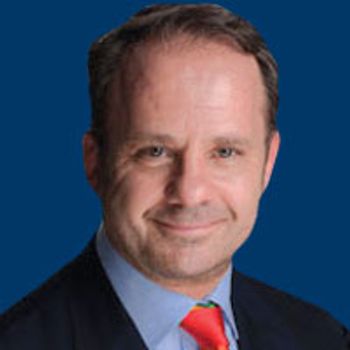
To great fanfare, Hackensack Meridian Health of New Jersey and Memorial Sloan Kettering Cancer Center announced a co-branding partnership that they say would lead to highly fruitful collaborative research and make hundreds of clinical trial opportunities available to their patients.

Dmitriy Zamarin, MD, PhD, medical oncologist, Memorial Sloan Kettering Cancer Center, discusses some of the novel approaches with immunotherapy that he would like to explore in the future treatment of patients with gynecologic cancers.

Immunotherapy may be having a moment in the changing landscape of bladder cancer, but expert Gopa Iyer, MD, advises that there is much research to be done before physicians replace chemotherapy with these agents upfront.

For patients with metastatic castration-resistant prostate cancer, the radiopharmaceutical radium-223 dichloride has proven to be an efficacious bone-targeted agent.
Dean F. Bajorin, MD, professor of Medicine, Memorial Sloan Kettering Cancer Center, discusses the standard chemotherapy approaches for patients with metastatic and muscle-invasive bladder cancer.