
A panel of experts on ovarian cancer review ongoing trials on maintenance therapies for recurrent ovarian cancer.
A panel of experts on ovarian cancer review ongoing trials on maintenance therapies for recurrent ovarian cancer.
A detailed discussion focused on recent data on PARP inhibitors in the recurrent ovarian cancer setting.
Ovarian cancer experts review clinical trial data on the efficacy of later-line therapies in advanced ovarian cancer.
A comprehensive overview of recent clinical trial data on PARP inhibitors in the first-line maintenance setting in ovarian cancer presented at ASCO 2023.
An expert panel highlights current unmet needs in the maintenance setting for ovarian cancer.
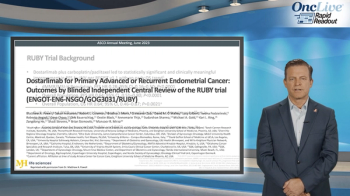
Matthew Powell, MD, presents data from the blinded independent central review of the RUBY trial, which studied dostarlimab in patients with primary advanced or recurrent endometrial cancer.
Experts on ovarian cancer discuss germline and somatic testing practices and provide clinical insights on factors that influence treatment decisions.
A panel of expert gynecologic oncologists introduce themselves and review frontline maintenance treatment options in ovarian cancer.
Brian Van Tine, MD, PhD, discusses key considerations for understanding the biology of MYC, the rationale for the phase 1 study of KB-0742 in MYC-amplified or -overexpressed relapsed or refractory solid tumors, and patient characteristics that may signal their eligibility for participation in this trial.
Treatment with duvelisib led to a high response rate in patients with peripheral T-cell lymphoma, with activity favoring patients with PTCL not otherwise specified and angioimmunoblastic T-cell lymphoma.
Brian A. Van Tine, MD, PhD, discusses the rationale for launching a randomized phase 2 trial investigating cabozantinib combined with nivolumab and ipilimumab vs cabozantinib alone in metastatic soft tissue sarcoma and discusses key findings from the trial.
The SEZ6-targeted antibody-drug conjugate ABBV-011, when administered at 1 mg/kg every 3 weeks, was found to be well tolerated and to demonstrate early efficacy in patients with relapsed or refractory small cell lung cancer.
Nusayba Bagegni, MD, discusses the prevalence of interstitial lung disease in patients with HER2-positive breast cancer treated with trastuzumab deruxtecan.
Press Release
Research from Washington University School of Medicine in St. Louis suggests that transposable elements in various cancers potentially may be used to direct novel immunotherapies to tumors that don’t typically respond to immune-based treatments.
Press Release
Siteman Cancer Center at Barnes-Jewish Hospital and Washington University School of Medicine in St. Louis announces several leadership changes, including a new Deputy Director, Associate Directors of Translational Research and Shared Resources, and a Deputy Associate Director of Shared Resources.
Foluso Bisi Ademuyiwa, MD, MPH, MSCI, discusses the optimal sequencing of current CDK4/6 inhibitors in the first-line setting for hormone receptor (HR)–positive, HER2-negative breast cancer based on updated efficacy and safety data.
Foluso Bisi Ademuyiwa, MD, MPH, MSCI, discusses the implications of the phase 3 KEYNOTE-522 trial in high-risk, early-stage triple-negative breast cancer.
Several landmark trials have led to FDA approval milestones across all breast cancer subtypes in the past 5 years, each continuing to change the navigation of treatment approaches in clinical practice.
Adrian González-González discusses findings from a preclinical study of trastuzumab deruxtecan in combination with DNA damage response (DDR) pathway inhibitors in xenograft models derived from patients with HER2-low triple-negative breast cancer.
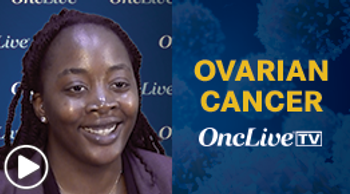
Bisiayo Fashemi, PhD, discusses how the addition of entinostat to olaparib could help combat PARP inhibitor-resistance in homologous recombination proficient ovarian cancer, as well as the clinical significance of utilizing mouse organoid models to investigate such strategies.
Press Release
Researchers at Washington University School of Medicine in St. Louis have identified a way to treat the area surrounding breast tumors that have spread to bone so that such tumors become vulnerable to attack by the body’s immune system.
Press Release
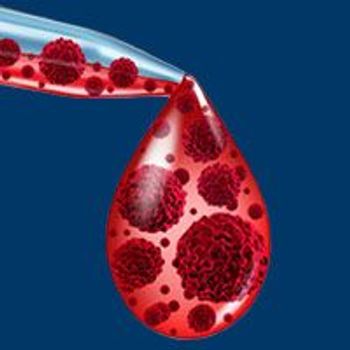
A new study led by Washington University School of Medicine in St. Louis reveals at least one cause of low white blood cells.
Press Release
A new study by researchers at Washington University School of Medicine in St. Louis found that undergoing more frequent computed tomography scans was not associated with improved outcomes following lung cancer surgery.
Press Release
New research including Siteman Cancer Center at Barnes-Jewish Hospital and Washington University School of Medicine in St. Louis indicates it’s both possible and helpful to get cancer patients who smoke into evidence-based tobacco-treatment programs as part of their cancer care.
Press Release
A type of chronic leukemia can simmer for many years and for a small percentage of patients, the slower paced disease can transform into an aggressive cancer, called secondary acute myeloid leukemia, that has few effective treatment options.

A teenage injury cost him a career among the stars, so John F. DiPersio, MD, PhD, became a star hematologist/oncologist instead.
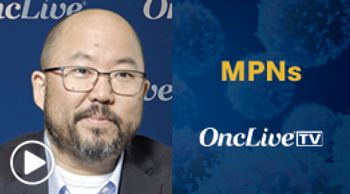
Stephen T. Oh, MD, PhD, discusses the benefits of pacritinib in patients with myelofibrosis.
Press Release
A single drug compound simultaneously attacks hard-to-treat prostate cancer on several fronts, according to a new study in mice and human cells.
Daniel Morgensztern, MD, discusses ongoing research with amivantamab-vmjw in non–small cell lung cancer.
Brad S. Kahl, MD, discusses unmet needs in mantle cell lymphoma.