Mount Sinai Tisch Cancer Center | Strategic Alliance Partners
Latest from Mount Sinai Tisch Cancer Center
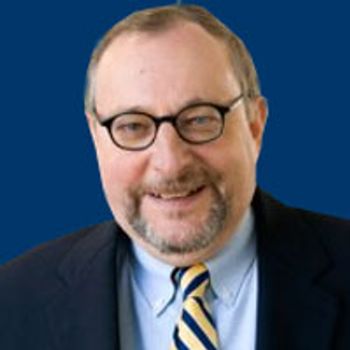
The International Association for the Study of Lung Cancer (IASLC) announced it is naming the Translational Research Lectureship Award after longtime member and former IASLC CEO, Fred R. Hirsch, MD, PhD, Executive Director of the Center for Thoracic Oncology and Associate Director of Biomarker Discovery at The Tisch Cancer Institute at Mount Sinai and the Joe Lowe and Louis Price Professor of Medicine (Hematology and Medical Oncology) at the Icahn School of Medicine at Mount Sinai.
OncLive interviewed experts at the State of the Science Summits™ in February 2020 on common misconceptions in their respective fields.
Marina Kremyanskaya, MD, PhD, discusses unmet needs in myelofibrosis.
William K. Oh, MD, discusses remaining challenges with the advancing treatments in prostate cancer.
Marina Kremyanskaya, MD, PhD, discusses responses with CPI-0610 in patients with myelofibrosis.
Karyn Aalami Goodman, MD, MS, an internationally recognized expert on gastrointestinal cancers, has joined the Icahn School of Medicine at Mount Sinai as Associate Director for Clinical Research at The Tisch Cancer Institute. She is also Professor and Vice Chair for Research and Quality in the Department of Radiation Oncology.
William K. Oh, MD, chief, Division of Hematology and Medical Oncology, professor of medicine and urology, Mount Sinai Hospital, and deputy director of The Tisch Cancer Institute, discusses targeted treatment in metastatic castration-resistant prostate cancer (mCRPC).
William K. Oh, MD, sheds light on how he approaches treatment in patients with metastatic hormone-sensitive prostate cancer.
Deepu Madduri, MD, discusses the results of the CARTITUDE-1 trial and the next phase of development with JNJ-4528.
William K. Oh, MD, discusses the phase III ENZAMET trial in metastatic hormone-sensitive prostate cancer.
Marina Kremyanskaya, MD, discusses the effect of CPI-0610 in patients with myelofibrosis.
Nicholas C. Rohs, MD, assistant professor of medicine, hematology, and medical oncology, Icahn School of Medicine, Mount Sinai, discusses the use of liquid biopsies in lung cancer.
Thomas Marron, MD, PhD, discusses the potential benefit of shortening the length of immunotherapy treatment in melanoma.
William K. Oh, MD, discusses remaining challenges in metastatic hormone-sensitive prostate cancer.
Ajai Chari, MD, discusses the implementing quadruplet-regimens in transplant-eligible multiple myeloma.
Ajai Chari, MD, discusses transplant eligibility in multiple myeloma.

Ibrahim S. Alshaygy, MD, MSC, discusses research suggesting a smaller surgical resection margin for dermatofibrosarcoma protuberans.
We sat down with Ajai Chari, MD, and Sundar Jagannath, MD, both of Mount Sinai Hospital, to provide insight on controversial, but critical, questions regarding the merits of quadruplet versus triplet therapy in the newly diagnosed setting, the optimal maintenance approach in high-risk patients, and the data in support of and against initiating treatment in patients with smoldering multiple myeloma.
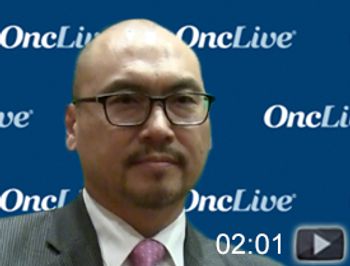
Hearn Jay Cho, MD, PhD, discusses investigational bispecific T-cell engager therapies in multiple myeloma.
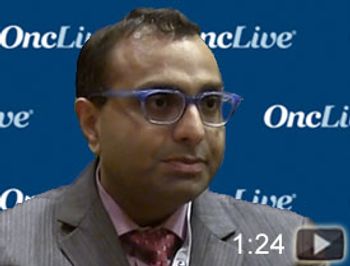
Samir Parekh, MBBS, discusses using genomics to treat patients with multiple myeloma.
We traveled to New York City, New York, for a State of the Science Summit™ on Multiple Myeloma, which featured insights from the faculty from the Mount Sinai Hospital.
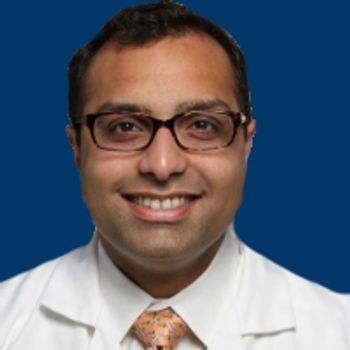
Samir Parekh, MBBS, highlights ongoing research regarding personalized medicine for multiple myeloma.
Sundar Jagannath, MD, highlights the current state of the relapsed/refractory multiple myeloma paradigm and research regarding next steps for advancing treatment.
Ajai Chari, MD, associate professor, hematology and medical oncology, Mount Sinai Hospital, discusses the use of frontline daratumumab (Darzalex) in transplant-eligible patients with multiple myeloma.
Matthew D. Galsky, MD, director, Genitourinary Medical Oncology, The Tisch Cancer Institute, Mount Sinai Hospital, discusses results from the HCRN GU14-182 study, which examined maintenance pembrolizumab versus placebo in patients with metastatic urothelial cancer.
Josep M. Llovet, MD, discusses a phase II, double-blind, placebo-controlled trial examining the efficacy and safety of namodenoson, an A3 adenosine receptor agonist, as a second-line treatment for patients with Child-Pugh B advanced hepatocellular carcinoma.
Deepu Madduri, MD, assistant professor, medicine, hematology and medical oncology, Mount Sinai Hospital, discusses the potential impact of CAR T-cell therapy in multiple myeloma.
Ajai Chari, MD, associate professor, hematology and medical oncology, Mount Sinai Hospital, discusses the phase III E3A06 study, which looked at the effects of lenalidomide in patients with smoldering myeloma.
Ajai Chari, MD, discusses current and emerging research in patients with transplant-eligible and -ineligible multiple myeloma as well as updates in smoldering multiple myeloma.
Deepu Madduri, MD, discusses ongoing trials examining CAR T-cell therapy in myeloma and the potential to use it in earlier lines of therapy.
