
Matthew Galsky, MD, discusses the impact of recent developments in the advanced urothelial carcinoma treatment paradigm.
Matthew Galsky, MD, discusses the impact of recent developments in the advanced urothelial carcinoma treatment paradigm.
Press Release
Researchers at the Icahn School of Medicine at Mount Sinai describe a troubling increase in early-onset colorectal cancer and precancerous polyps, based on a large, nationally representative study of patients under age 50 who underwent colonoscopy.
Press Release
Results from first-of-its-kind Mount Sinai study show that immunotherapy before liver cancer surgery can kill tumor, and likely residual cancer cells.

Next-generation spatial genomics technology paves the way for accelerating the discovery of new cancer drug targets
Ketan K. Badani, MD, discusses the evolution of robotic retroperitoneal partial nephrectomies in renal cell carcinoma.
Sundar Jagannath, MBBS, discusses the significance of the FDA approval of ciltacabtagene autoleucel, important adverse effects to be aware of, and shared his thoughts on where the treatment fits into the current and future treatment paradigms.
Sundar Jagannath, MBBS, discusses the FDA approval of ciltacabtagene autoleucel in relapsed/refractory multiple myeloma.
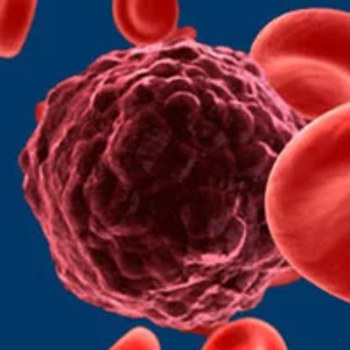
Oliver Van Oekelen, MD, MSc, discusses findings from a retrospective study that evaluated treatment and efficacy outcomes in patients with relapsed or refractory multiple myeloma who experienced disease progression after BCMA-directed CAR T-cell therapy.

Ashutosh K. Tewari, MD, discusses the factors to consider when deciding on a robotic radical prostatectomy for a patient with prostate cancer.
The Tisch Cancer Institute at Mount Sinai and the Samuel Waxman Cancer Research Foundation are launching a unique research program that will fund collaborations between TCI physician-scientists and colleagues from other established cancer research institutions to address the rising rates of cancer due to aging around the world.
Matthew Galsky, MD, discusses clinical trials that addressed key questions in urothelial cancer.
Ajai Chari, MD, reviews the takeaways from the PLEIADES trial and its comparability with the CANDOR trial, and how a subcutaneous formulation of a daratumumab combination became a pivotal player in the treatment enhancement for patients with relapsed or refractory multiple myeloma.
The immune checkpoint TIM-3 is shaping up to be a viable target for designing therapies for patients with non–small cell lung cancer and other malignancies.
Marina Kremyanskaya, MD, PhD, discusses the next steps of the phase 1/2 MANIFEST trial in myelofibrosis.
Matthew Galsky, MD, discusses the evolution of standard of care treatment options in urothelial carcinoma.
Tarek H. Mouhieddine, discusses a study that evaluated outcomes in patients with relapsed/refractory multiple myeloma who progressed on bispecific antibodies.
Most patients with myelofibrosis with moderate to severe thrombocytopenia treated with pacritinib were able to maintain full dose intensity over time and had numerically higher rates of symptom response vs those who received ruxolitinib.
Matthew Galsky, MD, discusses key developments in the standard-of-care treatment of patients with metastatic or advanced urothelial cancer.
The Icahn School of Medicine at Mount Sinai is establishing a Skin Biology and Diseases Resource-based Center, funded by a $4 million, five-year P30 grant from the National Institutes of Health and the National Institute of Arthritis and Musculoskeletal and Skin Diseases.

Daniela Sia, PhD, discusses a novel microenvironment-based classification system of intrahepatic cholangiocarcinoma.

Biomarkers of response to immunotherapy, characterized by high interferon signaling and expression of MHC-II related genes, predicted for improved survival in patients with advanced hepatocellular carcinoma following immediate treatment with a PD-1 inhibitor but not in those who had first received treatment with a TKI.
Josep M. Llovet, MD, discusses the importance of identifying biomarkers of response to checkpoint inhibitors for patients with hepatocellular carcinoma, as well as future research directions.
$60 million pledged to establish the Mount Sinai Tisch Cancer Center and to construct a new, state-of-the-art cancer hospital in Manhattan.
The Icahn School of Medicine at Mount Sinai has been awarded a grant of more than $4 million by the National Cancer Institute for a large-scale study to evaluate anal cancer screening in high-risk women who have been previously diagnosed with human papillomavirus infection.

Robotic prostate surgery pioneer Mani Menon, MD, is joining Mount Sinai and will serve as Chief of Strategy and Innovation in the Department of Urology for the Mount Sinai Health System.

Joseph Sparano, MD, will lead Hematology and Medical Oncology and will be Deputy Director of The Tisch Cancer Institute.
Three first-in-class, SOX11 small molecule inhibitors demonstrated on-target antitumor activity in mantle cell lymphoma cell lines and in patient-derived ibrutinib-resistant models ex vivo.
Charles Powell, MD, MBA, discusses managing fam-trastuzumab deruxtecan-nxki–induced interstitial lung disease in HER2-positive breast cancer.

Ashutosh K. Tewari, MD, discusses some of the key differences between racial subgroups in prostate cancer.
Ashutosh K. Tewari, MD, discusses the hallmarks of cancer among Black men with prostate cancer.