
Ajai Chari, MD, shares some background on talquetamab, reported safety and efficacy findings from MonumenTAL-1, and highlighted other ways in which the agent is being explored in multiple myeloma.
Ajai Chari, MD, shares some background on talquetamab, reported safety and efficacy findings from MonumenTAL-1, and highlighted other ways in which the agent is being explored in multiple myeloma.
Peter Kozuch, MD, discusses the phase 2/3 CIRCULATE-US trial evaluating chemotherapy decisions for patients with resected colorectal cancer based on circulating tumor DNA status.
Joseph A. Sparano, MD, highlights practice-changing clinical trials, novel therapies, the evolving treatment landscape, and unmet needs in the field of breast cancer.
Joshua Brody, MD, discussed significant updates in MCL treatment presented at the 2022 ASH Annual Meeting, including results from the phase 1/2 BRUIN trial of pirtobrutinib, follow-up data from the phase 2 ZUMA-7 trial on CAR T-cell therapies, and next steps to expand the development of immunotherapies in this disease.
Joshua Brody, MD, discusses unmet needs in patient subgroups within Hodgkin lymphoma, recent advancements in the use of antibody-drug conjugates such as brentuximab vedotin and anti–PD-1 therapies in earlier lines of therapy, and future avenues for expanding the use of immunotherapy in this tumor type.
Dr Brody previews mantle cell lymphoma data being presented at the 2022 ASH Annual Meeting and Exposition, including promising data on pirtobrutinib from the BRUIN trial, the potential for CAR T-cell therapy as evidenced in the ZUMA-2 trial, and how immunotherapies such as glofitamab are expanding the treatment paradigm.
Joshua Brody, MD, discusses key follow-up data from the phase 3 ECHELON-1 trial in classical Hodgkin lymphoma.
John O. Mascarenhas, MD, discusses current advancement in the treatment landscape of myelofibrosis.
John Mascarenhas, MD, discusses the shifts from monotherapy to combination therapies in the evolving field of myelofibrosis care.

Shambavi Richard, MD, discussed key studies that continue to shape the SOC in both the transplant-eligible and -ineligible populations, the role of transplant in the space, and unmet needs that remain for older and frail patients.
John O. Mascarenhas, MD, discusses the investigation of pelabresib in myelofibrosis.
Press Release
T-cell redirection therapy has shown to be effective in patients unresponsive to initial bispecific antibody treatment.
Several inroads have been made in the realm of gastrointestinal cancers, with novel immunotherapy combinations representing a significant advance spanning several tumor types.

Peter Kozuch, MD, discusses the role of circulating tumor DNA in colorectal cancer.
Joshua Brody, MD, discusses the significance of CAR T-cell therapies being used in earlier treatment lines in patients with diffuse large B-cell lymphoma who relapse within their first year of receiving chemotherapy.

Press Release
Mount Sinai researchers have discovered a previously unknown mechanism in which not-yet-malignant cells from early breast cancer tumors travel to other organs and, eventually, “turn on” and become metastatic breast cancer.
Press Release
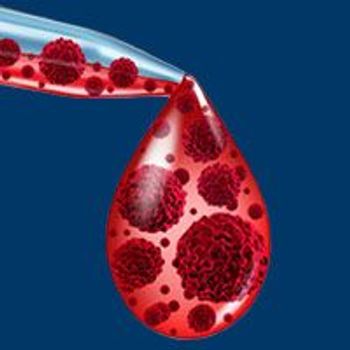
Study findings could be developed into less-invasive method.
Edward Kim, MD, discusses the future role of Y-90 in patients with unresectable hepatocellular carcinoma.
The bispecific antibody REGN5458 elicited rapid responses that were further characterized by their depth, durability, and low incidence of cytokine release syndrome in patients with relapsed/refractory multiple myeloma.
Daratumumab plus induction/consolidation lenalidomide, bortezomib, and dexamethasone elicited higher minimal residual disease-negativity rates vs the RVd combination alone in patients with transplant-eligible newly diagnosed multiple myeloma, including those in high-risk subgroups.
Matthew Galsky, MD, discusses the design and findings of the phase 3 CheckMate 274 trial in urothelial cancer.

Press Release
The Canopy Cancer Collective, a national nonprofit organization that strives to fuel better treatments and outcomes for pancreatic cancer patients, has awarded The Tisch Cancer Institute at Mount Sinai a $500,000 grant to support continued innovation in its multidisciplinary treatment of pancreatic cancer.

Press Release
Mount Sinai researcher Natasha Kyprianou, MBBS, PhD, a leading expert on prostate, bladder, and kidney cancer, has been awarded the Richard D. Williams, MD, Prostate Cancer Research Excellence Award by the Urology Care Foundation, the world’s leading nonprofit urological health foundation and official foundation of the American Urological Association.
Matthew Galsky, MD, discusses the rationale of the phase 3 CheckMate 274 trial in urothelial cancer.
Press Release
Mutation of a gene called ARID2 plays a role in increasing the chance that melanoma, a deadly skin cancer, will turn dangerously metastatic.
Matthew Galsky, MD, discusses long-term data from the phase 3 CheckMate 274 trial evaluating adjuvant nivolumab vs placebo in patients with high-risk, muscle-invasive urothelial cancer.
According to longer follow-up data from the phase 3 CheckMate 274 trial, patients with high-risk, muscle-invasive urothelial carcinoma continued to experience clinically meaningful improvements in disease-free survival when treated with adjuvant nivolumab vs placebo.
Press Release
Mount Sinai researchers have developed a novel method to identify aggressive early-stage lung cancers and target drugs known as aurora kinase inhibitors to tumors that are especially likely to respond to them.
Press Release
Most immunocompromised people with multiple myeloma benefited from a third dose of COVID-19 vaccines. However, some people with multiple myeloma still remained vulnerable and may need a fourth dose or antibody treatments as restrictions lift and new variants emerge

Press Release
Mount Sinai researchers conducting clinical trials of a drug targeting a cancer gene found that it increased metastatic cancer patients’ survival and was able to work within the brain.