
Lloyd Damon, MD, discusses optimal treatment regimens in adolescent/young adult acute lymphoblastic leukemia.
Lloyd Damon, MD, discusses optimal treatment regimens in adolescent/young adult acute lymphoblastic leukemia.

Charalambos (Babis) Andreadis, MD, MSCE, discusses the need to identify an optimal standard of care in patients with relapsed/refractory mantle cell lymphoma.
Thomas G. Martin, MD, discusses the impact of subcutaneous administration of daratumumab on patients with early relapse multiple myeloma.
Sandy Wong, MD, discusses investigational CAR T-cell products in relapsed/refractory multiple myeloma.
Rebecca L. Olin, MD, MSCE, associate professor, Department of Medicine (Hematology/Oncology), University of California San Francisco, discusses the utility of venetoclax in acute myeloid leukemia.
Adil Daud, MD, discusses the combination of dabrafenib and trametinib versus immunotherapy in patients with BRAF V600-mutant metastatic melanoma.
Adil Daud, MD, clinical professor, Department of Medicine (Hematology/Oncology) and director, Melanoma Clinical Research, University of California, San Francisco Helen Diller Family Comprehensive Cancer Center, discusses research evaluating interferon gamma as a potential biomarker of response in melanoma.
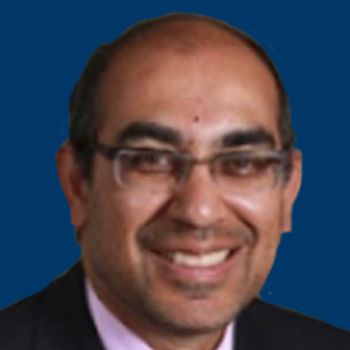
The use of immunotherapy in cancer was solidified by the ample activity seen in patients with melanoma.
Adil Daud, MD, clinical professor, Department of Medicine, director, Melanoma Clinical Research, University of California, San Francisco Helen Diller Family Comprehensive Cancer Center, discusses the immunogenicity of melanoma.
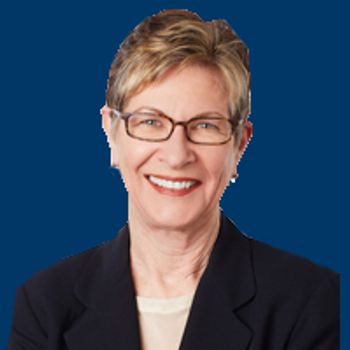
Margaret A. Tempero, MD, discusses the impact of FOLFIRINOX in the treatment of patients with metastatic pancreatic cancer and sheds light on the importance of molecular profiling in the space.

A. Jo Chien, MD, associate clinical professor, Department of Medicine, University of California, San Francisco Helen Diller Family Comprehensive Cancer Center, discusses the use of tucatinib (ONT-380) in the treatment of patients with HER2-positive breast cancer.
Lawrence D. Kaplan, MD, clinical professor of medicine, director, Adult Lymphoma Program, Division of Hematology-Oncology, University of California, San Francisco Helen Diller Family Comprehensive Cancer Center, discusses a phase Ib study with combination immune macrophage checkpoint blockade in indolent lymphoma.
Shagun Arora, MD, assistant clinical professor at the University of California, San Francisco (UCSF) Helen Diller Family Comprehensive Cancer Center, discusses the use of venetoclax (Venclexta) in the treatment of patients with chronic lymphocytic leukemia (CLL).
Nina Shah, MD, associate professor of medicine at the University of California, San Francisco Helen Diller Comprehensive Cancer Center, discusses the curative potential of chimeric antigen receptor (CAR) T-cell therapy in multiple myeloma.
Margetuximab in combination with chemotherapy improved progression-free survival compared with trastuzumab and chemotherapy in heavily pretreated patients with metastatic HER2-positive breast cancer.
Neil Shah, MD, PhD, professor, Department of Medicine (Hematology/Oncology), University of California, San Francisco (UCSF) Program Leader, Hematopoietic Malignancies Program, UCSF Helen Diller Family Comprehensive Cancer Center, discusses investigational agents in chronic myeloid leukemia (CML).
Laura J. Esserman, MD, MBA, professor, University of California, San Francisco Helen Diller Comprehensive Cancer Center, 2018 Giant of Cancer Care® for Cancer Diagnostics, discusses the elements of the I-SPY 2 trial in breast cancer.
Lawrence D. Kaplan, MD, clinical professor of medicine, director, Adult Lymphoma Program, Division of Hematology-Oncology, University of California, San Francisco Helen Diller Family Comprehensive Cancer Center, discusses the results of the phase III ECHELON-1 trial in Hodgkin lymphoma.

Shagun Arora, MD, assistant clinical professor at the University of California, San Francisco (UCSF) Helen Diller Family Comprehensive Cancer Center, discusses novel therapies in the treatment of patients with chronic lymphocytic leukemia (CLL).
Charalambos (Babis) Andreadis, MD, MSCE, associate professor of clinical medicine, Department of Medicine, University of California, San Francisco (UCSF) Helen Diller Family Comprehensive Cancer Center, discusses FDA-approved chimeric antigen receptor (CAR) T-cell therapies in diffuse large B-cell lymphoma (DLBCL).
Sandy Wong, MD, assistant professor, University of California, San Francisco (UCSF) School of Medicine, discusses an investigational antibody-drug conjugate (ADC) in multiple myeloma.
Nina Shah, MD, associate professor of medicine at the University of California, San Francisco Helen Diller Comprehensive Cancer Center, discusses challenges with chimeric antigen receptor (CAR) T-cell therapy in multiple myeloma.
Thomas G. Martin, MD, clinical professor of medicine, Adult Leukemia and Bone Marrow Transplantation Program, associate director, Myeloma Program, University of California, San Francisco (UCSF); co-leader, Hematopoietic Malignancies Program, Helen Diller Family Comprehensive Cancer Center, discusses the potential of selinexor in penta-refractory patients with multiple myeloma.
Nina Shah, MD, discusses the promise of bb21217 in the complex treatment paradigm of relapsed/refractory multiple myeloma
Nina Shah, MD, associate professor of medicine at the University of California, San Francisco Helen Diller Comprehensive Cancer Center, discusses the potential of bb21217 in the treatment of patients with multiple myeloma.
Pamela N. Munster, MD, professor, department of medicine (hematology/oncology), University of California, San Francisco (UCSF), director, early phase clinical trials unit, co-leader, Center for BRCA Research, leader, Experimental Therapeutics Program, UCSF Helen Diller Family Comprehensive Cancer Center, discusses the developmental process for biosimilars in oncology.
Thomas G. Martin, MD, clinical professor of medicine, Adult Leukemia and Bone Marrow Transplantation Program, associate director, Myeloma Program, University of California, San Francisco (UCSF); co-leader, Hematopoietic Malignancies Program, Helen Diller Family Comprehensive Cancer Center, discusses minimal residual disease (MRD) status in multiple myeloma.

Charalambos (Babis) Andreadis, MD, MSCE, associate professor of clinical medicine, Department of Medicine, University of California, San Francisco (UCSF) Helen Diller Family Comprehensive Cancer Center, discusses the treatment of patients with relapsed diffuse large B-cell lymphoma.
Hope Rugo, MD, professor of medicine, director of the Breast Oncology Clinical Trials Program, University of California, San Francisco Helen Diller Family Comprehensive Cancer Center, discusses the optimal setting for biosimilar evaluation.
Charalambos (Babis) Andreadis, MD, MSCE, associate professor of clinical medicine, Department of Medicine, University of California, San Francisco (UCSF) Helen Diller Family Comprehensive Cancer Center, discusses the role of ibrutinib (Imbruvica) in the treatment of patients with diffuse large B-cell lymphoma.