
Lab-grown dendritic cells dressed with a sample of a patient’s tumor might someday train the immune system to fight cancer, a study shows.
Lab-grown dendritic cells dressed with a sample of a patient’s tumor might someday train the immune system to fight cancer, a study shows.

A study found that the vast majority of veterans with early prostate cancer pursued surveillance instead of treatment.

UCSF Health’s Adam Blaisdell, MD, PhD, has been selected as an IGNITE fellow by the Cancer Research Institute.

To figure out how to beat persister tumor cells, researchers at UCSF built a robotic system that treats thousands of mini tumors at once in the laboratory.
Kathy Chiao and Ken Hao commit $100 million for major capital projects, cancer research, and innovation at UCSF — building on a recent $75 million gift to UC Davis for veterinary medicine.
A new gene-editing approach developed at UCSF treated leukemia, multiple myeloma, and sarcoma in mice by precisely reprogramming immune cells with no external manufacturing required.

The top 5 OncLive TV videos of the week cover insights in colorectal cancer, breast cancer, bladder cancer, and more
Laura J. Esserman, MD, MBA, discusses the potential utility of risk-based screening for breast cancer.
Javid Moslehi, MD, discusses the role of the cardiologist in the setting of breast cancer management to facilitate optimal cancer management.
Javid Moslehi, MD, highlights current cardiac monitoring protocols associated with breast cancer drugs and ways to refine these protocols in the future.
Laura J. Esserman, MD, MBA, discusses key results from the WISDOM 1.0 breast cancer screening trial.
Javid Moslehi, MD, explains the intersection of cardiovascular health and oncology when optimizing breast cancer treatment decision-making.
Laura J. Esserman, MD, MBA, explains current gaps with breast cancer screening methods.
Johannes R. Kratz, MD, has been named as the inaugural Chief of UCSF’s Division of Thoracic Surgery.
Breast cancer experts discuss adverse effect management when using breast cancer therapies targeting the PI3K, AKT, and mTOR pathways.
UCSF clinicians present research at SurgeWest 2025, on an RNA biomarker for prostate cancer and opioid prescribing patterns after urologic surgery.
Researchers from UCSF discovered that a combination of immunotherapies can reprogram the immune environment of colon cancer tumors in the liver.
US News & World Report lists UCSF Health pediatric care as tied for best in Northern California, with three specialties among the top 10 nationwide.
This year’s ASTRO program highlights research and expert discussions from UCSF Radiation Oncology and the Helen Diller Family Comprehensive Cancer Center.
Exposure to pollutants, such as pesticides and whildfires, could decrease brain and behavioral function in children, particularly in childhood cancer survivors.
Matching grant from Weill family creates collaborative research hub, uniting scientists from UCSF and Stanford Medicine to transform cancer care within a decade.
UCSF researchers have discovered that the cells of triple-negative breast cancer tumors build molecular tunnels into nearby fat cells.
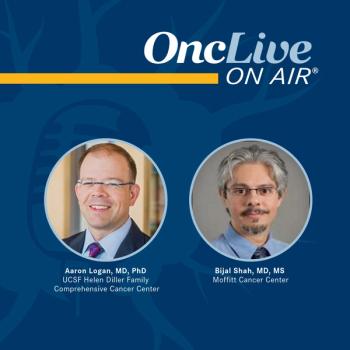
Drs Logan and Shah discussed where obe-cel currently fits into the B-ALL treatment paradigm and how the use of this agent might expand going forward.
Matching grant from Weill family creates collaborative research hub, uniting scientists from UCSF and Stanford Medicine to transform cancer care within a decade.

Laura A. Huppert, MD, discusses how the approval of the SERENA-6 regimen could affect second-line treatment decision-making in HR-positive breast cancer.

Aaron C. Logan, MD, PhD, discusses the potential use of obe-cel as definitive treatment in adult relapsed/refractory B-ALL.
Laura Huppert, MD, discusses ways that the frontline use of T-DXd in HER2-positive metastatic breast cancer may affect later-line treatment decisions.
Ana Velázquez Mañana, MD, MSc, discusses survey findings that revealed gender equity training for oncology fellows is often lacking.
Bladder tumors that have been excluded from clinical trials have a few things in common that could lead to new therapies.