
A protein called PCSK9 determines how pancreatic cancer cells metastasize to different parts of the body.
A protein called PCSK9 determines how pancreatic cancer cells metastasize to different parts of the body.
Researchers at UC San Francisco discovered that some gut bacteria reduce the side effects of chemotherapy and that some drugs boost protective bacteria.

The University of California Lung Cancer Consortium and AstraZeneca announced a five-year partnership to expand the Healthy Lungs California initiative.
UCSF experts highlight leadership in innovative cancer research and education.
Drs Park and Koshkin discuss sequencing antibody-drug conjugates for bladder cancer and the potential future role of sacituzimab govitecan in this disease.
Drs Park and Koshkin discuss the benefits of enfortumab vedotin in bladder cancer and the potential for more ADCs to join the treatment paradigm.
Experts across specialties reflect on the long-term effects of COVID-19 on several aspects of cancer care.
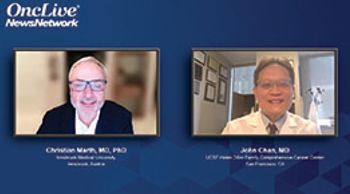
Christian Marth, MD, PhD, and John Chan, MD, discuss ongoing research to watch in endometrial cancer.
Christian Marth, MD, PhD, and John Chan, MD, discuss antibody-drug conjugates and agents under evaluation in endometrial cancer.
Christian Marth, MD, PhD, and John Chan, MD, discuss subgroup data for frontline lenvatinib/pembrolizumab in endometrial cancer after perioperative chemotherapy.
Christian Marth, MD, PhD, and John Chan, MD, discuss frontline chemoimmunotherapy combinations in advanced endometrial cancer.
Christian Marth, MD, PhD, and John Chan, MD, discuss data for frontline lenvatinib plus pembrolizumab in advanced endometrial cancer.
Christian Marth, MD, PhD, and John Chan, MD, discuss frontline treatment trends and challenges in advanced endometrial cancer.
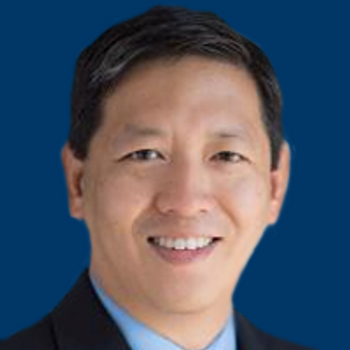
Felix Y. Feng, MD, a radiation oncologist and researcher at UCSF, died of cancer on December 10, 2024, at 48 years old.
Laura A. Huppert, MD, discusses survival outcomes of patients with metastatic breast cancer and leptomeningeal disease according to disease subtype.

Elacestrant plus abemaciclib demonstrated clinically important efficacy in ER-positive/HER2-negative advanced or metastatic breast cancer.
Hope S. Rugo, MD, FASCO, discusses updated safety findings from the ELEVATE trial of elacestrant-based combinations in ER+/HER2– metastatic breast cancer.
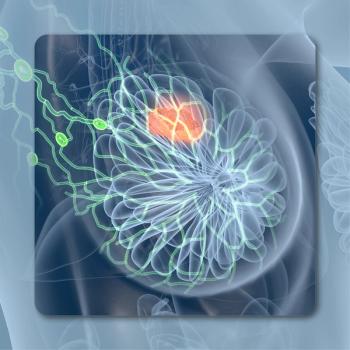
Elacestrant was partnered with multiple targeted agents across varying dose levels and schedules for patients with estrogen receptor–positive advanced breast cancer.
Neil P. Shah, MD, PhD, highlights key recent changes to the CML NCCN guidelines and details anticipated data for 2025.
Alan P. Venook, MD, describes challenges implementing NCCN guidelines into practice in rectal, colon, and biliary tract cancers, and advancements from 2024.
Alan P. Venook, MD, highlights notable NCCN guideline updates in HCC, considerations for implementing the changes in the clinic, and next steps in HCC.

UCSF Life Sciences Building will bring research, innovation, specialty care clinics, and world-class cancer therapy to San Francisco’s central waterfront.
Here is your snapshot of all therapeutic options that the FDA approved in October 2024 spanning tumor types.
Hope Rugo, MD, FASCO, discusses the FDA approval of inavolisib, how it will be incorporated into care, and the patient population evaluated in INAVO120.
Terence W. Friedlander, MD, discusses the design and methodology of the Duravelo-2 study of zelenectide pevedotin in advanced/metastatic urothelial cancer.
Terence W. Friedlander, MD, discusses emerging agents of interest in urothelial carcinoma.
Dr Taylor discusses the significance of the FDA approval of vorasidenib for patients with IDH-positive grade 2 astrocytoma or oligodendroglioma.
Panelists discuss how addressing unmet needs in patient selection, resistance mechanisms, and long-term outcomes can enhance the efficacy of antibody-drug conjugates in breast cancer treatment.
Panelists discuss how, despite the investigational status of agents like patritumab deruxtecan (HER3-DXd) and datopotamab deruxtecan (Dato-DXd), it’s crucial for community oncologists to be aware of the treatment-related adverse effects (TRAEs) associated with these therapies and to consider effective management strategies as reported in clinical trials.
Panelists discuss how ongoing clinical trials of investigational antibody-drug conjugates (ADCs) are advancing treatment options for breast cancer, particularly in patients with active brain metastases and advanced disease.