UCSF Helen Diller Family Comprehensive Cancer Center | Strategic Alliance Partners
Latest from UCSF Helen Diller Family Comprehensive Cancer Center
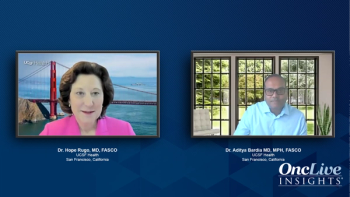
Panelists discuss how the multidisciplinary team plays a crucial role in managing treatment-resistant adverse effects for patients receiving antibody-drug conjugates, emphasizing collaboration among oncologists, pharmacists, nurses, and specialists to optimize patient care and ensure comprehensive support.
Panelists discuss how management and monitoring for pneumonitis and cardiotoxicity in trastuzumab deruxtecan (T-DXd) is similar to trastuzumab emtansine (T-DM1), while also emphasizing the need for awareness of adverse effects such as peripheral neuropathy, thrombocytopenia, and hepatotoxicity, along with strategies for their management and when to consider therapy modifications.
Terence W. Friedlander, MD, discusses adverse effects that are associated with standard enfortumab vedotin in bladder cancer.

Researchers will investigate aggressive prostate cancer from a mechanistic, biomarker and therapeutic perspective.
Experts on breast cancer provide clinical insights on the management of pneumonitis associated with trastuzumab deruxtecan.
Experts on breast cancer discuss the potential adverse events related to trastuzumab deruxtecan (T-DXd).
Terence W. Friedlander, MD, discusses updates in the frontline management of bladder cancer.
A UCSF-led study alerts transwomen and physicians to interpret standard screening guidelines with caution.

A 100-mg dose of tarlatamab was safe and showed particularly robust activity in patients with DLL3-positive neuroendocrine prostate cancer.
The milestone robotic procedure is a complex gastrointestinal surgery.
Treatment with nivolumab plus cabozantinib yielded responses in patients with non-clear cell renal cell carcinoma.

Eating more fruits, nuts and vegetables each day – along with fewer animal products – is associated with a nearly 50% reduction in the risk of prostate cancer progression.
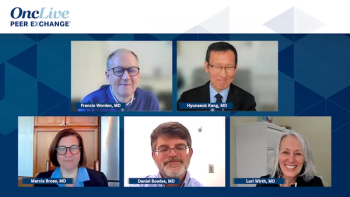
Exploring Real-World Evidence Presented at ATA 2023
ByLori J. Wirth, MD,Francis Worden, MD,Marcia S. Brose, MD, PhD,Daniel Bowles, MD,Hyunseok Kang, MD Medical professionals discuss the recently published real-world evidence presented at the American Thyroid Association 2023 Conference.
Determining Which DTC Patients May Benefit from Systemic Therapy
ByLori J. Wirth, MD,Francis Worden, MD,Marcia S. Brose, MD, PhD,Daniel Bowles, MD,Hyunseok Kang, MD Hyunseok Kang, MD, discusses the importance of balancing toxicities and other factors when initiating first-line treatments for patients with refractory differentiated thyroid cancer (DTC), while emphasizing the need to set clear goals and communicate potential adverse reactions before allowing patients to make informed decisions.
Targeted therapy, genomics, and treatment disparities were among the topics that were presented by researchers from UCSF at the 2024 AACR conference.
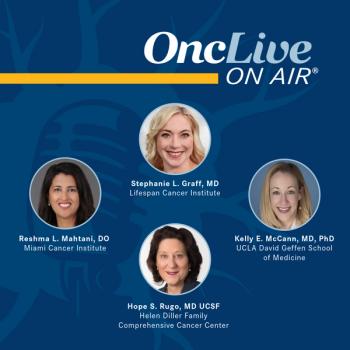
Breast Cancer Experts Share Obstacles and Successes as Women in Oncology
ByStephanie L. Graff, MD, FACP,Reshma L. Mahtani, DO,Kelly E. McCann, MD, PhD,Hope S. Rugo, MD, FASCO Drs Graff, Mahtani, McCann, and Rugo share moments that sparked their interest in oncology and setbacks they overcame when building their careers.
UCSF researcher to lead multicenter precision medicine trial for juvenile myelomonocytic leukemia.
Hope S. Rugo, MD, draws on her own journey as a woman in oncology to provide insights on navigating career transitions and building support networks.
Hope Rugo, MD, discusses the evolution of antibody-drug conjugates in hormone receptor–positive, HER2-positive, and HER2-low breast cancer.
Laura A. Huppert, MD, discusses data informing the sequence of immunotherapy and chemotherapy regimens in early-stage triple-negative breast cancer.
Hope S. Rugo, MD, FASCO, shares progress made with ADCs and the interest in moving these agents up in the HR-positive/HER2-negative breast cancer paradigm.
Michael D. Alvarado, MD, discusses the decision to undergo breast conservation surgery vs mastectomy following neoadjuvant breast cancer therapy.
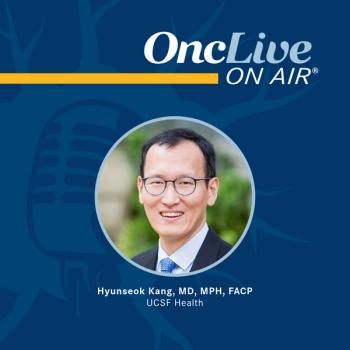
Dr Kang discusses the significance of the FDA approval of toripalimab for nasopharyngeal carcinoma and his anticipated use of the agent.
In case you missed it, read a recap of every episode of OncLive On Air recorded in January 2024.

A genetic mutation that makes cancer cells hardy can be engineered into T cells, giving them superhuman strength.
Many clinicians have reported a lack of understanding of the FDA approval process and a desire for strong premarket evidence to support these approvals.
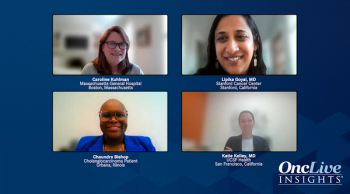
Provider and patient perspectives on why patient education about FGFRi treatment-associated adverse events and how to manage them are is essential in helping patients maintain a good quality of life and stay on treatment.
Many patients with cholangiocarcinoma being treated with FGFRi will experience stomatitis and dry mouth, but there are strategies that can help.
Experts share preventative and management strategies for nail toxicities and mouth sores that can cause significant quality of life issues for patients being treated with FGFRi.
Hyperphosphatemia is the most common AE associated with FGFRi treatments and can impact patient quality of life, but there are treatments and possible diet changes that may help mitigate this AE.
