

Hope Rugo, MD, discusses the challenges of differentiating between HER2-low and HER2-negative metastatic breast cancer and prognostic differences in HER2+ and HER2-low metastatic breast cancer.
Hope Rugo, MD, discusses the challenges of differentiating between HER2-low and HER2-negative metastatic breast cancer and prognostic differences in HER2+ and HER2-low metastatic breast cancer.
Rahul Aggarwal, MD, discusses the rationale for investigating androgen deprivation therapy intensification in biochemically relapsed prostate cancer.
Lutetium-177-FAP-2286 produced preliminary evidence of antitumor activity with a manageable safety profile in patients with advanced or metastatic solid tumors, according to data from the phase 1/2 LuMIERE trial.
Sacituzumab govitecan improved progression-free survival and overall response rate among patients with HER2-low or HER2 immunohistochemistry zero, hormone receptor–positive metastatic breast cancer.
First-line treatment with camrelizumab plus rivoceranib resulted in a significant improvement in progression-free survival and overall survival compared with sorafenib in patients with unresectable hepatocellular carcinoma.
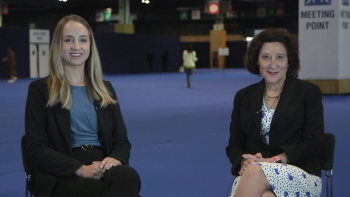
OncLive® will be LIVE with OncLive® News Network: On Location at the 2022 ESMO Congress. Each day, we will broadcast a series of interviews with top thought leaders, to learn their thoughts and reactions to data presented across oncology during the conference.
DNA damage homologous recombination repair genotypic variants are not created equal.
Lena Winestone, MD, discusses disparities with diagnosis in pediatric leukemia.
CDK4/6 inhibitors have carved out a substantial role in the treatment of patients with hormone receptor–positive, HER2-negative breast cancer.
Andrew H. Ko, MD, discusses the multitude of treatment options for patients with gastroesophageal cancer, emerging combinations in hepatocellular carcinoma, and how HER2 expression can drive therapy decisions in colorectal cancer.
As ongoing research efforts are shifting further into personalized care, Hope S. Rugo, MD, FASCO discusses how pathologic complete response and the predictive value of residual cancer burden scoring are becoming a pivotal end point for the changing triple-negative breast cancer landscape.
The oral VEGFR2 TKI rivoceranib demonstrated an objective response rate by investigator assessed RECIST 1.1 criteria of 15.1% and a disease control rate of 64.4% for patients with recurrent or metastatic adenoid cystic carcinoma.
Sacituzumab govitecan elicited a statistically significant and clinically meaningful benefit among patients with hormone receptor–positive, HER2-negative breast cancer with endocrine therapy resistance, reducing the risk of disease progression by 34% vs standard chemotherapy, according to results of the phase 3 TROPiCS-02 trial.
Thomas Martin, MD, discusses updates from the CARTITUDE-1 trial, as well as the future of CARs and bispecific T cell engagers in multiple myeloma.
Lung cancer management methods are rapidly evolving to encompass immunotherapy in the frontline setting and approved second-line options with tyrosine kinase inhibitors and monoclonal antibodies in non–small cell lung cancer, as well as treatment advances in first- and second-line small cell lung cancer.
Press Release
UCSF’s Division of Hematology-Oncology is welcoming Krishna Komanduri, MD, as division chief of Hematology-Oncology at UCSF Health.
The FDA has approved ciltacabtagene autoleucel for the treatment of adult patients with relapsed/refractory multiple myeloma, following 4 or more prior lines of therapy, including a proteasome inhibitor, an immunomodulatory agent, and an anti-CD38 monoclonal antibody.
Immunotherapy treatment for early-stage triple-negative breast cancer is enjoying a boom period, though there are still unanswered questions, particularly around the optimal chemotherapy backbone and patient selection.
Thomas G. Martin, MD, discusses the patient population of the phase 2 CARTITUDE-1 study in relapsed/refractory multiple myeloma.
Thomas G. Martin, MD, discusses some of the exciting clinical trials open at UCSF Helen Diller Family Comprehensive Cancer Center in multiple myeloma, especially for those in the relapsed/refractory setting.
Shumei Kato, MD, discusses the characterization of BRAF mutations in oncology.
Advances in the treatment of solid tumors and hematologic malignancies have resulted in the development of thera-peutic regimens that can be administered at various points in a patient’s care.
Rahul Banerjee, MD, discusses the rationale to create a supportive mobile health companion app for CAR T-cell therapy recipients and their caregivers to use throughout the therapeutic process.
Thomas G. Martin, MD, discusses the 2-year follow-up data of the phase 1/2 CARTITUDE-1 study in relapsed/refractory multiple myeloma, that were presented during the 2021 ASH Annual Meeting & Exposition.
The combination of cabozantinib and atezolizumab led to a statistically significant improvement in progression-free survival and a numerical improvement in overall survival vs sorafenib as frontline treatment in patients with advanced hepatocellular carcinoma, according to findings from the first planned analysis of the phase 3 COSMIC-312 trial.
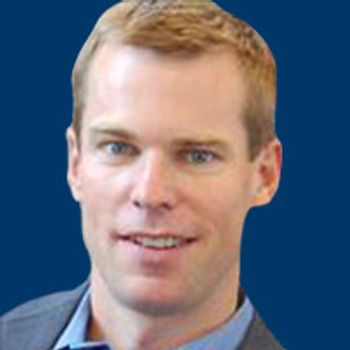
The Cancer Cell Map Initiative, developed by investigators at the University of California San Francisco and the University of California San Diego, has successfully charted how hundreds of genetic mutations involved in breast cancer and cancers of the head and neck affect the activity of proteins that ultimately lead to disease.

Nina Shah, MD, discusses the potential utility of natural killer cells in multiple myeloma.
Hope S. Rugo, MD, FASCO, provides her insights on the final analysis data from the international phase 3 ASCENT trial.
Nina Shah, MD, discusses the potential of vaccine-based therapies in multiple myeloma.
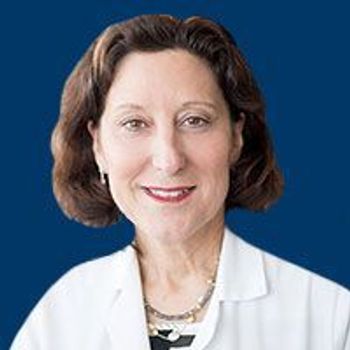
Hope S. Rugo, MD, discusses the final data from the phase 3 KEYNOTE-355 trial with pembrolizumab plus chemotherapy in patients with metastatic TNBC and the clinical impact on the treatment paradigm.