
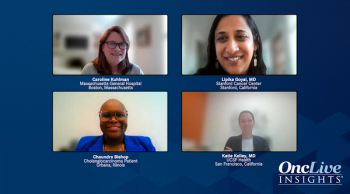
Ocular toxicities from dry eye to development of cataracts are potential risks with FGFRi treatment; providers share management strategies.
Ocular toxicities from dry eye to development of cataracts are potential risks with FGFRi treatment; providers share management strategies.
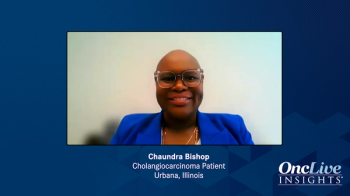
A patient with cholangiocarcinoma shares her experience while being treated with an FGFR inhibitor, as well as insights on what providers should tell their patients to help them best manage or possibly prevent these adverse events.
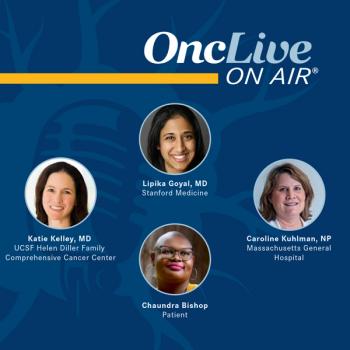
Goyal, Bishop, Kelley, and Kuhlman discuss ways to prepare patients with cholangiocarcinoma for FGFR inhibitor–related adverse effects.
A review of how frequently adverse events from hyperphosphatemia to nail toxicities to stomatitis and more.
Provider perspectives on the importance of education patients about potential adverse events they may experience when initiating treatment with FGFR inhibitors.
Press Release
A national survey conducted by UCSF researchers reveals that many physicians are unfamiliar with how the FDA regulates new drugs and medical devices.
Next-generation FGFR inhibitors show promise in early trials evaluating their efficacy and safety for the treatment of cholangiocarcinoma.
Experts discuss treatment options for cholangiocarinoma and how FGFR inhibitors have changed the treatment landscape in recent years.
Experts in treating cholangiocarcinoma share insights on when biomarker testing is needed and which biomarkers to test for.
Key opinion leaders illustrate how patients with intrahepatic cholangiocarcinoma present in a clinical setting.
The intricate web of risk factors influencing diverse forms of liver cancers are explored.

Thomas G. Martin, MD, has received a grant from the California Institute of Regenerative Medicine to produce a CAR T cell therapy for multiple myeloma.
The American Society of Clinical Oncology has elected Eric J. Small, MD, FASCO, to serve as its president for the term beginning in June 2025.
In case you missed it, here is a recap of the most popular episodes of OncLive On Air® from 2023.
Regular screenings may decrease the chance of diagnosis of advanced breast cancer in some women and lead to a 20% reduction in breast cancer mortality. However, the chances of being diagnosed with advanced breast cancer are higher among women who are Black or Hispanic/Latinx, overweight, or obese.

Laura A. Huppert, MD, discusses the impact of sequential treatment with fam-trastuzumab deruxtecan-nxki and sacituzumab govitecan-hziy on outcomes in patients with HER2-low metastatic breast cancer, according to findings from a retrospective analysis.
Medical experts discuss the pathology of intrahepatic cholangiocarcinoma.

Press Release
University of California prostate cancer experts will share clinical insights at the first annual PSMA Conference, “PSMA PET and RLT: Present and Future.”
Pembrolizumab plus olaparib did not improve progression-free or overall survival vs pembrolizumab plus chemotherapy in patients with locally recurrent inoperable or metastatic triple-negative breast cancer who received induction pembrolizumab plus chemotherapy.
Arpita Desai, MD, discusses the impact that the findings from the phase 3 CONTACT-03 trial had in patients with metastatic renal cell carcinoma.

Ana Velázquez Mañana, MD, discusses findings from a study determining survivorship care needs in low-income, older patients with lung cancer.

Jacqueline Aredo, MD, MS, discusses findings from a study assessing the molecular distribution of driver mutations and tumor suppressor gene mutations in patients with non–small cell lung cancer who are eligible for lung cancer screening.
Andrew Ko, MD, FASCO, highlights what the potential approval of zolbetuximab could mean for the first-line treatment paradigm for patients with CLDN18.2-positive gastric/gastroesophageal junction adenocarcinoma and detailed other ongoing research in the gastrointestinal cancer space.
Ajai Chari, MD, director, discusses the safety profile of talquetamab following the drug’s FDA approval for patients with relapsed/refractory multiple myeloma.
Ajai Chari, MD, discusses selecting between CAR T-cell therapies and bispecific antibodies in multiple myeloma, expands on the factors that can help inform these decisions, and highlights the need for additional data to help inform sequencing and potential combinations for these therapies.

Ajai Chari, MD, discusses the evolving role of bispecific antibodies and CAR T-cell therapies, such as ciltacabtagene autoleucel, in the treatment of patients with multiple myeloma.
Ajai Chari, MD, director, discusses the current landscape of bispecific antibodies in relapsed/refractory multiple myeloma.
Ajai Chari, MD, discusses the use of the CAR T-cell therapies idecabtagene vicleucel and ciltacabtagene autoleucel in the treatment of patients with multiple myeloma.

Ajai Chari, MD, discusses important patient factors to consider when selecting between currently approved BCMA-targeted therapies for the treatment of patients with multiple myeloma.
Dr Kelley discusses standard first-line treatment options for patients with advanced HCC, key findings from the phase 3 HIMALAYA trial, and the safety profile of the STRIDE regimen in this population.