Ajai Chari, MD, expands on the evolving debate surrounding transplant eligibility determination in newly diagnosed multiple myeloma.
Ajai Chari, MD, expands on the evolving debate surrounding transplant eligibility determination in newly diagnosed multiple myeloma.
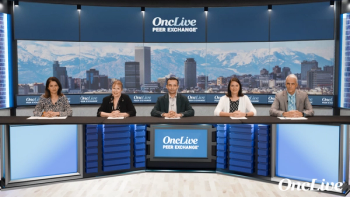
Panelists discuss how community providers can implement strategies and utilize resources to effectively connect patients to referral centers for chimeric antigen receptor T-cell therapy, while addressing how to initiate conversations about the therapy and counsel patients regarding potential adverse events.
Panelists discuss how early referral for chimeric antigen receptor T-cell therapy is crucial for patients, as it helps to overcome potential barriers and ensures timely access to this transformative treatment option.
Panelists discuss how patient and disease factors influence the choice between ide-cel and cilta-cel for chimeric antigen receptor (CAR) T-cell therapy, the significance of adverse event profiles in clinical decision-making, the use of bridging therapy prior to infusion, and the experiences of progression rates and potential mechanisms post treatment, as well as future directions for CAR T-cell therapy in relapsed/refractory multiple myeloma.
Panelists discuss how the KARMMA-3 study’s design, patient population, and efficacy outcomes—including overall survival data—inform the approval of ide-cel, as well as the implications of CARTITUDE-4’s recent findings on treatment selection and approaches for cilta-cel in chimeric antigen receptor T-cell therapy.
Panelists discuss the currently available chimeric antigen receptor T-cell therapies for early relapse multiple myeloma, examining their place within the treatment paradigm and how factors such as product type (cilta-cel vs ide-cel) and high-risk features (such as minimal residual disease positivity post induction and extramedullary disease) influence clinical decision-making.
Panelists discuss the key disease and patient factors considered when choosing between triplet and quadruplet induction regimens for patients with transplant-ineligible multiple myeloma, as well as the unmet needs that persist in the treatment landscape for both transplant-eligible and ineligible populations.
Panelists discuss the CEPHEUS trial results for newly diagnosed patients who are not transplant eligible, highlighting key takeaways. They also compare the CEPHEUS data with other quadruplet regimens in the non–transplant-eligible space, such as Isa-VRd.
Panelists discuss the importance of minimal residual disease negativity as a primary outcome measure and the treatment strategies for patients who are eligible for transplantation but choose to decline it, including preferred induction regimens for this population.
Panelists discuss whether daratumumab quadruplet induction regimens should be considered the new standard of care for newly diagnosed transplant-eligible patients and explore scenarios in which a triplet induction regimen might still be appropriate. They also review the findings from the ISKIA and GMMG-CONCEPT trials, including considerations for using isatuximab-carfilzomib (IsaKRd) over D-VRd.
Panelists discuss the findings of the PERSEUS trial and the recent cytogenetic risk analysis for patients with newly diagnosed transplant-eligible multiple myeloma. They then explore the CASSIOPEIA trial and its implications regarding daratumumab quadruplet induction regimens.
Ajai Chari, MD, discusses the potential role for CAR T-cell therapies in the early-relapsed setting for patients with multiple myeloma.
Ajai Chari, MD, discusses unmet needs in multiple myeloma, as well as what oncologists should know about the current treatment paradigm for this disease.
Ajai Chari, MD, discusses the 2024 OncLive® Bridging the Gaps in Hematologic Malignancies meeting, highlighting the treatment of multiple myeloma.
Ajai Chari, MD, discusses the efficacy of treating patients with less frequent or lower intensity dosing of talquetamab in patients with relapsed/refractory multiple myeloma, as evaluated in the phase 1/2 MonumenTAL-1 study.
Ajai Chari, MD, director, discusses the safety profile of talquetamab following the drug’s FDA approval for patients with relapsed/refractory multiple myeloma.
Ajai Chari, MD, discusses the evolving role of bispecific antibodies and CAR T-cell therapies, such as ciltacabtagene autoleucel, in the treatment of patients with multiple myeloma.
Ajai Chari, MD, director, discusses the current landscape of bispecific antibodies in relapsed/refractory multiple myeloma.
Ajai Chari, MD, discusses the use of the CAR T-cell therapies idecabtagene vicleucel and ciltacabtagene autoleucel in the treatment of patients with multiple myeloma.
Ajay Chari, MD, discusses several avenues for future study in newly diagnosed multiple myeloma.
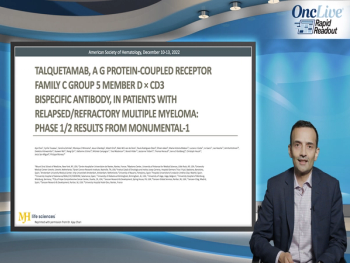
Dr Ajay Chari reviews the results from the MonumenTAL-1 trial which evaluates the use of talquetamab, a GPRC5D x CD3 bispecific antibody in patients with relapsed refractory multiple myeloma.