

Videos
Advertisement

Advertisement

Julia White, MD, The Ohio State University Comprehensive Cancer Center, discusses brain metastases in patients with HER2-positive breast cancer.
Kevin Kalinsky, MD, assistant professor of Medicine at Columbia University Medical Center, discusses the potential advantages of optical imaging for patients with HER2-positive breast cancer.

The PARP inhibitor olaparib improved progression-free survival versus standard chemotherapy in patients with BRCA-positive, HER2-negative breast cancer, according to findings from the phase III OLYMPIAD trial.
Carlos Barcenas, MD, assistant professor, Department of Breast Medical Oncology, Division of Cancer Medicine, The University of Texas MD Anderson Cancer Center, discusses managing neratinib-related side effects with colestipol (Colestid).

High breast density surpasses other known risk factors for developing breast cancer, including family history of the disease, personal history of benign lesions, and later-in-life childbirth, according to the results of a study published in JAMA Oncology.
Vivianne Tjan-Heijnen, MD, PhD, professor, Division of Medical Oncology, Department of Internal Medicine, Maastricht University Medical Center, discusses the results of the phase III DATA study.
Julia White, MD, professor of Radiation Oncology, The Ohio State University Comprehensive Cancer Center, discusses RTOG-1119 trial for patients with breast cancer.

Combination regimens that pair nab-paclitaxel with PD-L1 checkpoint blockade immunotherapy agents are emerging as a robust area of investigation in triple-negative breast cancer, bolstered by clinical trial results that establish the chemotherapeutic agent as an effective partner for other therapies.
Julie R. Nangia, MD, assistant professor, Breast Center-Clinic, faculty senator, Baylor College of Medicine, discusses hair loss prevention treatment for patients with breast cancer.
Joyce A. O’Shaughnessy, MD, addresses the key issues in breast cancer discussed at the 2017 OncLive® State of the Science Summit on Treatment of Metastatic Breast Cancer and shared her expert insight on where triple-negative breast cancer treatment is headed based on recent findings.

Melanie E. Royce, MD, PhD, discusses the recent progress in the landscape of HER2-positive breast cancer and what she envisions future treatment approaches will be for patients.
Carlos Barcenas, MD, assistant professor, Department of Breast Medical Oncology, Division of Cancer Medicine, University of Texas MD Anderson Cancer Center, discusses side effects of neratinib in patients with HER2-positive early-stage breast cancer.
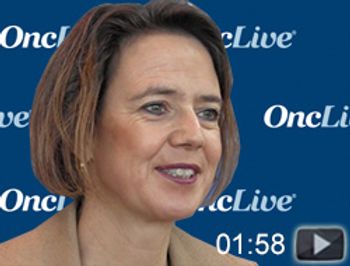
Sibylle Loibl, MD, PhD, co-chair of the German Breast Group (GBG) and associate professor at the University of Frankfurt, discusses the GeparSepto trial in subgroups of patients with breast cancer.

Ribociclib, an orally bioavailable, selective cyclin-dependent kinase 4/6 inhibitor, demonstrated similar clinical benefits and safety profiles for both elderly and younger patients with hormone-receptor positive, human epidermal growth factor receptor-2 negative advanced breast cancer.

Tara Sanft, MD, assistant professor of Medicine, medical director of Adult Survivorship for Yale Cancer Center Survivorship Clinic, discusses sequencing of treatments for patients with HER2-positive breast cancer.
Henry M. Kuerer, MD, PhD, discusses surgical advancements in the field of breast cancer and the goals of a phase II single-center trial and how it could impact these exceptional responders.
Welela Tereffe, MD, discusses the current state of radiation therapy in breast cancer and the importance of a multidisciplinary approach.
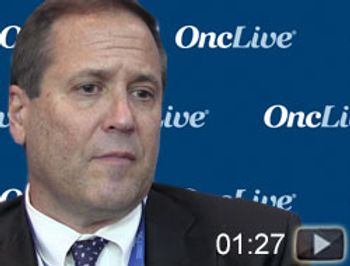
Adam M. Brufsky, MD, PhD, professor of Medicine, associate chief of Hematology/Oncology, co-director of the Comprehensive Breast Care Center, associate director of Clinical Investigation, University of Pittsburgh, discusses the COLET trial combining cobimetinib (Cotellic) and paclitaxel (Abraxane) as a treatment for patients with triple-negative breast cancer (TNBC).
Treatment with nanoparticle albumin-bound nab-paclitaxel showed encouraging activity across different subgroups of patients with breast cancer, according to the results of a meta-analysis of several clinical trials.
Jenny C. Chang, MD, discusses the significance of molecular testing in breast cancer and how it will lead to an improvement in treatment approaches in 2017 and beyond.
Charles L. Loprinzi, MD may have landed somewhat accidentally into the world of symptom management research, but once he arrived, he was there to stay.

Henry M. Kuerer, MD, PhD, professor of Surgery, The University of Texas MD Anderson Cancer Center, discusses the elimination of breast cancer surgery in exceptional responders.

Jenny C. Chang, MD, director of the Methodist Cancer Center at Houston Methodist Hospital, discusses genomic testing in breast cancer.
Welela Tereffe, MD, associate professor, Department of Radiation Oncology, The University of Texas MD Anderson Cancer Center, discusses the role of radiation therapy in the treatment of patients with breast cancer who previously received neoadjuvant chemotherapy.
Advertisement
Advertisement
Trending on OncLive
1
Single-Center, Retrospective Data Show Low Rate of Lifileucel Infusion Following Referral in Advanced Melanoma
2
Outcomes With Bridging Therapy Correlate With Cilta-Cel Efficacy, Safety in Multiple Myeloma
3
Real-World Data Support Clinical Benefit With Lifileucel in Previously Treated Advanced Melanoma
4
Long-Term Cilta-Cel Data Show Low Rates of PFS Events in Standard-Risk R/R Myeloma
5