

Adding capecitabine to adjuvant therapy reduced the risk of disease recurrence by 30% and prolonged survival by 40% for patients with residual breast cancer following neoadjuvant chemotherapy and surgery.

Your AI-Trained Oncology Knowledge Connection!
Adding capecitabine to adjuvant therapy reduced the risk of disease recurrence by 30% and prolonged survival by 40% for patients with residual breast cancer following neoadjuvant chemotherapy and surgery.

Active research and advancements in the field focuses on lessening the burden of radiation treatment while still maintaining acceptable cosmetic outcomes for patients with breast cancer.

Clifford Hudis, MD, discusses the evolving adjuvant therapy options in HER2-positive breast cancer.
Nimmi Kapoor, MD, Breast and Thyroid Surgical Oncologist at Breastlink, discusses the benefits and safety of multigene panel testing in patients at risk for hereditary breast cancer.

Robert R. Kuske, MD, radiation oncologist, Arizona Breast Cancer Specialists, discusses the analysis of the Pooled Registry of Multicatheter Interstitial Sites Experience, which examined the safety of accelerated partial breast irradiation via multicatheter interstitial brachytherapy.

As genetic testing becomes increasingly available, there will be a growing gap between the wide availability of testing and the relative importance of results to treatment decisions.
Patrick I. Borgen, MD, chair, Department of Surgery, head, Brooklyn Cancer Center, Maimonides Medical Center, compares the efficacy of surgical versus medical treatment of patients with breast cancer.

Frank A. Vicini, MD, radiation oncologist, 21st Century Oncology of Michigan, discusses a European study that examined the efficacy of accelerated partial breast irradiation versus conventional whole breast irradiation in patients with low-risk breast cancer.
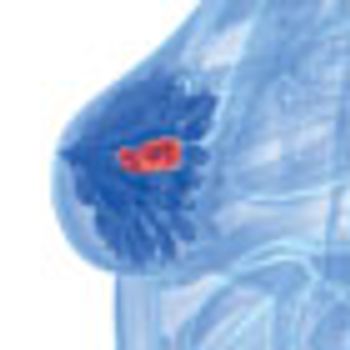
Rates of overall survival, disease-free survival, and local control were found to be comparable in select patients with early-stage breast cancer who underwent accelerated partial breast irradiation using multicatheter brachytherapy versus conventional whole breast irradiation.

The American Cancer Society now recommends that women at an average risk of breast cancer should wait to undergo annual screening mammography until they reach the age of 45.


Sylvia Adams, MD, explains the potential of TILs, as well as other biomarkers, including PD-1/PD-L1, in TNBC and other breast cancer types.

Patients with hormone receptor (HR)–positive, HER2-negative breast cancer who have a favorable gene-expression profile may be able to avert chemotherapy and receive endocrine treatment alone.
Rebecca Feldman, PhD, molecular science liaison/research scientist, Caris Life Sciences, discusses caveolin-1 as potentially having an oncogenic role in breast cancer.
Jennifer Montes, MD, NYU Langone Medical Center, discusses a recent study that examined the relationship of magnetic resonance imaging (MRI) characteristics with race in breast cancer.

The FDA has granted the CDK4/6 inhibitor abemaciclib a breakthrough therapy designation as monotherapy for heavily pretreated patients with refractory hormone-receptor-positive advanced breast cancer.
Matteo Lambertini, MD, Department of Medical Oncology, U.O. Oncologia Medica A, Hospital San Martino, Genova, Italy, discusses the use of luteinizing hormone-releasing hormone agonists (LHRHa) during chemotherapy to preserve ovarian function and fertility in patients with breast cancer.
Ingrid A. Mayer, MD, associate professor of medicine, co-leader and clinical director, Breast Cancer Research Program, medical oncologist, Vanderbilt-Ingram Cancer Center, discusses toxicities that are associated with therapies for ER-positive metastatic breast cancer.

Judy C. Boughey, MD, chair, Division of Surgery Research, Mayo Clinic, discusses locoregional clinical trials for breast cancer.

T.S. Wiley, CEO, Wiley Protocol Systems, discusses a study that examined the efficacy of biomemetic bio-identical hormone replacement therapy for patients with metastatic breast cancer.
Nimmi S. Kapoor, MD, surgical oncologist, Breastlink Laguna Hills and Breastlink Orange, discusses the benefits and safety of multigene panel testing in patients who are at risk for hereditary breast cancer.

Dennis Slamon, MD, PhD, discusses the inhibition of CDK 4/6 and PD-1, which represent two of the most exciting developments in the field of metastatic breast cancer.
Young women with breast cancer may decline, discontinue tamoxifen because of fertility concerns.
Joyce A. O'Shaughnessy, MD, Texas Oncology-Baylor Charles A. Sammons Cancer Center, discusses new developments in molecular profiling in patients with metastatic breast cancer.

Medivation has announced that it will purchase the PARP inhibitor talazoparib (BMN-673) from BioMarin Pharmaceutical for $410 million, with additional milestone and royalty payments of up to $160 million.
Joyce A. O'Shaughnessy, MD, Texas Oncology-Baylor Charles A. Sammons Cancer Center, discusses how the results of phosphoprotein assays can impact treatment decisions for select patients with advanced breast cancer.

Although many drugs are under study for patients with metastatic breast cancer, there is a pressing need to establish methods of predicting response and improving drug delivery, and researchers are looking toward molecular imaging techniques to help reach those goals.
Joyce A. O'Shaughnessy, MD, Texas Oncology-Baylor Charles A. Sammons Cancer Center, discusses insights from adding phosphoprotein testing to genomic testing for patients with breast cancer.

Shannon Puhalla, MD Assistant Professor of Medicine, Division of Hematology, University of Pittsburgh, discusses recent updates of the PALOMA-3 trial.

There is clear evidence that obesity at the time of diagnosis of operable breast cancer is associated with an increased risk of distant recurrence, specifically for HR–positive, HER2-negative disease, and oncologists should consider helping patients better manage their weight as part of their treatment plans.