

Opinion|Videos|February 24, 2026
Balancing Toxicity, Quality of Life, and Benefit With Dual Checkpoint Inhibition
Frontline HCC experts weigh atezolizumab-bevacizumab, STRIDE, and nivolumab-ipilimumab, using ALBI and social support to guide safer choices.
Advertisement
Episodes in this series
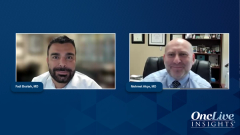
This segment addresses one of the most important real-world considerations in frontline HCC management: balancing the clinical benefits of dual checkpoint inhibition with toxicity risk and patient quality of life. Dr. Braiteh frames the discussion by acknowledging that many patients present with significant symptoms driven by underlying liver disease, such as untreated hepatitis or decompensated cirrhosis, populations often excluded from clinical trials but frequently encountered in practice. He emphasizes the need to distinguish disease-related symptoms from treatment-emergent adverse events when evaluating tolerability.
Dr. Braiteh asks how recent quality-of-life and safety analyses from CheckMate 9DW inform the risk–benefit assessment of nivolumab plus ipilimumab. Dr. Akçe summarizes findings from a recent abstract evaluating patient-reported outcomes and adverse events. He noted that although a high proportion of patients experienced immune-related toxicities, most occurred within the first three months of therapy. Importantly, patients who discontinued treatment due to adverse events or required high-dose steroids achieved survival and response outcomes comparable to the overall study population, suggesting durable benefit despite early treatment interruption.
Dr. Akçe also highlights that patients receiving nivolumab plus ipilimumab maintained quality of life and experienced a lower risk of deterioration compared with those treated with lenvatinib or sorafenib. These data reinforce that immune-related adverse events, although common, are often manageable and do not necessarily compromise long-term outcomes when addressed promptly.
Dr. Braiteh expands on practical management strategies, emphasizing close monitoring during the initial treatment period when high-dose CTLA-4 exposure occurs. He reviews commonly observed immune-mediated toxicities, including hepatitis, thyroid dysfunction, and colitis, noting that severe events requiring high-dose steroids occur in a minority of patients. Both faculty stress that early recognition, patient education, and multidisciplinary team involvement are essential to safely deliver dual checkpoint therapy and preserve quality of life in appropriately selected patients with advanced HCC.
Advertisement
Related to this article

Researchers at Wake Forest University School of Medicine identified a protein that may help breast cancer spread to the brain and evade immune defenses.
Benjamin Weinberg, MD, discusses the FDA approval of daraxonrasib, RASolute 302 survival data, safety considerations, and future RAS-targeted therapies in pancreatic cancer.
Half of lenalidomide-refractory patients with 1 to 3 prior lines remained alive and progression free at least 5 years after a single cilta-cel infusion.
Andrew Kuykendall, MD, discusses the FDA approval of rusfertide and how to apply it in clinical practice for polycythemia vera management.

An NDA seeks FDA approval of savolitinib plus osimertinib for EGFR-mutated NSCLC with MET overexpression or amplification after EGFR TKI therapy.
Jason Hafron, MD, discusses the emotional, clinical, and financial burden of false positive cancer screening results and improved risk stratification.

Raajit K. Rampal, MD, PhD, discusses JAK inhibitor choice in cytopenic myelofibrosis, emerging combinations, and anemia-directed agents.

The sNDA for elinzanetant seeks FDA approval for moderate-to-severe vasomotor symptoms in women receiving endocrine therapy for HR-positive breast cancer.
Advertisement
Advertisement
Trending on OncLive
1
China's NMPA Approves Pirtobrutinib Across CLL
2
FDA Grants Priority Review to Elinzanetant for Endocrine Therapy–Associated Vasomotor Symptoms in HR+ Breast Cancer
3
Long-Term PERSEUS Data Confirm Durable PFS Benefit With D-VRd in Transplant-Eligible Newly Diagnosed Myeloma
4
Calculating the Real Cost of False Positive Findings in Cancer Screening
5