
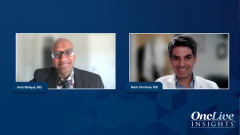
Opinion|Videos|February 10, 2026
Individualizing First-Line Therapy in Unresectable Hepatocellular Carcinoma
Dual-checkpoint HCC toxicities peak weeks 3–15; experts share monitoring and steroid-first hepatitis management, plus cautious rechallenge strategies and emerging IL‑6 approaches.
Advertisement
Episodes in this series
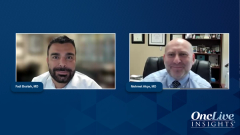
In this opening segment of the OncLive® Insights program, faculty set the stage for a practical and evidence-based discussion on first-line treatment selection for patients with advanced, unresectable hepatocellular carcinoma (HCC). Dr. Fadi Braiteh, a gastrointestinal medical oncologist and clinical associate professor at UNLV, welcomes viewers and introduces his colleague, Dr. Mehmet Akçe from the University of Alabama at Birmingham. Together, they outline the goals of the program: to reassess current evidence, integrate real-world clinical experience, and emphasize individualized decision-making in this complex disease setting.
Dr. Braiteh begins by asking Dr. Akçe to walk through his approach to selecting first-line regimens, with a focus on how patient- and disease-specific characteristics influence treatment recommendations beyond standard considerations such as comorbidities. Dr. Akçe describes a structured process grounded in data from pivotal phase 3 trials. He reviews the established immune-based frontline options, including dual immune checkpoint blockade, the STRIDE regimen, and immune checkpoint inhibitor–antiangiogenic combinations, while also acknowledging a role for TKIs in patients who are not candidates for immunotherapy.
The discussion highlights key factors that shape treatment selection, such as liver function, performance status, and the presence of contraindications to immune checkpoint inhibitors, including solid organ transplant history or active, severe autoimmune disease. Both faculty emphasize the importance of shared decision-making, noting that detailed conversations around efficacy, safety profiles, administration schedules, and potential adverse events are essential to helping patients make informed choices.
Dr. Braiteh adds real-world perspective by underscoring the complexity of managing patients who often present with HCC alongside cirrhosis and other underlying liver conditions. He stresses the need for careful evaluation of autoimmune etiologies and transplant history, which can meaningfully impact therapeutic options. A nuanced, patient-centered approach is required when navigating first-line therapy for unresectable HCC.
Advertisement
Related to this article

Researchers at Wake Forest University School of Medicine identified a protein that may help breast cancer spread to the brain and evade immune defenses.
Benjamin Weinberg, MD, discusses the FDA approval of daraxonrasib, RASolute 302 survival data, safety considerations, and future RAS-targeted therapies in pancreatic cancer.
Half of lenalidomide-refractory patients with 1 to 3 prior lines remained alive and progression free at least 5 years after a single cilta-cel infusion.
Andrew Kuykendall, MD, discusses the FDA approval of rusfertide and how to apply it in clinical practice for polycythemia vera management.

An NDA seeks FDA approval of savolitinib plus osimertinib for EGFR-mutated NSCLC with MET overexpression or amplification after EGFR TKI therapy.
Jason Hafron, MD, discusses the emotional, clinical, and financial burden of false positive cancer screening results and improved risk stratification.
Raajit K. Rampal, MD, PhD, discusses JAK inhibitor choice in cytopenic myelofibrosis, emerging combinations, and anemia-directed agents.

The sNDA for elinzanetant seeks FDA approval for moderate-to-severe vasomotor symptoms in women receiving endocrine therapy for HR-positive breast cancer.
Advertisement
Advertisement
Trending on OncLive
1
China's NMPA Approves Pirtobrutinib Across CLL
2
FDA Grants Priority Review to Elinzanetant for Endocrine Therapy–Associated Vasomotor Symptoms in HR+ Breast Cancer
3
Long-Term PERSEUS Data Confirm Durable PFS Benefit With D-VRd in Transplant-Eligible Newly Diagnosed Myeloma
4
Calculating the Real Cost of False Positive Findings in Cancer Screening
5