

Opinion|Videos|February 17, 2026
Interpreting IMbrave050 and the Unmet Need in the Adjuvant HCC Setting
For HCC with portal vein invasion, experts urge baseline EGD for varices to guide anti-VEGF use and reduce bleeding risk.
Advertisement
Episodes in this series
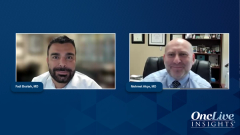
This segment centers on the evolving evidence for adjuvant therapy in HCC, with a focused discussion on results from the IMbrave050 trial and how those findings should (or should not) inform frontline treatment decisions. Dr. Braiteh introduces the topic by asking whether recently reported IMbrave050 data in patients who underwent curative-intent resection or ablation might influence treatment selection in advanced disease.
Dr. Akçe clarifies an important practical distinction: although baseline EGD is not strictly required before initiating immune checkpoint inhibitor–only regimens, he routinely incorporates it into care to treat the patient holistically. For atezolizumab plus bevacizumab, however, he emphasizes that EGD results are essential prior to treatment initiation because of bleeding risk.
Turning to IMbrave050, Dr. Akçe explains that this was an adjuvant trial enrolling patients at high risk for recurrence following curative resection or ablation. Participants were randomized to active surveillance or one year of atezolizumab plus bevacizumab. Although interim results initially suggested an improvement in recurrence-free survival, the final analysis did not confirm a sustained benefit. As a result, Dr. Akçe chose not to adopt this regimen in the adjuvant setting based on interim findings alone, citing the significant commitment and potential burden of one year of systemic therapy.
Both faculty emphasize that the adjuvant HCC space remains an area of substantial unmet need, with multiple negative trials to date across both immunotherapy- and tyrosine kinase inhibitor–based strategies. Importantly, Dr. Akçe differentiates this setting from the frontline advanced HCC landscape, where several therapies have demonstrated clear efficacy and safety. Dr. Braiteh adds that adjuvant therapy may offer opportunities for earlier detection of complications in cirrhotic patients but acknowledges that definitive conclusions await further data.
Advertisement
Related to this article

Researchers at Wake Forest University School of Medicine identified a protein that may help breast cancer spread to the brain and evade immune defenses.
Benjamin Weinberg, MD, discusses the FDA approval of daraxonrasib, RASolute 302 survival data, safety considerations, and future RAS-targeted therapies in pancreatic cancer.

Half of lenalidomide-refractory patients with 1 to 3 prior lines remained alive and progression free at least 5 years after a single cilta-cel infusion.

Andrew Kuykendall, MD, discusses the FDA approval of rusfertide and how to apply it in clinical practice for polycythemia vera management.

An NDA seeks FDA approval of savolitinib plus osimertinib for EGFR-mutated NSCLC with MET overexpression or amplification after EGFR TKI therapy.

Jason Hafron, MD, discusses the emotional, clinical, and financial burden of false positive cancer screening results and improved risk stratification.

Raajit K. Rampal, MD, PhD, discusses JAK inhibitor choice in cytopenic myelofibrosis, emerging combinations, and anemia-directed agents.

The sNDA for elinzanetant seeks FDA approval for moderate-to-severe vasomotor symptoms in women receiving endocrine therapy for HR-positive breast cancer.
Advertisement
Advertisement
Trending on OncLive
1
China's NMPA Approves Pirtobrutinib Across CLL
2
FDA Grants Priority Review to Elinzanetant for Endocrine Therapy–Associated Vasomotor Symptoms in HR+ Breast Cancer
3
Long-Term PERSEUS Data Confirm Durable PFS Benefit With D-VRd in Transplant-Eligible Newly Diagnosed Myeloma
4
Calculating the Real Cost of False Positive Findings in Cancer Screening
5