
Opinion|Videos|August 11, 2026
CNS and Leptomeningeal Disease Management in EGFR-Mutated Non-Small Cell Lung Cancer and Future Outlook
Author(s)Ticiana A. Leal, MD
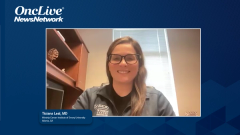
Dr. Leal addresses CNS disease management in EGFR-mutated NSCLC, noting that baseline brain metastases represent a high-risk feature associated with worse prognosis and shorter PFS. Potent EGFR tyrosine kinase inhibitors, particularly osimertinib and lazertinib, remain most valuable for CNS control and reducing CNS progression risk in patients without baseline brain involvement. Amivantamab, an EGFR-MET bispecific antibody, has also demonstrated CNS benefit in both MARIPOSA and MARIPOSA-2. Notably, datopotamab deruxtecan, an antibody-drug conjugate not traditionally expected to cross the blood-brain barrier effectively, also demonstrated CNS activity in the pooled TROPION-Lung01/05 analysis. She emphasizes the importance of investigating CNS efficacy early in drug development to inform sequencing strategies that control CNS disease, reduce progression risk, and delay whole brain radiation given its neurologic toxicity.
Advertisement
Episodes in this series
Dr. Leal addresses CNS disease management in EGFR-mutated NSCLC, noting that baseline brain metastases represent a high-risk feature associated with worse prognosis and shorter PFS. Potent EGFR tyrosine kinase inhibitors, particularly osimertinib and lazertinib, remain most valuable for CNS control and reducing CNS progression risk in patients without baseline brain involvement. Amivantamab, an EGFR-MET bispecific antibody, has also demonstrated CNS benefit in both MARIPOSA and MARIPOSA-2. Notably, datopotamab deruxtecan, an antibody-drug conjugate not traditionally expected to cross the blood-brain barrier effectively, also demonstrated CNS activity in the pooled TROPION-Lung01/05 analysis. She emphasizes the importance of investigating CNS efficacy early in drug development to inform sequencing strategies that control CNS disease, reduce progression risk, and delay whole brain radiation given its neurologic toxicity.
For leptomeningeal disease, a particularly difficult-to-treat, life-limiting complication with high prevalence in EGFR-mutated NSCLC, she notes that international multicenter cohort data from the US and China demonstrate that EGFR-targeted therapy has improved OS even in patients with leptomeningeal involvement, representing the primary contributor to delaying this complication. Emerging amivantamab-lazertinib data are of interest, and she advocates for future trial designs that explicitly include patients with leptomeningeal disease to generate dedicated evidence in this underserved population.
Closing her top takeaways, Dr. Leal emphasizes: combination therapy should be the default consideration for most patients with EGFR-mutated NSCLC given the prevalence of high-risk features (CNS metastases, L858R mutation, positive ctDNA, TP53 co-mutation); ongoing work aims to better tailor specific combinations to individual patients while balancing toxicity; and shared decision-making incorporating patient voice remains essential given the multiple effective options now available. Looking ahead, she highlights anticipation for neoadjuvant and perioperative strategies in early-stage EGFR-mutated NSCLC, including the LAURA trial (osimertinib after chemoradiation in unresectable disease), the ADAURA trial (adjuvant osimertinib), and the forthcoming ADAURA2 trial in stage 1 disease, with hope that these approaches will extend the substantial survival gains seen in advanced disease to earlier-stage, potentially curable patients.
Advertisement
Related to this article

Benjamin Weinberg, MD, discusses the FDA approval of daraxonrasib, RASolute 302 survival data, safety considerations, and future RAS-targeted therapies in pancreatic cancer.

Half of lenalidomide-refractory patients with 1 to 3 prior lines remained alive and progression free at least 5 years after a single cilta-cel infusion.

Andrew Kuykendall, MD, discusses the FDA approval of rusfertide and how to apply it in clinical practice for polycythemia vera management.

An NDA seeks FDA approval of savolitinib plus osimertinib for EGFR-mutated NSCLC with MET overexpression or amplification after EGFR TKI therapy.

Jason Hafron, MD, discusses the emotional, clinical, and financial burden of false positive cancer screening results and improved risk stratification.

Raajit K. Rampal, MD, PhD, discusses JAK inhibitor choice in cytopenic myelofibrosis, emerging combinations, and anemia-directed agents.

The sNDA for elinzanetant seeks FDA approval for moderate-to-severe vasomotor symptoms in women receiving endocrine therapy for HR-positive breast cancer.

The NMPA has approved of pirtobrutinib in treatment-naive and previously treated CLL/SLL.
Advertisement
Advertisement
Trending on OncLive
1
Ifinatamab Deruxtecan BLA Voluntarily Withdrawn in Previously Treated Extensive-Stage SCLC
2
China's NMPA Approves Pirtobrutinib Across CLL
3
FDA Grants Priority Review to Elinzanetant for Endocrine Therapy–Associated Vasomotor Symptoms in HR+ Breast Cancer
4
Long-Term PERSEUS Data Confirm Durable PFS Benefit With D-VRd in Transplant-Eligible Newly Diagnosed Myeloma
5