
Opinion|Videos|July 21, 2026
Treatment Burden and Subcutaneous Amivantamab in EGFR-Mutated Non-Small Cell Lung Cancer
Author(s)Ticiana A. Leal, MD
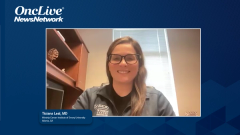
Dr. Leal addresses time toxicity data from Dr. Florez and colleagues comparing the clinic and at-home time burden across EGFR-mutated NSCLC frontline regimens. Both intravenous and subcutaneous amivantamab-lazertinib combinations carried higher time toxicity than osimertinib-chemotherapy or osimertinib monotherapy, driven largely by the prophylactic regimens required for dermatologic prophylaxis education and anticoagulation for thromboembolic risk reduction. She notes that with subcutaneous amivantamab now available, infusion-related burden is substantially reduced, and she actively transitions eligible patients to the subcutaneous formulation to minimize both time burden and administration-related adverse events.
Advertisement
Episodes in this series
Dr. Leal addresses time toxicity data from Dr. Florez and colleagues comparing the clinic and at-home time burden across EGFR-mutated NSCLC frontline regimens. Both intravenous and subcutaneous amivantamab-lazertinib combinations carried higher time toxicity than osimertinib-chemotherapy or osimertinib monotherapy, driven largely by the prophylactic regimens required for dermatologic prophylaxis education and anticoagulation for thromboembolic risk reduction. She notes that with subcutaneous amivantamab now available, infusion-related burden is substantially reduced, and she actively transitions eligible patients to the subcutaneous formulation to minimize both time burden and administration-related adverse events.
Regarding whether the subcutaneous formulation has shifted her risk-benefit calculus, Dr. Leal confirms it has meaningfully improved clinical workflow in both frontline and second-line settings. The PALOMA-3 trial demonstrated comparable efficacy between subcutaneous and intravenous amivantamab-lazertinib with substantially lower administration-related adverse events and reduced thromboembolic events; an exploratory analysis additionally suggested improved OS with the subcutaneous formulation. Based on this evidence and FDA approval, subcutaneous amivantamab is now her default choice when selecting this combination in either treatment line.
Remaining barriers include ensuring consistent implementation of the COCOON dermatologic prophylaxis protocol, access to prophylactic anticoagulation, and sustained patient follow-up. She emphasizes that proactive, early dose modification rather than reactive management after toxicities reach grade 3 is essential, particularly for dermatologic adverse events, a key lesson from the COPERNICUS trial experience.
Advertisement
Related to this article

Benjamin Weinberg, MD, discusses the FDA approval of daraxonrasib, RASolute 302 survival data, safety considerations, and future RAS-targeted therapies in pancreatic cancer.
Half of lenalidomide-refractory patients with 1 to 3 prior lines remained alive and progression free at least 5 years after a single cilta-cel infusion.

Andrew Kuykendall, MD, discusses the FDA approval of rusfertide and how to apply it in clinical practice for polycythemia vera management.

An NDA seeks FDA approval of savolitinib plus osimertinib for EGFR-mutated NSCLC with MET overexpression or amplification after EGFR TKI therapy.

Jason Hafron, MD, discusses the emotional, clinical, and financial burden of false positive cancer screening results and improved risk stratification.

Raajit K. Rampal, MD, PhD, discusses JAK inhibitor choice in cytopenic myelofibrosis, emerging combinations, and anemia-directed agents.

The sNDA for elinzanetant seeks FDA approval for moderate-to-severe vasomotor symptoms in women receiving endocrine therapy for HR-positive breast cancer.

The NMPA has approved of pirtobrutinib in treatment-naive and previously treated CLL/SLL.
Advertisement
Advertisement
Trending on OncLive
1
Ifinatamab Deruxtecan BLA Voluntarily Withdrawn in Previously Treated Extensive-Stage SCLC
2
China's NMPA Approves Pirtobrutinib Across CLL
3
FDA Grants Priority Review to Elinzanetant for Endocrine Therapy–Associated Vasomotor Symptoms in HR+ Breast Cancer
4
Long-Term PERSEUS Data Confirm Durable PFS Benefit With D-VRd in Transplant-Eligible Newly Diagnosed Myeloma
5