
Opinion|Videos|July 7, 2026
Risk Stratification for Treatment Intensification in EGFR-Mutated Non-Small Cell Lung Cancer: TP53, ctDNA, and the TOP Trial
Author(s)Ticiana A. Leal, MD
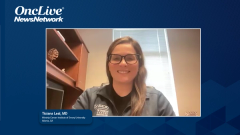
Dr. Leal discusses the clinical and molecular features most useful for identifying patients likely to benefit from frontline treatment intensification in EGFR-mutated NSCLC. Across FLAURA2 and MARIPOSA, patients with TP53 co-mutations, positive baseline circulating tumor DNA (ctDNA), baseline brain metastases, and EGFR L858R mutation status, which are all associated with worse prognosis on monotherapy, consistently derived benefit from combination strategies, reinforcing the relevance of these markers for treatment selection.
Advertisement
Episodes in this series
Dr. Leal discusses the clinical and molecular features most useful for identifying patients likely to benefit from frontline treatment intensification in EGFR-mutated NSCLC. Across FLAURA2 and MARIPOSA, patients with TP53 co-mutations, positive baseline circulating tumor DNA (ctDNA), baseline brain metastases, and EGFR L858R mutation status, which are all associated with worse prognosis on monotherapy, consistently derived benefit from combination strategies, reinforcing the relevance of these markers for treatment selection.
She highlights the TOP trial presented at ELCC 2026, a Chinese phase 3 study specifically designed to evaluate osimertinib plus chemotherapy versus osimertinib monotherapy in patients with TP53 co-mutations. The trial demonstrated median PFS of 34 months with the combination versus 15.6 months with monotherapy, a trend toward improved OS, and meaningfully prolonged duration of response (32.7 versus 15 months). No new safety signals emerged, and as in FLAURA2, patients experienced an extended chemotherapy-free interval after completing induction therapy and transitioning to pemetrexed maintenance, then osimertinib alone.
Dr. Leal considers these data, spanning FLAURA2, MARIPOSA, and now TOP, as collectively supportive of identifying TP53 co-mutations upfront to guide patients with this feature toward combination therapy. She notes that uncertainty remains regarding which specific patient subgroups may benefit preferentially from the FLAURA2 (osimertinib-chemotherapy) versus MARIPOSA (amivantamab-lazertinib) approach, an area still requiring further clarification.
Advertisement
Related to this article

Benjamin Weinberg, MD, discusses the FDA approval of daraxonrasib, RASolute 302 survival data, safety considerations, and future RAS-targeted therapies in pancreatic cancer.
Half of lenalidomide-refractory patients with 1 to 3 prior lines remained alive and progression free at least 5 years after a single cilta-cel infusion.

Andrew Kuykendall, MD, discusses the FDA approval of rusfertide and how to apply it in clinical practice for polycythemia vera management.

An NDA seeks FDA approval of savolitinib plus osimertinib for EGFR-mutated NSCLC with MET overexpression or amplification after EGFR TKI therapy.

Jason Hafron, MD, discusses the emotional, clinical, and financial burden of false positive cancer screening results and improved risk stratification.

Raajit K. Rampal, MD, PhD, discusses JAK inhibitor choice in cytopenic myelofibrosis, emerging combinations, and anemia-directed agents.

The sNDA for elinzanetant seeks FDA approval for moderate-to-severe vasomotor symptoms in women receiving endocrine therapy for HR-positive breast cancer.

The NMPA has approved of pirtobrutinib in treatment-naive and previously treated CLL/SLL.
Advertisement
Advertisement
Trending on OncLive
1
Ifinatamab Deruxtecan BLA Voluntarily Withdrawn in Previously Treated Extensive-Stage SCLC
2
China's NMPA Approves Pirtobrutinib Across CLL
3
FDA Grants Priority Review to Elinzanetant for Endocrine Therapy–Associated Vasomotor Symptoms in HR+ Breast Cancer
4
Long-Term PERSEUS Data Confirm Durable PFS Benefit With D-VRd in Transplant-Eligible Newly Diagnosed Myeloma
5