
Opinion|Videos|November 4, 2026
Matching the Setting to the Patient: Resources and Ongoing Coordination
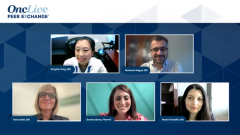
This segment compares the practical experience of delivering therapy across the center, local oncology, and home, and considers which patients are best suited to each.
Advertisement
Episodes in this series
This segment compares the practical experience of delivering therapy across the center, local oncology, and home, and considers which patients are best suited to each. Faculty describe how patient phenotype, distance, competing treatment needs, and personal preference shape the setting, with many patients eager to transition once stable and others preferring to remain at the center for expert-level care or the social contact it provides. Real-world availability varies, and faculty note that local oncology infusion is sometimes easier to arrange than home infusion, particularly in rural areas where not every home-infusion company will administer the therapy. Manufacturer support resources are highlighted as increasingly useful, helping teams identify infusion partners and, in some regions, training local oncologists and staff on administration and side-effect management. The segment closes on the constant work of patient and caregiver education, structured symptom-reporting, and the communication that keeps distributed care coordinated and safe.
Advertisement
Related to this article
See what leading breast oncologists have to say about practice-informing data to come out of the 2026 ESMO Congress.
Community hematologists/oncologists discussed bispecific antibody integration in community practice for relapsed/refractory multiple myeloma.
TP53 Comutations, Long-Term Toxicity, and Sunvozertinib Access Shape EGFR+ NSCLC Treatment Decisions
Faculty at an OncLive Scientific Interchange and Workshop discussed factors that help inform treatment selection in advanced EGFR-mutated NSCLC.
Roswell Park researchers identified a promising strategy to overcome resistance to KRAS-targeted cancer therapies.
Faculty at an OncLive Scientific Interchange and Workshop discussed operationalizing outpatient bispecific antibody therapy for relapsed/refractory multiple myeloma.
Keith Flaherty, MD, FAACR, discusses the 2026 AACR Cancer Progress Report and how the oncology field can build on the report’s findings.
Praful Ravi, MB, BChir, MRCP, discusses the LASER futility readout, PSMA heterogeneity in clear cell RCC, and next steps for radiopharmaceuticals.
Erica L. Mayer, MD, MPH, discusses the FDA approval of camizestrant for ESR1-mutated HR+/HER2– breast cancer and the importance of ctDNA monitoring.
Advertisement
Advertisement
Trending on OncLive
1
Breast Cancer Experts Spotlight Practice-Informing and Thought-Provoking Data From ESMO 2026
2
TP53 Comutations, Long-Term Toxicity, and Sunvozertinib Access Shape EGFR+ NSCLC Treatment Decisions
3
Phase 1 Study of BGB-B2033 (GPC3 x 4-1BB Bispecific Antibody) Monotherapy: First Disclosure of Dose Optimization and Dose Escalation Update in Advanced Hepatocellular Carcinoma
4
Outpatient Models and Prophylactic Measures Help Bring Bispecifics Into Community Practice for R/R Myeloma
5