
Opinion|Videos|November 4, 2026
Patient and Caregiver Burden in the Home-Infusion Era
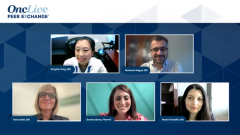
This segment examines the burdens that persist even within a well-designed transition pathway.
Advertisement
Episodes in this series
This segment examines the burdens that persist even within a well-designed transition pathway. On the patient side, faculty highlight limited mobility from refractory joint involvement, the frequent need for central venous access and its associated infection risk, and the challenge of ensuring patients actually reach and adhere to treatment after leaving the center. Insurance lag during transition can delay therapy and create real emotional distress for patients and families. Faculty then weigh the caregiver experience, which cuts both ways: home infusion can reduce stress and restore a sense of normalcy, yet it can also shift substantial monitoring and day-to-day responsibility onto family members. Balanced against these burdens is the central advantage of home infusion, the flexibility that lets patients reclaim work, family, and daily life. Faculty are candid about the trade-offs, including lost face-to-face contact, missed subtle symptom changes, patient under-reporting, and the heightened coordination such transitions demand.
Advertisement
Related to this article
See what leading breast oncologists have to say about practice-informing data to come out of the 2026 ESMO Congress.
Community hematologists/oncologists discussed bispecific antibody integration in community practice for relapsed/refractory multiple myeloma.
TP53 Comutations, Long-Term Toxicity, and Sunvozertinib Access Shape EGFR+ NSCLC Treatment Decisions
Faculty at an OncLive Scientific Interchange and Workshop discussed factors that help inform treatment selection in advanced EGFR-mutated NSCLC.

Roswell Park researchers identified a promising strategy to overcome resistance to KRAS-targeted cancer therapies.
Faculty at an OncLive Scientific Interchange and Workshop discussed operationalizing outpatient bispecific antibody therapy for relapsed/refractory multiple myeloma.
Keith Flaherty, MD, FAACR, discusses the 2026 AACR Cancer Progress Report and how the oncology field can build on the report’s findings.
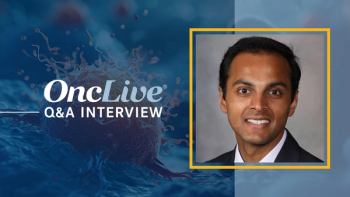
Praful Ravi, MB, BChir, MRCP, discusses the LASER futility readout, PSMA heterogeneity in clear cell RCC, and next steps for radiopharmaceuticals.
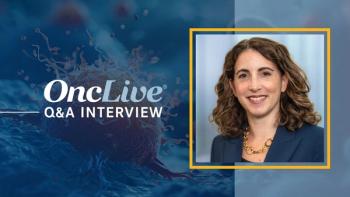
Erica L. Mayer, MD, MPH, discusses the FDA approval of camizestrant for ESR1-mutated HR+/HER2– breast cancer and the importance of ctDNA monitoring.
Advertisement
Advertisement
Trending on OncLive
1
Breast Cancer Experts Spotlight Practice-Informing and Thought-Provoking Data From ESMO 2026
2
TP53 Comutations, Long-Term Toxicity, and Sunvozertinib Access Shape EGFR+ NSCLC Treatment Decisions
3
Phase 1 Study of BGB-B2033 (GPC3 x 4-1BB Bispecific Antibody) Monotherapy: First Disclosure of Dose Optimization and Dose Escalation Update in Advanced Hepatocellular Carcinoma
4
Outpatient Models and Prophylactic Measures Help Bring Bispecifics Into Community Practice for R/R Myeloma
5