
Opinion|Videos|July 16, 2026 (Updated: June 18, 2026)
Post-Combination Sequencing and Resistance Mechanisms
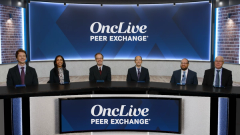
Dr. Somaiah addresses the critical question of treatment sequencing after combination second-line therapy, acknowledging that all currently approved agents were studied as sequential monotherapies without prospective data on their performance following combination treatment. This represents uncharted territory requiring clinical experience and real-world data collection.
Advertisement
Episodes in this series
Dr. Somaiah addresses the critical question of treatment sequencing after combination second-line therapy, acknowledging that all currently approved agents were studied as sequential monotherapies without prospective data on their performance following combination treatment. This represents uncharted territory requiring clinical experience and real-world data collection.
Ripretinib's switch-control mechanism provides mechanistic rationale for retained activity after combination therapy, as its mutation coverage is based on binding characteristics rather than prior regimen exposure. The drug's ability to target both switch pocket and activation loop sites should theoretically remain intact regardless of previous treatment combinations.
Future resistance mechanisms after combination therapy remain unknown, though the panel discussed emerging "APAL" mutations (primary plus ATP-binding pocket plus activation loop) that represent triple mutations potentially resistant to all current agents. Understanding whether combination therapy delays, prevents, or alternatively accelerates such complex resistance patterns will be crucial for optimizing treatment sequences.
Near-term sequencing decisions will likely rely on clinical experience, institutional protocols, and real-world evidence rather than prospective trial data. The importance of collecting ctDNA at progression and participating in clinical trials cannot be overstated for advancing the field's understanding of optimal sequencing strategies.
Dr. Heinrich emphasizes that using the most effective therapy early may prevent complex resistance emergence, though this remains theoretical pending long-term follow-up data. The goal involves maximizing initial disease control while preserving subsequent treatment options, requiring careful balance between aggressive early intervention and sequential treatment preservation.
Advertisement
Related to this article

The designation covers QTX3034 plus cetuximab with or without FOLFOX; phase 1 data showed a 25% confirmed ORR with the doublet in CRC and PDAC.

MimiVax and Roswell Park announced phase 2b SURVIVE trial results evaluating the SurVaxM vaccine in newly diagnosed glioblastoma.

Faculty at an OncLive Scientific Interchange and Workshop discussed individualizing frontline immune checkpoint inhibitor selection in metastatic NSCLC.

The FDA granted fast track designation to MC001 for pancreatic cancer.
The NCCN update adds locally advanced CSCC to the category 2A listing cosibelimab received in metastatic disease in 2025.

In TASKIN, the 12-month OS rate was 61.3% with vilamakitug vs 55.7% with placebo plus trifluridine/tipiracil.

The 510(k) clearance covers an MRI-derived AI risk score for stage I to IIIA disease; the high-risk category carried an HR of 2.81 for recurrence.
The FDA has approved dostarlimab for MSI-H or dMMR locally advanced rectal cancer.
Advertisement
Advertisement
Trending on OncLive
1
Dr Cercek on the FDA Approval of Dostarlimab for dMMR/MSI-H Locally Advanced Rectal Cancer
2
FDA Clears TumorSight Risk, an MRI-Derived AI Recurrence Tool for HR+, HER2– Breast Cancer
3
Vilamakitug Meets OS Threshold in Phase 1/2 Refractory mCRC Trial
4
Weigh Benefit Against Burden: Defining Lurbinectedin’s Role in a Shifting Small Cell Lung Cancer Landscape
5