
Opinion|Videos|March 21, 2025
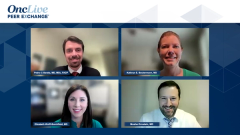
RCC Treatment Evolution: Expert Perspectives on the Evolving Landscape and Advances From ASCO GU 2025
Experts discuss how treatment sequencing in advanced renal cell carcinoma (RCC) may evolve with the emergence of novel combinations and highlight emerging data from ASCO GU 2025 likely to impact clinical practice.
Advertisement
Episodes in this series

Video content above is prompted by the following:
Looking ahead, how do you see treatment sequencing evolving with the emergence of novel combinations? What emerging data from ASCO GU 2025 are most likely to impact clinical practice?
Advertisement
Related to this article
Here is your cheat sheet to all therapeutic options that were cleared by the FDA in September 2026 spanning tumor types.

The FDA approved tucatinib plus trastuzumab and pertuzumab as maintenance for advanced HER2-positive breast cancer after induction.

The c-Met–directed ADC was designated for EGFR wild-type nonsquamous NSCLC after platinum chemotherapy and anti–PD-(L)1 therapy.

Dana-Farber’s Xin Gu, PhD, and Nicholas Polizzi, PhD, received NIH New Innovator Awards for high-risk, high-reward research.
The c-Met–directed ADC-based combination was designated for mCRC previously treated with fluoropyrimidine, irinotecan, oxaliplatin, and anti-VEGF therapy.

Pooled data from 3 randomized trials showed ropeginterferon alfa-2b improved responses vs phlebotomy alone but not vs hydroxyurea in polycythemia vera.

Experts break down key multiple myeloma data and trends from the 23rd Annual IMS Meeting.

Firmonertinib did not significantly improve BICR-assessed PFS vs platinum/pemetrexed chemotherapy in first-line EGFR exon 20–mutant NSCLC in FURVENT trial.
Advertisement
Advertisement
Trending on OncLive
1
FDA Approves Tucatinib Plus Trastuzumab/Pertuzumab as First-Line Maintenance in Advanced HER2+ Breast Cancer
2
FDA Grants Breakthrough Therapy Designation to Telisotuzumab Adizutecan Plus Bevacizumab in Refractory mCRC
3
FDA Grants Breakthrough Therapy Designation to Temab-A in Previously Treated c-Met–Expressing Nonsquamous NSCLC
4
Etentamig, Iberdomide, and Long-Term PERSEUS Data Headline Key Myeloma Findings From IMS 2026
5